
Pacific Halibut
Hippoglossus stenolepis
Also called: halibut, barn door (large)
A huge, right-eyed flatfish of the North Pacific, caught from Alaska and the Pacific Northwest on heavy tackle over deep sand and gravel.
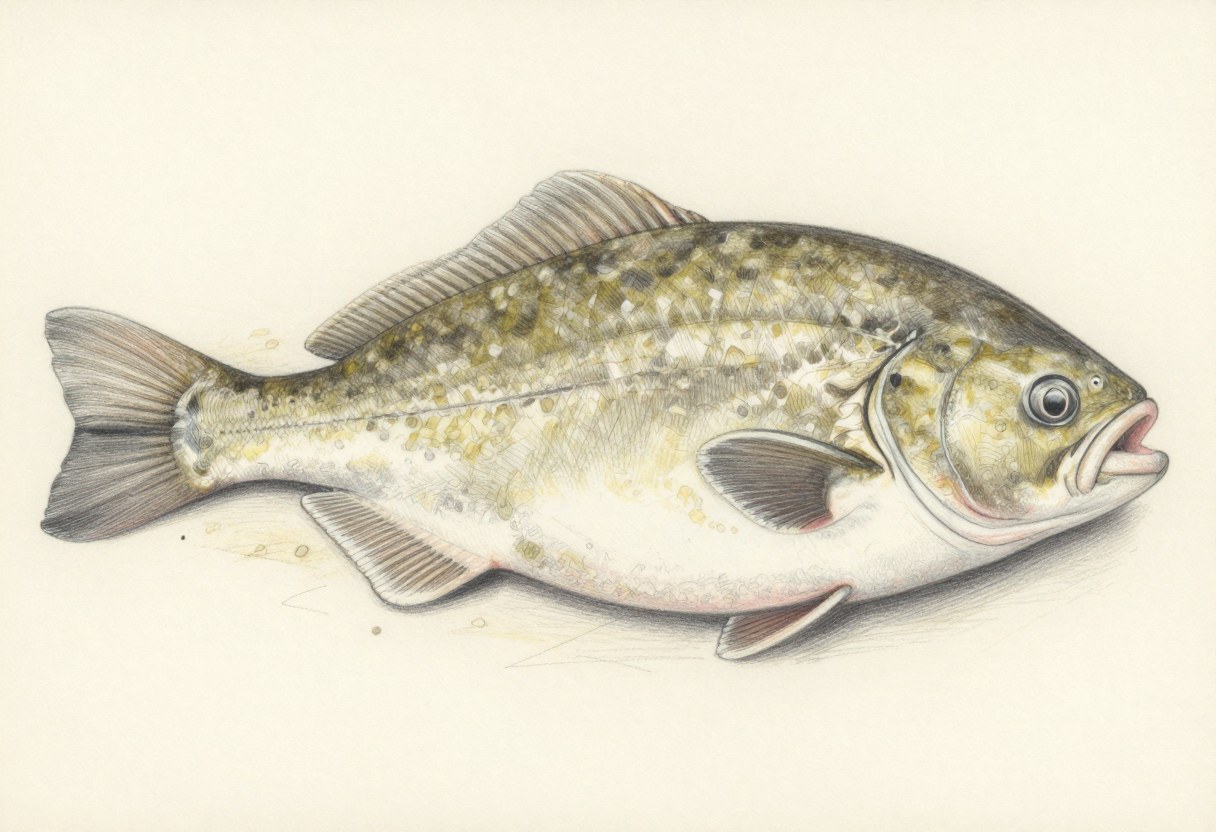
- Type
- Bottom & Reef Fish
- Typical size
- Commonly 20 to 60 lb; large fish over 100 lb
- Range
- The Pacific coast from northern California through Canada and Alaska
- Coasts
- Pacific
- Where
- Open water
- Best seasons
- Spring and summer are the main seasons
Note: Large halibut are powerful and can injure anglers on a boat. Halibut rules are set by international and state managers. Size limits, bag limits, and seasons for this species change often, so check current state and federal rules before you keep one.
How to identify it
- Both eyes on the right side of the body.
- A dark olive-brown to nearly black upper side and a white underside.
- A diamond-shaped, flat body with a large mouth.
- A slightly forked, crescent tail.
Often confused with
- Summer Flounder: left-eyed and far smaller, on the Atlantic coast.
Baits and lures
- Herring and salmon heads
- Octopus and squid
- Large jigs and leadhead jigs with big plastic trailers
Techniques
- Drop heavy baits or jigs to the bottom on sandy and gravel areas.
- Fish tide changes and use enough weight to hold bottom.
- Use strong gear and a plan for landing a large fish.
- Be careful with big fish on deck, since they can thrash.
Field notes
Pacific halibut can live for decades and grow very large. Female fish are bigger than males, and managers set strict limits.
Related guides
Saltwater size limits, bag limits, seasons, gear rules, and license requirements change often and differ by state and in federal waters. Some species are catch-and-release only or closed in certain areas. Check your state's current fishing regulations before you keep a fish; our state resources directory links to each state's official wildlife and fisheries agency.