
Bluefish
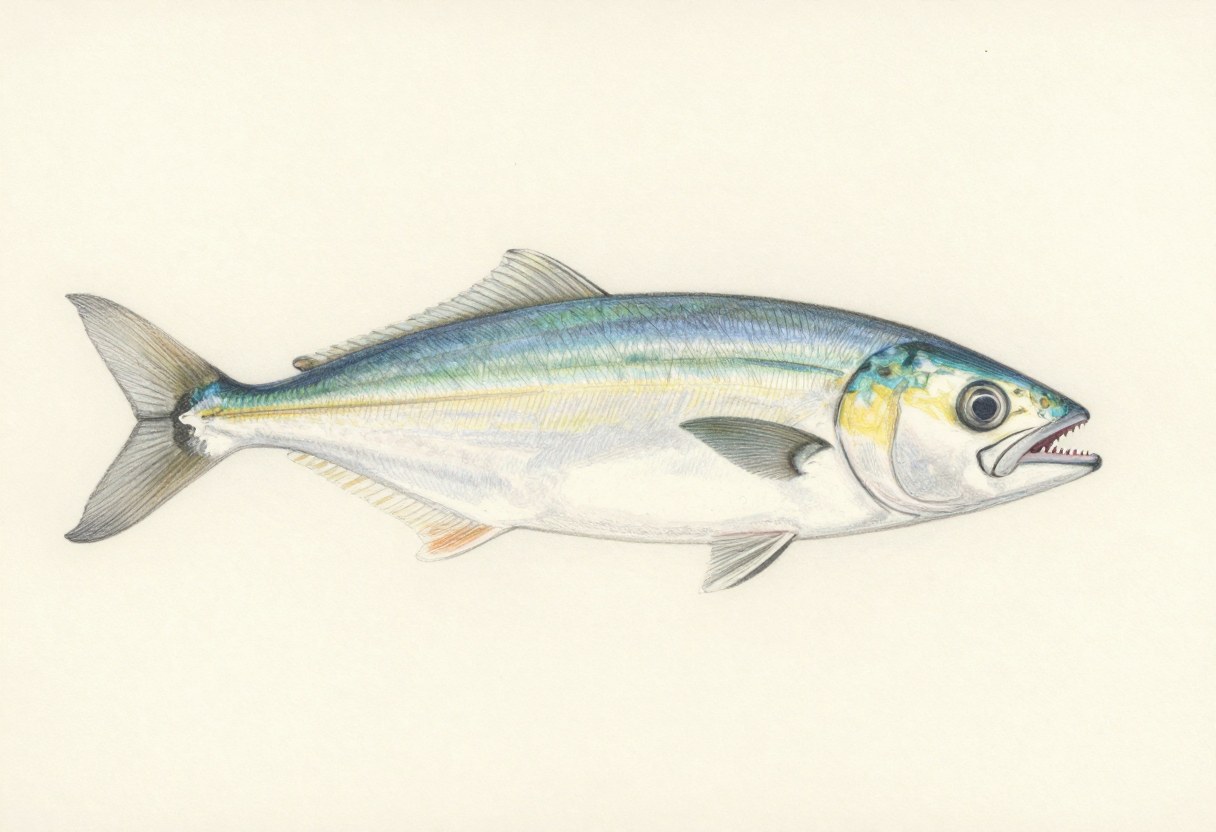
Pomatomus saltatrix
Also called: blues, chopper (large), snapper blue (small)
A fierce, toothy, schooling predator that blitzes baitfish from the surf to nearshore waters, and a favorite of Atlantic surf anglers.
- Type
- Inshore & Flats
- Typical size
- 1 to 10 lb; 'choppers' over 10 lb
- Range
- The Atlantic coast from Maine to Florida, with a smaller presence in the Gulf
- Coasts
- Northeast Atlantic, Southeast Atlantic, Gulf of Mexico
- Where
- Surf & beaches, Open water, Reefs, wrecks & jetties
- Best seasons
- Summer and fall in the Northeast; spring and fall to the south
Note: Bluefish have sharp teeth and thrash on the deck, so use pliers or a grip tool, and keep fingers away from the mouth. Size limits, bag limits, and seasons for this species change often, so check current state and federal rules before you keep one.
How to identify it
- A bluish-green back, silver sides, and a white belly.
- A mouth full of sharp teeth.
- A dark blotch at the base of the pectoral fin.
- A forked tail and a slightly protruding lower jaw.
Often confused with
- Spanish Mackerel: slimmer, with golden spots along the sides.
Baits and lures
- Cut mullet or menhaden
- Metal spoons and casting jigs
- Poppers and plugs
- Live baitfish
Techniques
- Cast metal lures into diving birds and breaking schools.
- Fish cut bait in the surf and inlets.
- Use a short wire leader or heavy fluorocarbon, since bluefish bite through line.
- Move quickly, since schools move.
Field notes
Bluefish are known for blitzes, where a school drives bait to the surface. The meat is best eaten fresh, since it spoils quickly.
Related guides
Saltwater size limits, bag limits, seasons, gear rules, and license requirements change often and differ by state and in federal waters. Some species are catch-and-release only or closed in certain areas. Check your state's current fishing regulations before you keep a fish; our state resources directory links to each state's official wildlife and fisheries agency.