
Eastern Red Cedar
Juniperus virginiana
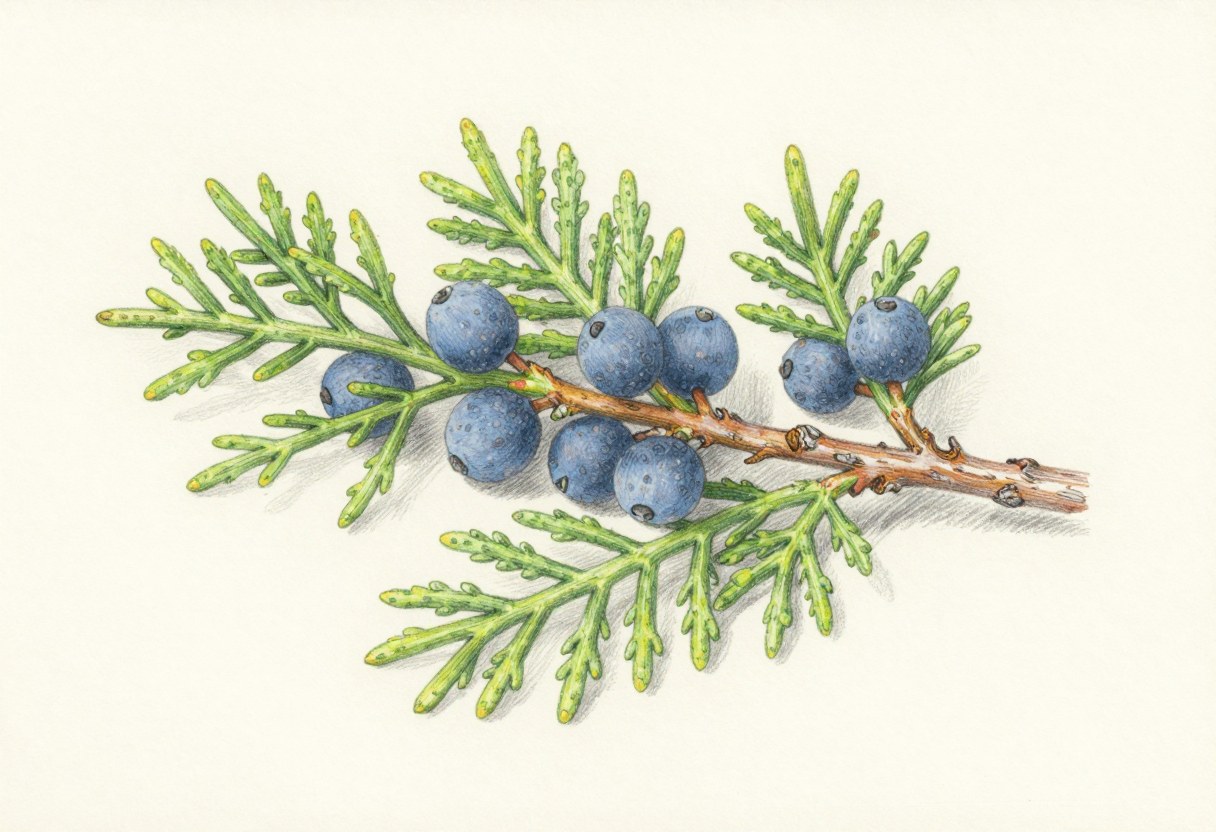
A common evergreen with scale-like leaves, blue berry-like cones, and fragrant red wood. It is a juniper rather than a true cedar.
- Type
- Conifers
- Leaves
- Scale-like
- Region
- Northeast, Southeast, Midwest & Plains
- Typical size
- 30–50 ft tall, with a trunk 1–2 ft across
- Range
- The eastern and central United States, including much of the Great Plains
- Look for it
- Winter, when the dark green trees stand out and blue cones are on the branches
How to identify it
- Leaves are tiny and scale-like on mature branches, and sharp and awl-like on young shoots.
- Cones look like small, powdery blue berries.
- Bark is reddish-brown and peels in long, shredded strips.
- The tree has a dense, conical shape, and the wood smells like a cedar chest.
Often confused with
- Ashe juniper: a similar juniper of Texas and the Southwest.
Why it matters outdoors
- Shredded cedar bark makes good fire-starting tinder.
- Birds, including cedar waxwings, eat the berries, and deer and other wildlife use the dense cover.
- Burns fast and throws sparks, so be careful with cedar in a campfire.
Field notes
Eastern red cedar spreads across pastures and prairies in the central states, and in some areas it is considered an invasive problem. It also gives winter cover and food to wildlife.
The dry, stringy bark is easy to shred into tinder, but it also burns very quickly.
Related guides
This guide helps you recognize trees and avoid harmful plants. It does not teach foraging, and nothing here is advice to eat or use a wild plant. Identification from a drawing can be wrong, so check with a regional field guide or a local expert, such as your state forestry or extension service.