
Bald Cypress
Taxodium distichum
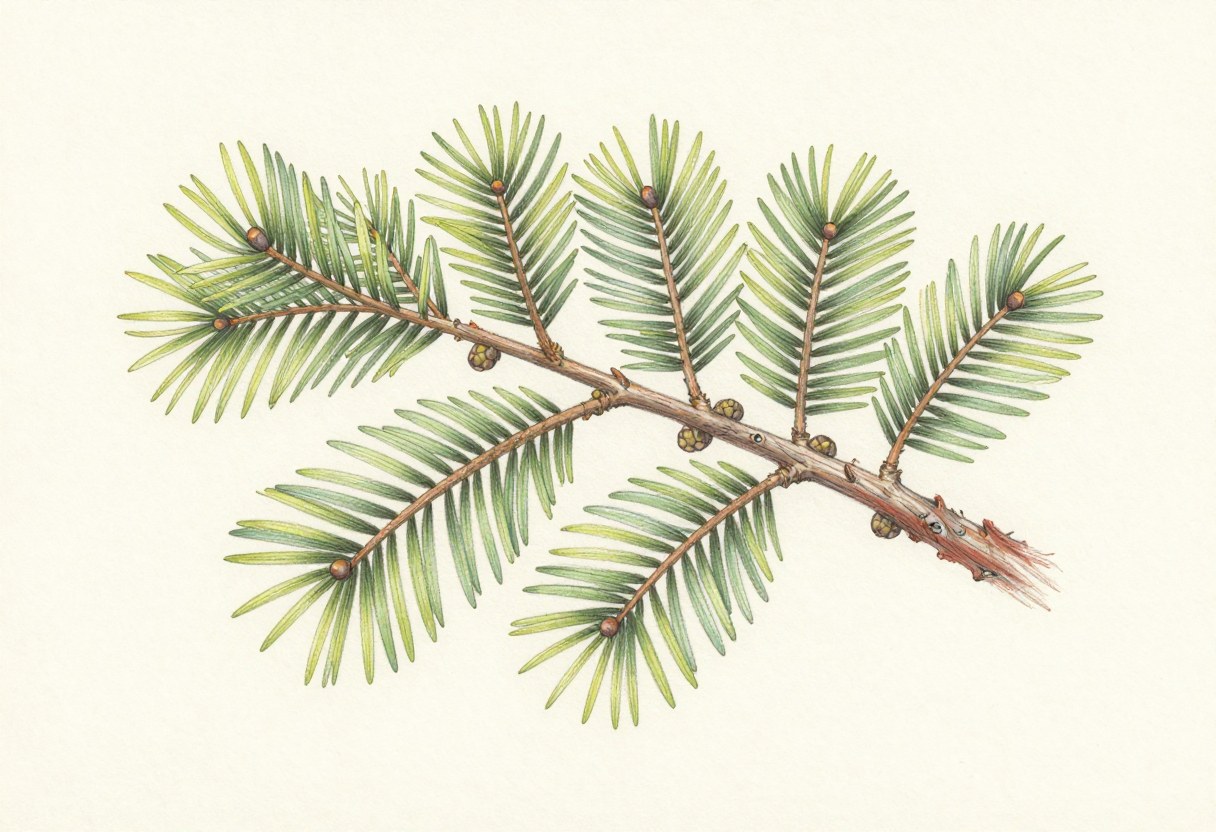
A swamp conifer with feathery needles that turn rusty orange and drop in fall, and knobby roots called knees.
- Type
- Conifers
- Leaves
- Needles
- Region
- Southeast
- Typical size
- 70–120 ft tall, with a flared, buttressed trunk
- Range
- The Southeast and the Mississippi Valley, in swamps and along rivers
- Look for it
- Fall, when the needles turn rusty orange before dropping
How to identify it
- Needles are soft, flat, and arranged in two rows along slender twigs, like a feather.
- It is a deciduous conifer: it loses its needles in fall.
- Cones are small and round, like a ball.
- Roots send up knobby growths called knees in wet soil, and the base of the trunk is flared.
Often confused with
- Pond cypress: a related swamp tree with short, awl-like needles pressed against the twigs.
Why it matters outdoors
- Cypress sloughs and swamps are classic wood duck and waterfowl country.
- Wood is resistant to rot, which is why it is prized for boats and docks.
- Standing water around cypress knees can hide stumps and holes, so watch your footing and wear waders.
Field notes
Bald cypress is the signature tree of the southern swamp. It grows in standing water and sends up knees that rise above the surface.
Because it loses its needles in winter, the tree looks bare, which gave it the name bald.
Related guides
This guide helps you recognize trees and avoid harmful plants. It does not teach foraging, and nothing here is advice to eat or use a wild plant. Identification from a drawing can be wrong, so check with a regional field guide or a local expert, such as your state forestry or extension service.