
Field Guide / Ticks, Spiders & Biting Pests
Red Imported Fire Ant
Solenopsis invicta
Also called: fire ant
A small, aggressive reddish ant of the South whose mounds erupt in a swarm when disturbed, and whose stings burn and blister.
- Kind
- Stinging Insects
- Size
- About 1/8 to 1/4 inch
- Range
- The southeastern and south-central United States, with pockets in the Southwest and California
- Regions
- Southeast, Southwest
- When active
- Warm months, and year-round in mild areas
- Concern
- Medically significant venom, Allergic reactions
How to identify it
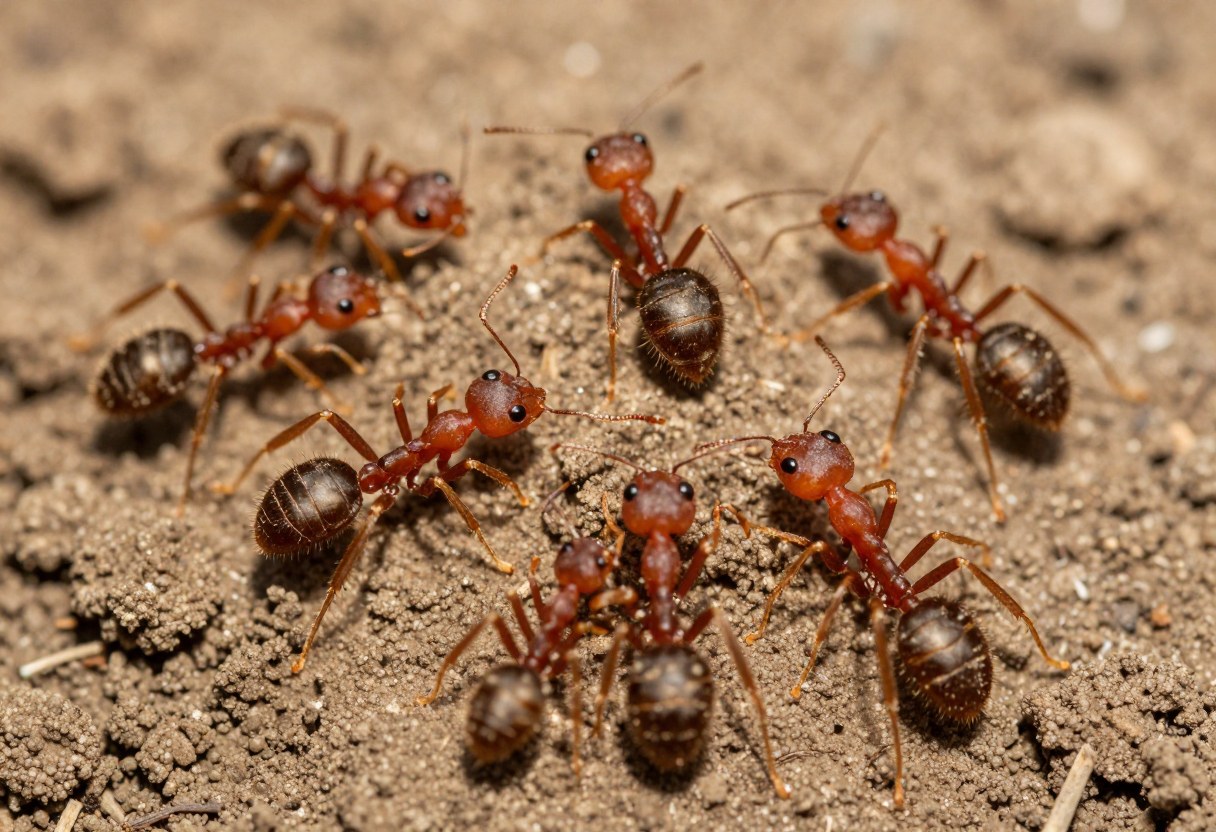
- Reddish-brown ants with a darker abdomen, in workers of different sizes.
- Colonies build dome-shaped mounds of loose soil with no obvious entrance hole.
- A disturbed mound sends out a swarm that climbs and stings.
- Mounds are common in open, sunny areas, fields, and lawns.
Health risk
Fire ants sting repeatedly, leaving burning, itchy welts that form white pustules in a day or so. Some people have serious allergic reactions. Multiple stings can be dangerous for small children and pets.
How to avoid it
- Look before you sit, kneel, or set up camp, and avoid mounds.
- Do not disturb a mound with a boot or a stick.
- Check gear and tent floors, and keep food sealed.
- Wear boots and long pants in infested areas.
If you are bitten or stung
- Brush the ants off right away, since they sting at once and in numbers.
- Wash the area with soap and water, and apply a cold pack.
- Do not break the blisters, which can lead to infection.
- Use hydrocortisone cream or an antihistamine as the label directs.
When to get medical care
- Get emergency care right away for hives all over the body, swelling of the face or throat, trouble breathing, dizziness, or fainting, which can signal a severe allergic reaction.
- See a doctor for many stings at once, a sting inside the mouth or throat, or a sting site that looks infected.
- If you have ever had a serious reaction to a sting, talk to a doctor about carrying epinephrine.
Call 911 for trouble breathing, swelling of the face or throat, a racing heart, dizziness, or fainting.
Field notes
Fire ants nest in the open and flood out of a mound within seconds. If you see one on your leg, brush hard and fast, since more are probably crawling up.
Related guides
This page is general information from public health sources such as the CDC, not medical advice. Risks vary with where you live, your health, and any allergies, so talk to a doctor or pharmacist about repellents, allergy plans, and vaccines. Follow the label on any repellent or insecticide.