
Field Guide / Ticks, Spiders & Biting Pests
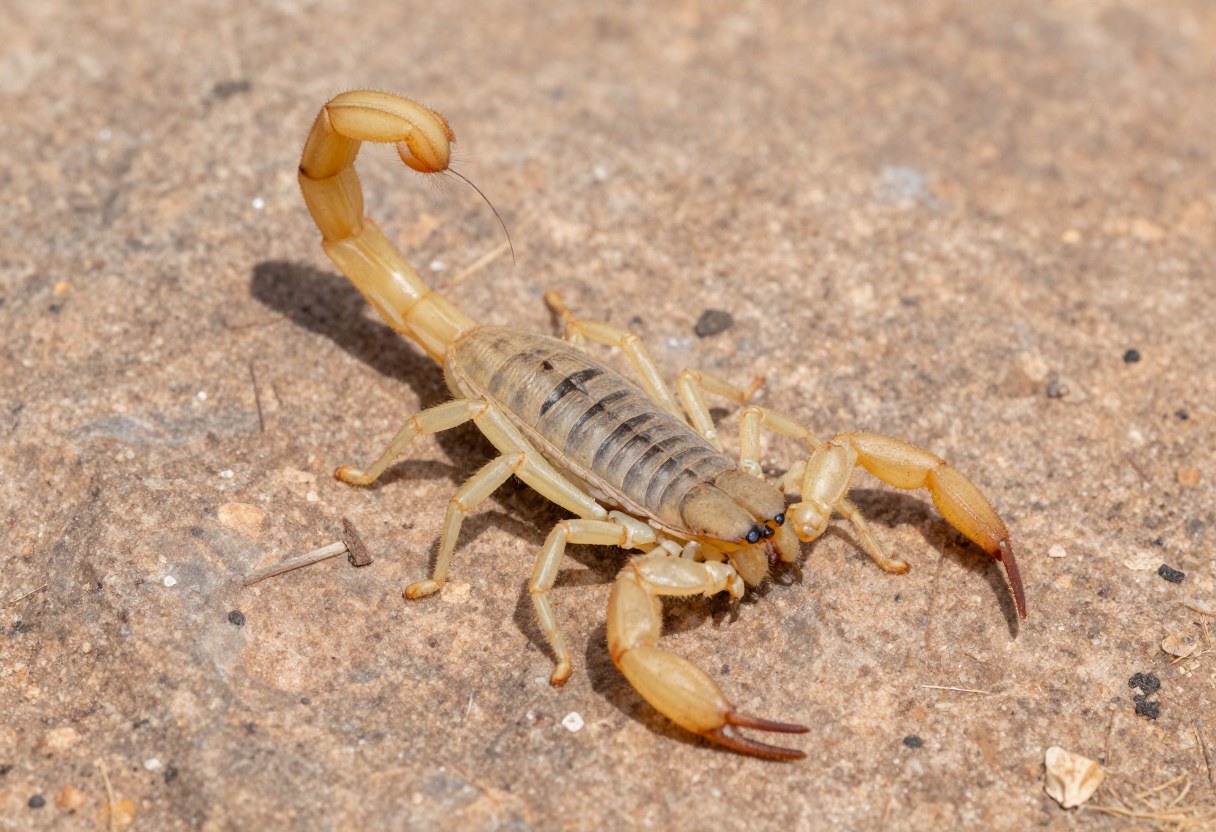
Arizona Bark Scorpion
Centruroides sculpturatus
Also called: bark scorpion
A slender, pale scorpion of the Sonoran Desert, the most venomous scorpion in the United States, with a painful sting that is usually not dangerous to healthy adults.
- Kind
- Spiders & Scorpions
- Size
- About 2 to 3 inches
- Range
- Arizona, western New Mexico, southeastern California, and the Colorado River area
- Regions
- Southwest
- When active
- Warm months, mostly at night
- Concern
- Medically significant venom
How to identify it
- The body is pale yellow to tan, slim, and lightly built.
- The pincers are thin and the tail is long and slender.
- It climbs well and may be found on walls, trees, and under bark.
- It glows bright blue-green under a black light.
Health risk
A sting causes sharp pain, tingling, and numbness. Symptoms are usually mild in healthy adults, but young children and older adults can have serious symptoms such as muscle twitching and trouble breathing.
How to avoid it
- Shake out boots, clothing, sleeping bags, and bedding before use.
- Wear closed shoes outdoors at night, and use a flashlight.
- Do not reach under rocks, boards, or bark without looking.
- Use a black light after dark to spot scorpions around camp.
If you are bitten or stung
- Wash the area with soap and water.
- Apply a cool, damp cloth to ease pain.
- Call Poison Help at 1-800-222-1222 for advice.
- Do not cut the area or try to suck out venom.
When to get medical care
- Get medical care for a sting in a young child, an older adult, or someone with a health condition.
- Go to the emergency room for trouble breathing, muscle twitching, or other serious symptoms.
Call 911 for trouble breathing, swelling of the face or throat, a racing heart, dizziness, or fainting.
Field notes
Bark scorpions hide during the day and hunt at night. In scorpion country, check footwear and bedding as a habit, and keep a light handy.
Related guides
This page is general information from public health sources such as the CDC, not medical advice. Risks vary with where you live, your health, and any allergies, so talk to a doctor or pharmacist about repellents, allergy plans, and vaccines. Follow the label on any repellent or insecticide.