

Reticle Types
Also called: crosshair, duplex, BDC, mil-dot
The aiming pattern inside a scope. Common types include the simple duplex, bullet-drop (BDC), and mil-dot or MOA grid reticles.
- Type
- Specs & Terms
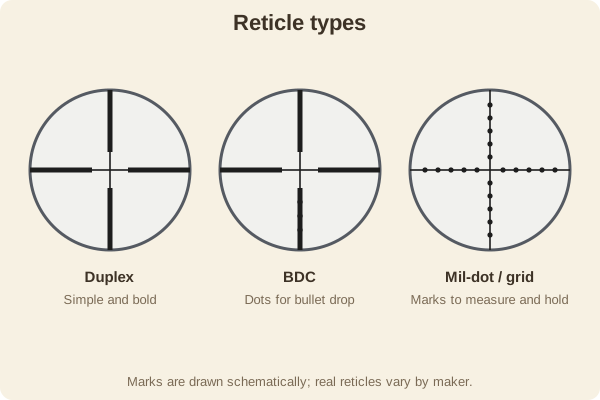
- Duplex
- Crosshair with thick outer lines that thin toward the center
- BDC
- Extra aiming marks for bullet drop at set distances
- Mil-dot or MOA grid
- Evenly spaced marks to measure and hold for range and wind
- Used for
- Hunting, Target shooting
What it is good for
- Choosing a scope that fits how you shoot.
- Quickly holding over at known distances.
- Learning your ballistics.
Where it falls short
- BDC marks fit only the ammunition they were designed for.
- Busy reticles can confuse a new shooter.
- Mil or MOA grids need practice and a ballistic chart.
Tips
- A simple duplex is plenty for most big-game shots inside 300 yards.
- Check your actual drop at the range before trusting any marks.
Works well with
- MOA and MIL: the units on a grid reticle.
- Focal Plane: decides how the reticle scales when you zoom.
Field notes
The right reticle is the one you understand and can use under pressure.
Related guides
Specs here are typical, not guarantees; models differ, so check the maker's published numbers. Never look at the Sun through any optic without a certified solar filter, and zero or mount a scope with the firearm unloaded and pointed in a safe direction. Rules on optics, such as scopes on certain hunts or lasers and electronics, differ by state; our state resources directory links to each state's official regulations. Want a buying guide? Read Choosing Hunting Optics.