

Reflector Telescope
Also called: Newtonian, mirror telescope
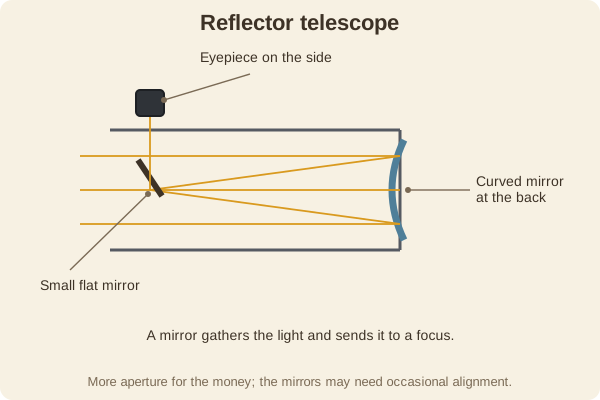
A telescope that uses a mirror at the back to gather light. It gives the most aperture for the price.
- Type
- Telescopes
- Typical apertures
- 114 to 200 mm for common models
- Design
- Open tube with a primary mirror at the back and a small flat mirror near the front
- Upkeep
- The mirrors may need occasional alignment (collimation)
- Used for
- Stargazing
Safety: Never point a telescope, finder, or any other optic at the Sun without a certified solar filter made for it. Even a glance can cause permanent eye damage.
What it is good for
- Faint objects such as galaxies and nebulae from dark skies.
- Budget buyers who want large aperture.
- People who like to tinker.
Where it falls short
- Needs collimation from time to time.
- The open tube lets in dust and air currents.
- Bulkier than a refractor of the same aperture.
Tips
- Let the telescope cool outdoors for 20 to 30 minutes before observing.
Works well with
- Dobsonian Telescope: a reflector on a simple rocker mount.
- Refractor Telescope: sealed, low-maintenance option.
Field notes
A mirror collects light across a wide surface without the glass cost of a large lens, which is why reflectors are good value.
Related guides
Specs here are typical, not guarantees; models differ, so check the maker's published numbers. Never look at the Sun through any optic without a certified solar filter, and zero or mount a scope with the firearm unloaded and pointed in a safe direction. Rules on optics, such as scopes on certain hunts or lasers and electronics, differ by state; our state resources directory links to each state's official regulations. Want a buying guide? Read Choosing Hunting Optics.