

Natural Navigation Myths
Also called: moss on trees, moss north, watch method, tree rings, nature compass
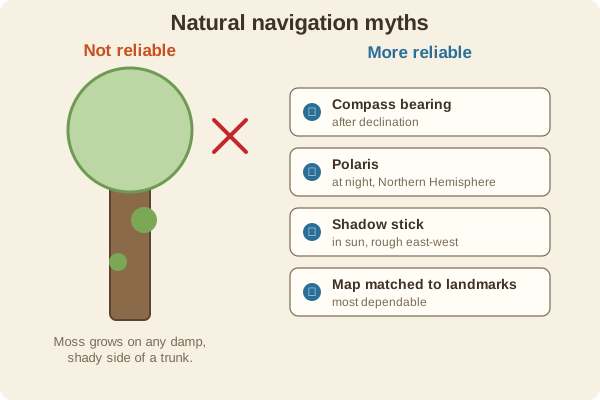
Moss, tree shape, and the like are not dependable direction finders. Use a compass, the Sun, or Polaris, and treat natural signs as weak hints.
- Type
- Techniques
- Moss
- Grows wherever it is damp and shady, which can be any side of a tree
- Tree lean and bark
- Wind, light, and slope shape trees more than direction
- Reliable instead
- A compass, Polaris, the shadow stick method, and a map matched to landmarks
- Watch method
- A rough Sun-based trick that is easy to get wrong, especially with daylight saving time
- Used for
- Hiking & camping, Hunting
What it is good for
- Knowing what not to trust when you are lost.
- Teaching beginners a few safer tricks.
Where it falls short
- Natural signs vary by place and weather, so they can mislead.
- A wrong guess can send you farther off course.
Tips
- Check any natural sign against a second source before you act on it.
- Look at many trees in the area, not just one, and treat a pattern as a hint.
- Practice real techniques, such as a compass bearing, before you need them.
Works well with
- Shadow Stick Method: a better daytime direction finder.
- Finding North by the Stars: a better night direction finder.
Field notes
The moss idea is popular because it is simple, but it does not hold up. Light, water, and the type of tree matter more than direction, so moss can grow on every side of a trunk.
Related guides
Numbers here are typical, and values such as magnetic declination change over time and place, so check a current source such as NOAA or your map's legend. Practice near home before you rely on a skill far from help, carry a paper map and compass as a backup, and tell someone your plan. Rules on electronics, land access, and trespass differ by state; our state resources directory links to each state's official regulations. Want a step-by-step guide? Read Trail Navigation Basics.