
Chinook Salmon
Oncorhynchus tshawytscha
The largest Pacific salmon, also called king salmon: a powerful fish of Pacific rivers and stocked in the Great Lakes.
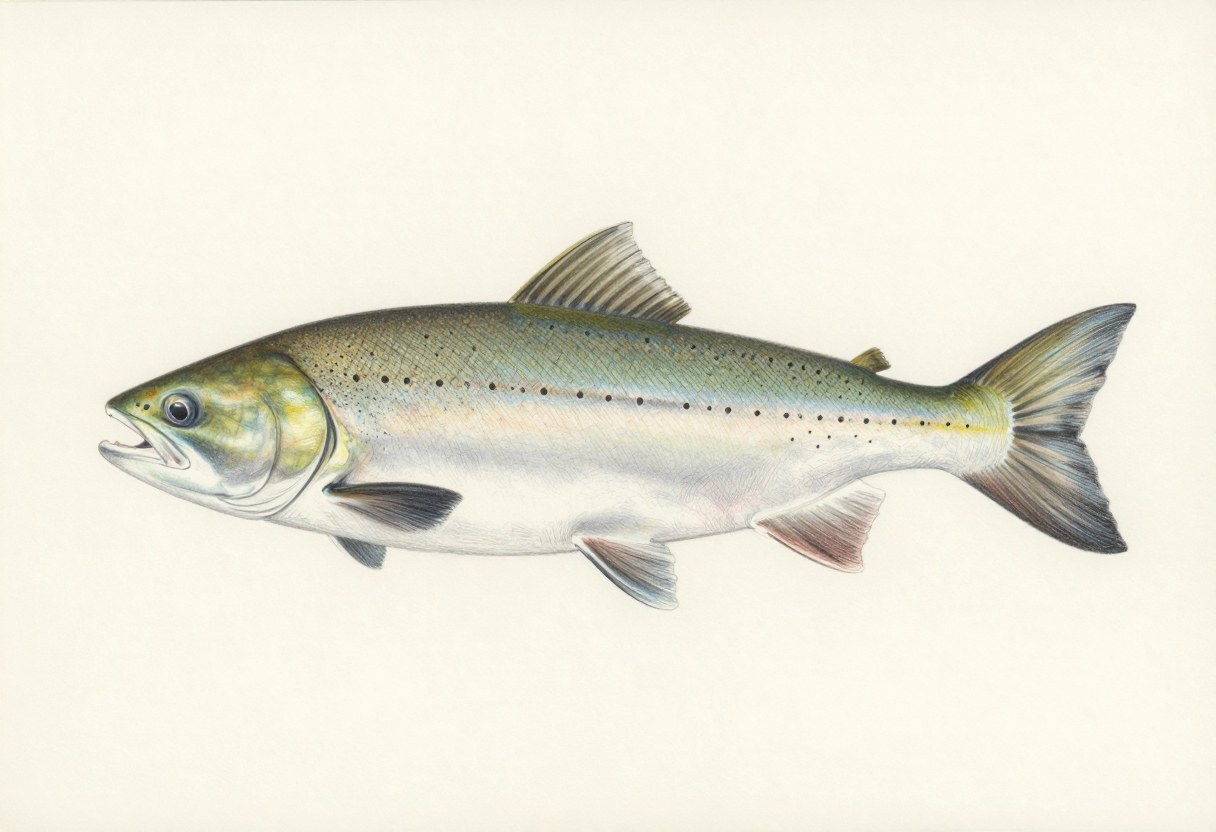
- Type
- Trout & Salmon
- Water
- Cold water
- Habitat
- Rivers, Lakes, Reservoirs
- Typical size
- 8 to 20 lb in the Great Lakes; ocean-run fish are often larger
- Range
- Native to the Pacific coast from California to Alaska, and stocked in the Great Lakes and a few reservoirs.
- Best seasons
- Fall runs in rivers; late spring through summer when trolling in the Great Lakes
How to identify it
- Small black spots cover the back and appear on both lobes of the tail fin.
- The inside of the mouth is black, including a black gum line at the base of the teeth.
- The body is silver with a blue-green back, and large fish are thick and powerful.
- Spawning fish darken and turn reddish.
Often confused with
- Coho Salmon: spots only on the upper lobe of the tail and white gums at the base of the teeth.
Best baits and lures
- Trolling spoons and plugs
- Cut herring
- Roe and egg clusters
- Spinners
- Flies
Techniques
- Troll spoons and flasher rigs at varying depths over open water
- Drift roe or cut bait through deep river runs in fall
- Cast spinners and plugs in river current
- Fish near river mouths when fish stage in fall
Fishing notes
Chinook are the strongest of the Pacific salmon, capable of long, powerful runs that test heavy tackle. Fish that have come from the ocean are chrome-bright, and as they move into freshwater to spawn they darken and stop feeding normally.
In the Great Lakes, stocked chinook roam open water chasing alewives, and anglers troll with downriggers to reach them at specific depths and temperatures.
Salmon regulations are complicated, with strict seasons, tag or stamp requirements, and area-specific limits. Always confirm the current rules for your water.
Related guides
Size limits, bag limits, legal baits, and seasons vary by state and waterbody and change over time. Check your state's current regulations — our state resources directory links straight to each state's official fishing rules and license portal.