
Sextans
The Sextant
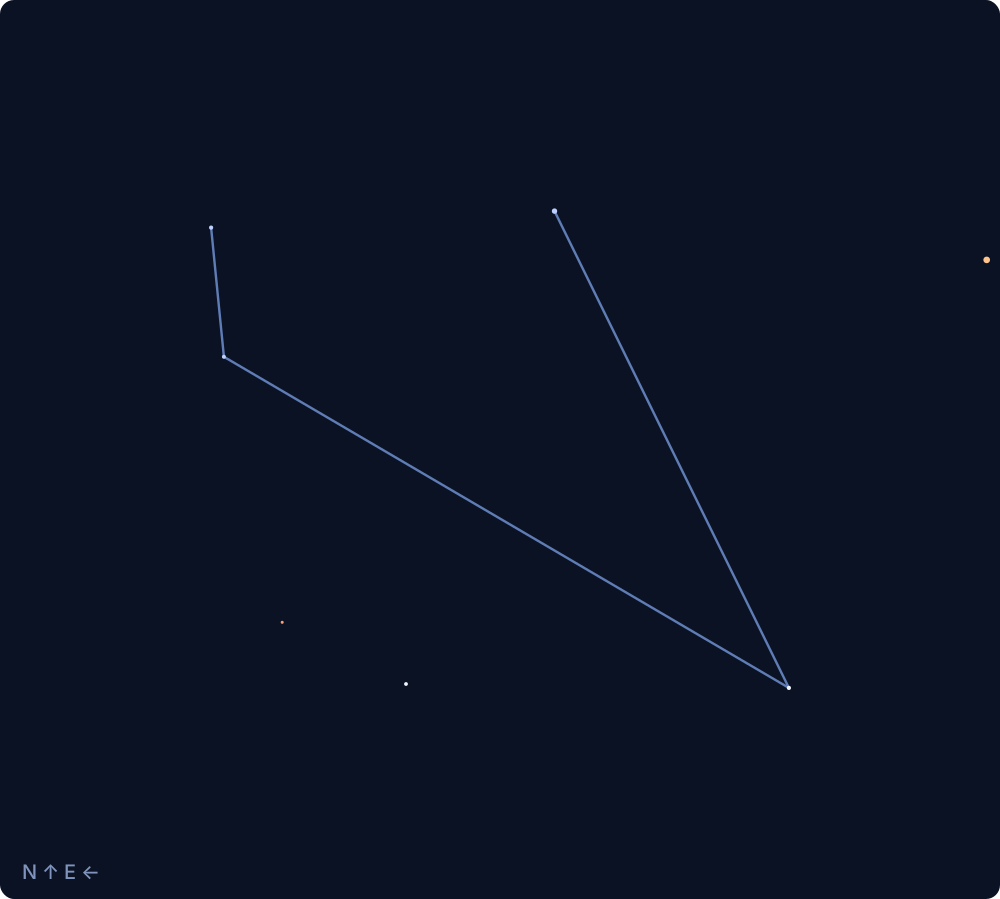
A very faint spring constellation south of Leo, named for a navigation instrument.
- Best season
- Spring
- Best months
- February through May, in the south on late winter and spring evenings
- Visibility
- Visible from everywhere in the United States, but very faint
- Abbreviation
- Sex
How to find it
- Look south of Leo, between Regulus and Alphard in Hydra, for a very faint group of stars.
Brightest stars
- Alpha Sextantis (a faint star)
What to look for
- How empty the region looks. Sextans is a good test of sky darkness.
Binocular and telescope targets
- Spindle Galaxy (NGC 3115): an edge-on galaxy, visible in a small telescope
Using it to find other things
- Sextans lies south of Leo, between Regulus and Alphard.
About this constellation
Sextans is one of the faintest constellations. Johannes Hevelius named it in the 1600s after the sextant he used to measure star positions.
It is mostly a place to look for the Spindle Galaxy in a telescope, or to check how dark your sky really is.
Related guides
Visibility depends on your latitude, the date, and the time of night. The months above assume a typical evening from the contiguous United States, so use a planetarium app to confirm what is up tonight. Never look at the Sun through binoculars or a telescope without a proper solar filter.
Star positions: Hipparcos and Bright Star catalogues via d3-celestial (BSD-3-Clause, © 2015 Olaf Frohn).