
Lupus
The Wolf
A southern constellation just south of Libra and Scorpius, where a supernova seen in 1006 AD shone as the brightest star-like event in recorded history. Only the northern part is visible from the United States.
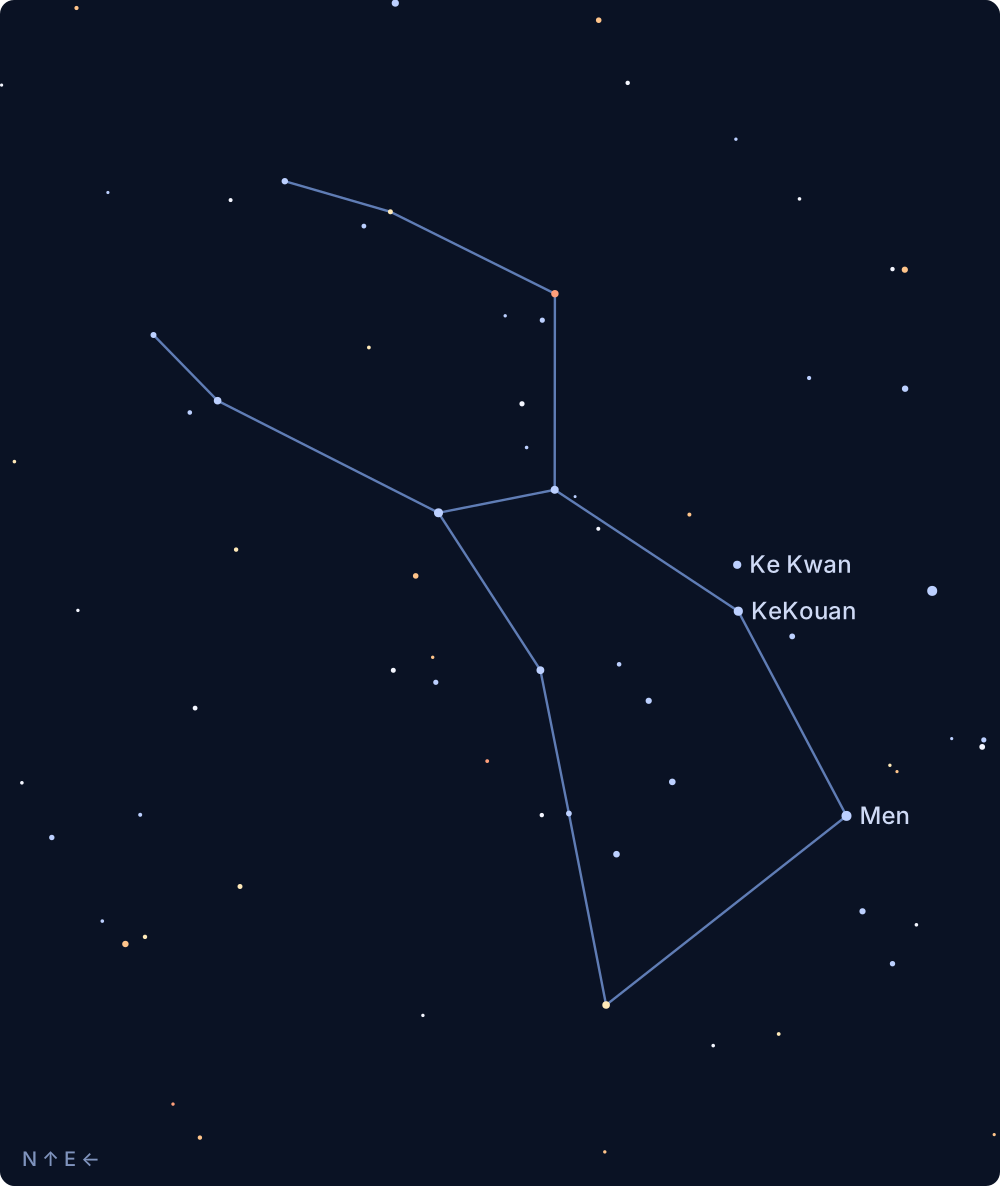
- Best season
- Summer
- Best months
- May through July, very low in the south on summer evenings
- Visibility
- Only partly visible, very low in the south, from the southern United States
- Abbreviation
- Lup
How to find it
- Look below Libra and Scorpius, very low in the south, for a group of faint-to-moderate stars.
Brightest stars
- Alpha Lupi
- Beta Lupi
What to look for
- The faint wolf pattern, low on the horizon, from the far southern states.
Binocular and telescope targets
- SN 1006: the remains of the brightest supernova in recorded history
Using it to find other things
- Lupus lies below Libra, between Scorpius and Centaurus.
About this constellation
Lupus is a southern constellation that only partly rises from the United States. It was known to ancient observers as an unnamed beast held by the Centaur.
A supernova seen in 1006 AD in Lupus was brighter than any other star-like event in recorded history, bright enough to be seen in daytime.
Related guides
Visibility depends on your latitude, the date, and the time of night. The months above assume a typical evening from the contiguous United States, so use a planetarium app to confirm what is up tonight. Never look at the Sun through binoculars or a telescope without a proper solar filter.
Star positions: Hipparcos and Bright Star catalogues via d3-celestial (BSD-3-Clause, © 2015 Olaf Frohn).