
Lepus
The Hare
A small winter constellation crouched below Orion's feet, easy to find because it sits right under the Hunter.
- Best season
- Winter
- Best months
- December through March, low in the south on winter evenings
- Visibility
- Visible from the United States, low in the south
- Abbreviation
- Lep
How to find it
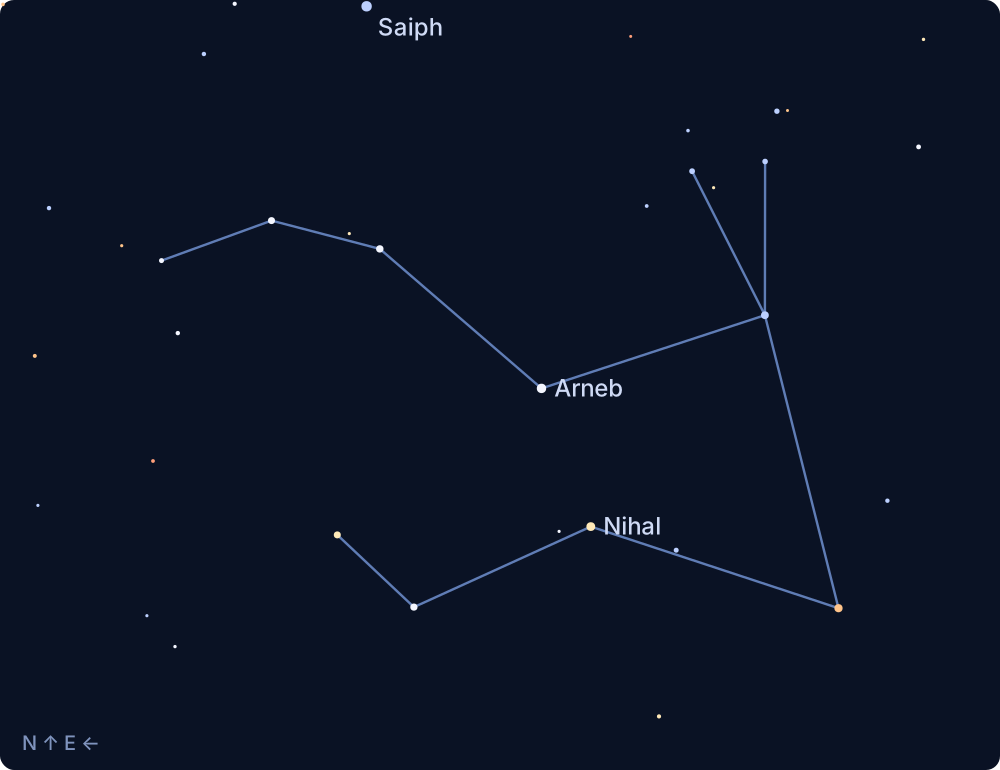
- Look directly below Orion's feet and Rigel for a small, lopsided group of stars. Arneb is the brightest.
Brightest stars
- Arneb (the hare's heart, a yellow-white supergiant)
- Nihal
What to look for
- Hind's Crimson Star (R Leporis), a very red variable star that needs binoculars or a small telescope.
Binocular and telescope targets
- M79: a globular cluster visible in small telescopes
- Hind's Crimson Star: a deep red variable star
Using it to find other things
- Lepus sits below Orion, as if the Hare were being chased by the Hunter and his dogs.
About this constellation
Lepus is easy to place because it lies beneath Orion's feet. The hare is small, but it sits in a rich part of the winter sky.
Hind's Crimson Star is among the reddest stars known, and it changes in brightness over a cycle of more than a year.
Related guides
Visibility depends on your latitude, the date, and the time of night. The months above assume a typical evening from the contiguous United States, so use a planetarium app to confirm what is up tonight. Never look at the Sun through binoculars or a telescope without a proper solar filter.
Star positions: Hipparcos and Bright Star catalogues via d3-celestial (BSD-3-Clause, © 2015 Olaf Frohn).