
Hercules
The Strongman
A large summer constellation with a four-star Keystone and M13, the brightest globular star cluster in the northern sky.
- Best season
- Summer
- Best months
- May through September, high in the sky on summer evenings
- Visibility
- Visible from everywhere in the United States
- Abbreviation
- Her
How to find it
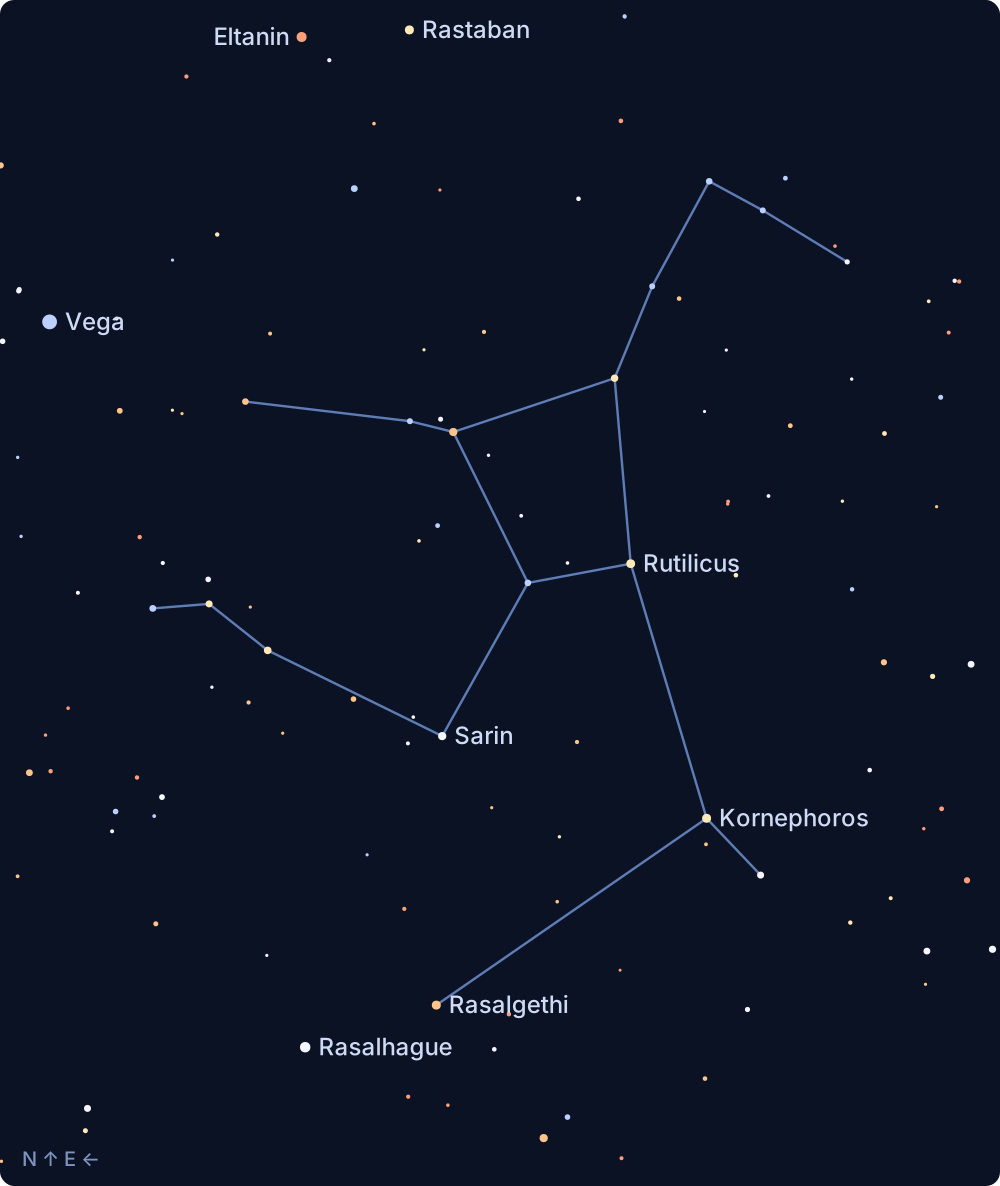
- Look for the Keystone, a lopsided four-star square, between Vega and the arc of Corona Borealis.
- M13 lies between the two stars on the Keystone's western side, closer to the upper one.
Brightest stars
- Kornephoros (the brightest star in Hercules)
- Rasalgethi (a red giant and double star)
What to look for
- M13 as a fuzzy star in binoculars on a dark night.
Binocular and telescope targets
- Great Globular Cluster (M13): hundreds of thousands of stars, the best globular cluster in the northern sky
- M92: another bright globular cluster near the Keystone
- Rasalgethi: a double star with a red giant and a blue-green companion
Using it to find other things
- Hercules sits between Vega and Corona Borealis.
About this constellation
Hercules is a large constellation, but only the Keystone stands out. Start there, then look for M13.
Rasalgethi, which marks the strongman's head, is a red giant star. Its name comes from an Arabic phrase meaning 'head of the kneeler.'
Related guides
Visibility depends on your latitude, the date, and the time of night. The months above assume a typical evening from the contiguous United States, so use a planetarium app to confirm what is up tonight. Never look at the Sun through binoculars or a telescope without a proper solar filter.
Star positions: Hipparcos and Bright Star catalogues via d3-celestial (BSD-3-Clause, © 2015 Olaf Frohn).