
Delphinus
The Dolphin
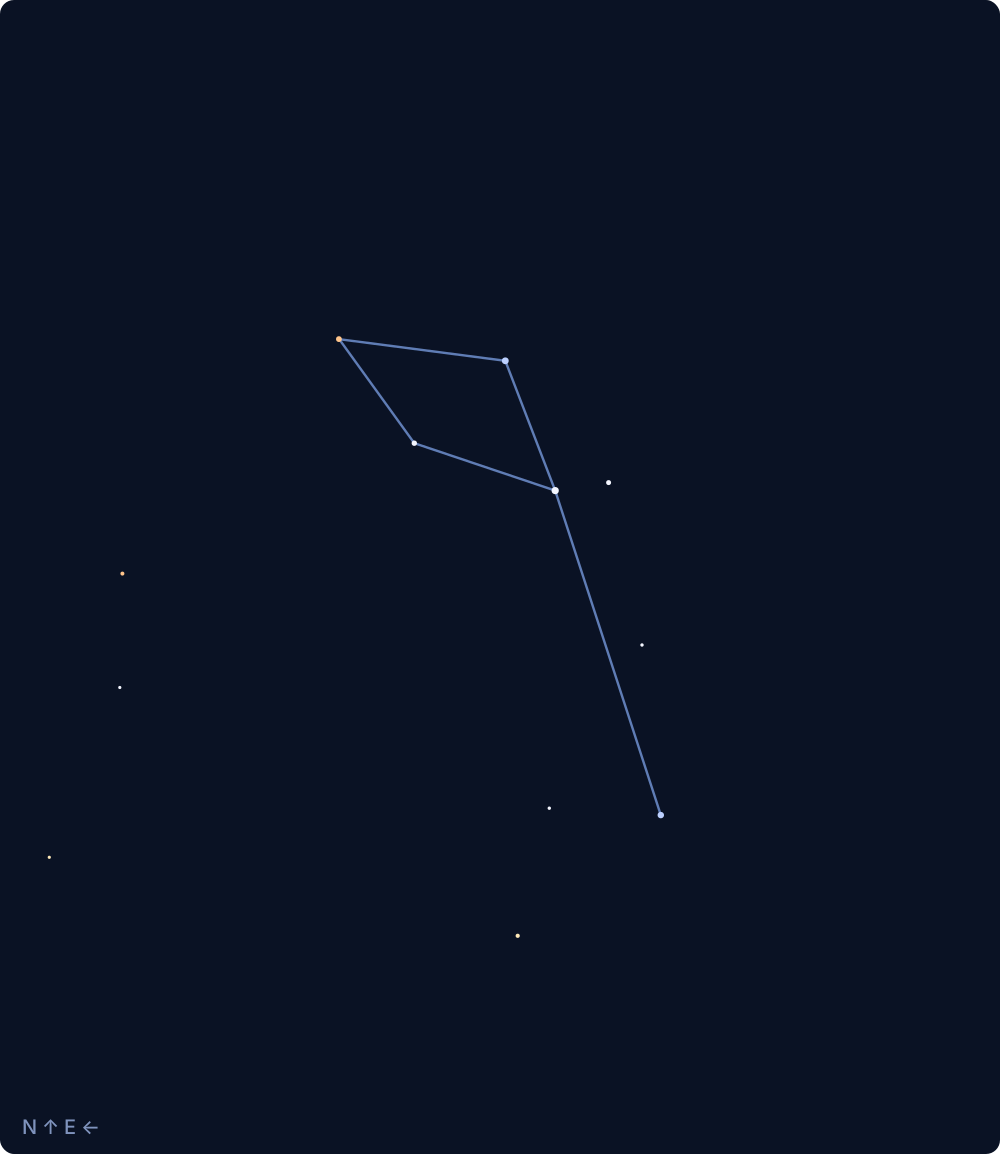
A small, neat constellation, a diamond of four stars with a short tail, that looks like a dolphin leaping.
- Best season
- Summer
- Best months
- June through October, high in the south on summer evenings
- Visibility
- Visible from everywhere in the United States
- Abbreviation
- Del
How to find it
- Look to the left of Altair, a little above it, for a small diamond of four stars with a tail trailing from one corner.
- The diamond is often called Job's Coffin.
Brightest stars
- Rotanev
- Sualocin
- Gamma Delphini (a double star in small telescopes)
What to look for
- The diamond shape, which stands out in a dark sky despite its small size.
Binocular and telescope targets
- Gamma Delphini: a pretty double star in small telescopes
Using it to find other things
- Delphinus sits near Altair and Aquila, along the edge of the Milky Way.
About this constellation
Delphinus is one of the easiest small constellations to recognize. Its diamond of four stars looks like a tiny cluster at first glance.
Two of its stars have unusual names, Sualocin and Rotanev. They are the Latinized name of an astronomer's assistant, Niccolò Cacciatore, spelled backward.
Related guides
Visibility depends on your latitude, the date, and the time of night. The months above assume a typical evening from the contiguous United States, so use a planetarium app to confirm what is up tonight. Never look at the Sun through binoculars or a telescope without a proper solar filter.
Star positions: Hipparcos and Bright Star catalogues via d3-celestial (BSD-3-Clause, © 2015 Olaf Frohn).