
Corvus
The Crow
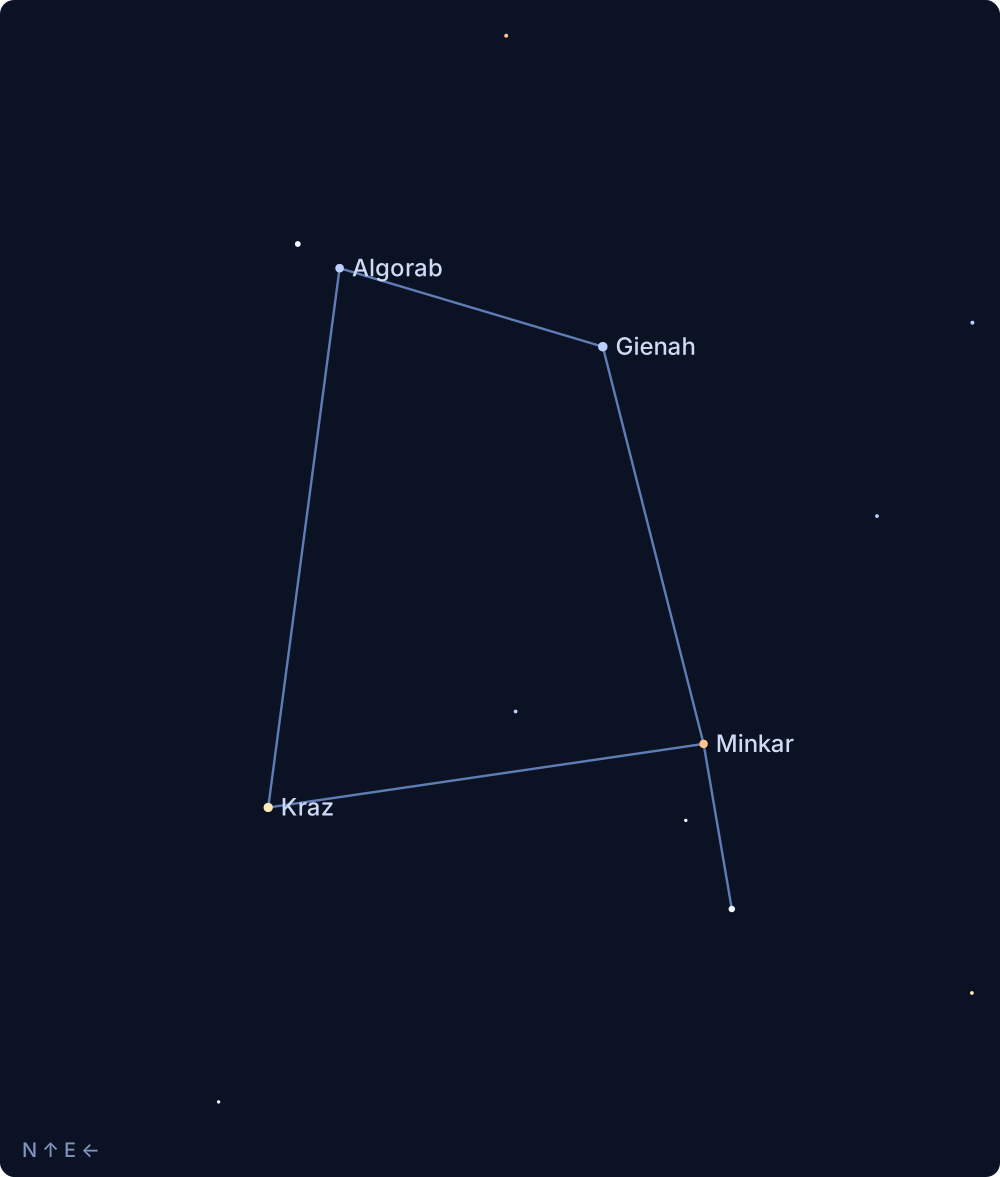
A small spring constellation, a lopsided quadrilateral of four fairly bright stars, just southwest of Spica.
- Best season
- Spring
- Best months
- April through June, low in the south on spring evenings
- Visibility
- Visible from the United States, low in the south
- Abbreviation
- Crv
How to find it
- Follow the Big Dipper's handle to Arcturus and Spica, then keep going to a small quadrilateral of stars southwest of Spica.
- The four stars of Corvus are all about the same brightness, which makes it stand out.
Brightest stars
- Gienah
- Kraz
- Algorab
- Minkar
What to look for
- The quadrilateral: a compact pattern of four stars of similar brightness in a sparse region.
Binocular and telescope targets
- Antennae Galaxies: two colliding galaxies, a challenge for medium and large telescopes
Using it to find other things
- Corvus sits southwest of Spica.
About this constellation
Corvus is easy to find because the four stars of its main pattern are bright for such a sparse stretch of sky. They make a lopsided quadrilateral.
The Antennae Galaxies in Corvus are a famous pair of galaxies in collision, but they need a fairly large telescope to see.
Related guides
Visibility depends on your latitude, the date, and the time of night. The months above assume a typical evening from the contiguous United States, so use a planetarium app to confirm what is up tonight. Never look at the Sun through binoculars or a telescope without a proper solar filter.
Star positions: Hipparcos and Bright Star catalogues via d3-celestial (BSD-3-Clause, © 2015 Olaf Frohn).