
Corona Borealis
The Northern Crown
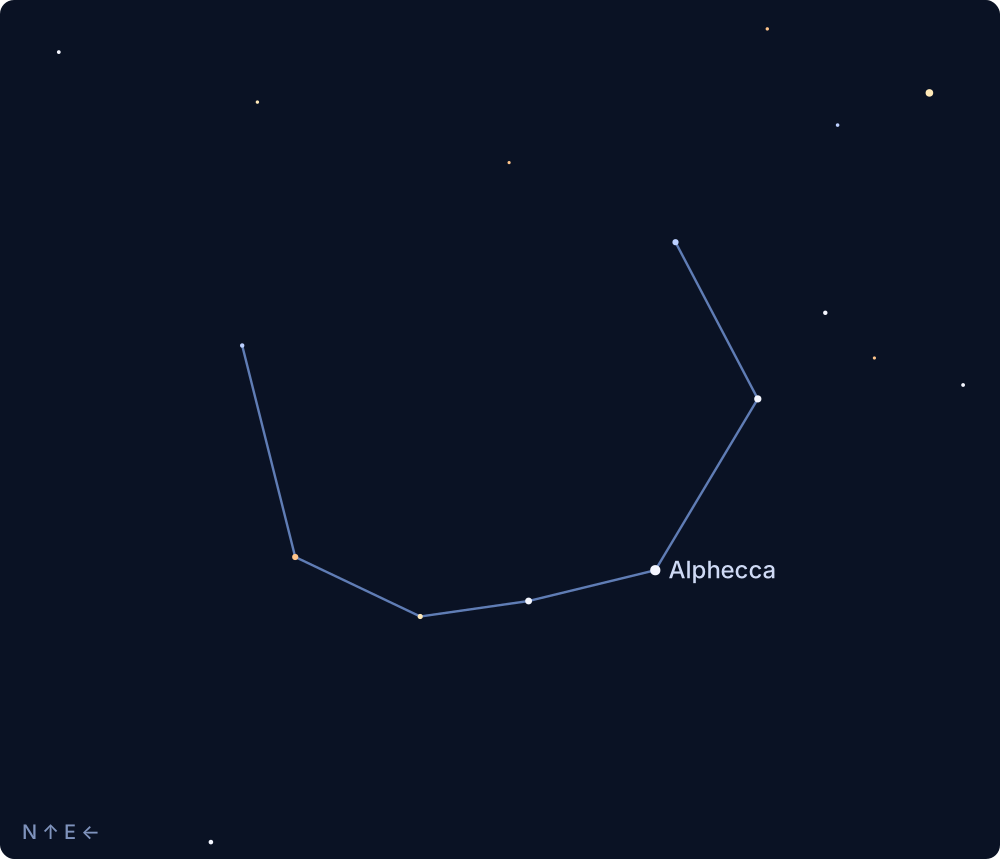
A small, graceful semicircle of stars, the Northern Crown, which sits between Boötes and Hercules.
- Best season
- Summer
- Best months
- May through August, high in the south to overhead on late spring and summer evenings
- Visibility
- Visible from everywhere in the United States
- Abbreviation
- CrB
How to find it
- Look east of Arcturus for a small, almost perfect arc of about seven stars.
- Alphecca is the brightest, a little off the curve.
Brightest stars
- Alphecca (the jewel of the crown, also called Gemma)
What to look for
- The shape: a small, delicate arc that stands out in a dark sky.
- T Coronae Borealis, a star that flares into view unpredictably. Check current news before looking.
Binocular and telescope targets
- T Coronae Borealis: a recurrent nova that has flared up in the past and may do so again
Using it to find other things
- Corona Borealis sits beside Boötes and Hercules.
About this constellation
The Northern Crown is among the most recognizable small constellations, because its stars form such a neat curve.
One star in the crown, T Coronae Borealis, is a recurrent nova. It is normally too faint to see, but it has flared briefly in the past. Astronomers watch it closely, so check current news before looking.
Related guides
Visibility depends on your latitude, the date, and the time of night. The months above assume a typical evening from the contiguous United States, so use a planetarium app to confirm what is up tonight. Never look at the Sun through binoculars or a telescope without a proper solar filter.
Star positions: Hipparcos and Bright Star catalogues via d3-celestial (BSD-3-Clause, © 2015 Olaf Frohn).