
Field Guide / Clouds & Weather Signs
Stratus
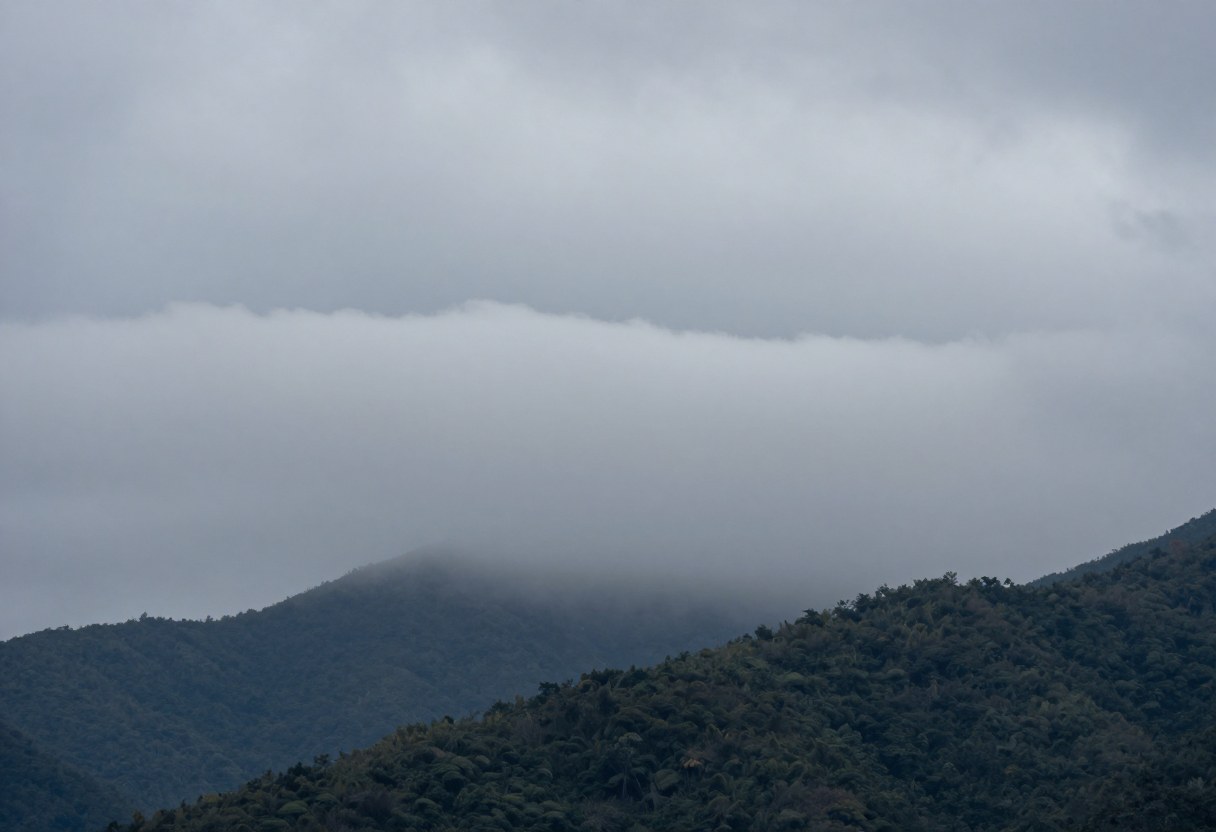
A low, flat, gray layer, like a lid on the landscape. It brings a dull, damp day with mist or drizzle, and it is like fog that has not reached the ground.
- Height
- Low Clouds
- Abbreviation
- St
- Typical altitude
- Below about 6,500 ft (2,000 m)
- Usually means
- Dull and damp
How to recognize it
- A uniform gray layer with a flat, featureless base.
- It can sit just above hills and treetops.
- When thin, you may see the sun's outline.
What it usually means
- Often brings drizzle, mist, or light snow, rarely heavy rain.
- Stratus that touches the ground is fog.
- It can burn off by midday, or linger for days in cool, humid weather.
What to do outdoors
- Dress for damp and cool conditions, since mist can soak clothing.
- On hills, visibility can drop quickly, so stay on the trail and carry a map or GPS.
Often confused with
- Fog: the same kind of layer, but at the ground.
- Nimbostratus: thicker and darker, with steady rain or snow.
Field notes
Stratus makes for gloomy days but is rarely dangerous by itself. The main hazards are damp, cool conditions and lost visibility on hills.
Related guides
Cloud signs are rough guides, not forecasts. Always check the National Weather Service forecast at weather.gov before and during a trip, carry a way to receive alerts, and treat any watch or warning as a reason to change your plans. If you can hear thunder, you are close enough to be struck by lightning.