
Field Guide / Clouds & Weather Signs
Altostratus
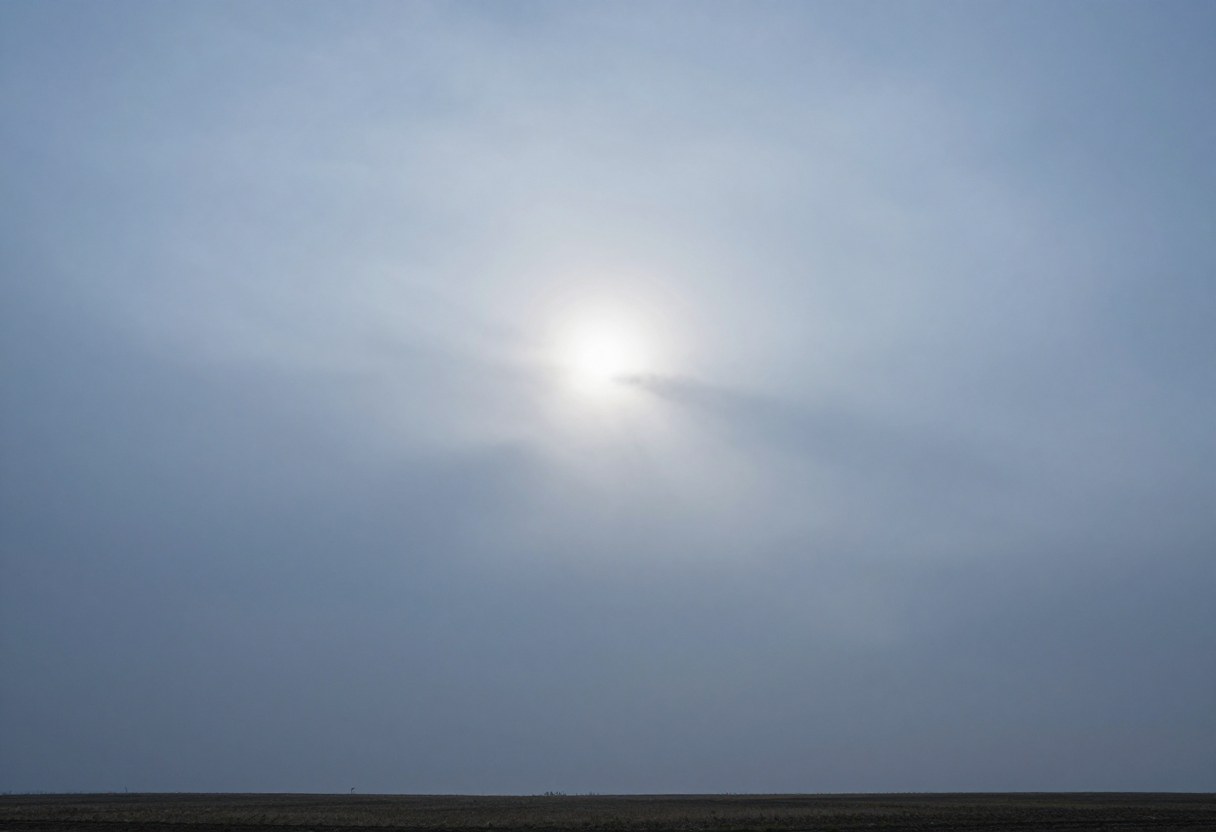
A gray-blue sheet over the whole sky through which the sun shows only as a dim disc. It often comes before steady rain or snow.
- Height
- Mid-Level Clouds
- Abbreviation
- As
- Typical altitude
- About 6,500–20,000 ft (2,000–6,000 m)
- Usually means
- Rain or snow likely
How to recognize it
- A uniform gray or blue-gray sheet, often covering the whole sky.
- The sun looks like a pale disc seen through frosted glass.
- No halo and no clear shadows on the ground.
What it usually means
- Often thickens into nimbostratus, and steady rain or snow commonly follows within several hours.
- A sky that was thin and milky in the morning and has turned gray by midday is a classic sign of an approaching warm front.
What to do outdoors
- Expect rain or snow and plan for it: set up camp early, put on rain layers, and give yourself time to get to shelter.
- In cold weather, wet and wind can cause hypothermia, so keep dry clothing available.
Often confused with
- Cirrostratus: thinner and whiter, with a sharp sun and often a halo.
- Nimbostratus: darker and thicker, with rain already falling.
Field notes
Altostratus is the stage between a thin halo sky and a rainy one. When the sun fades to a pale disc, the rain is usually only a few hours away.
Related guides
Cloud signs are rough guides, not forecasts. Always check the National Weather Service forecast at weather.gov before and during a trip, carry a way to receive alerts, and treat any watch or warning as a reason to change your plans. If you can hear thunder, you are close enough to be struck by lightning.