
.300 AAC Blackout
Also called: .300 Blackout, 300 BLK, .300 BLK
A short, wide cartridge made to fit AR-15 rifles. It works best for deer, hogs, and varmints at closer range, and it shoots well suppressed.
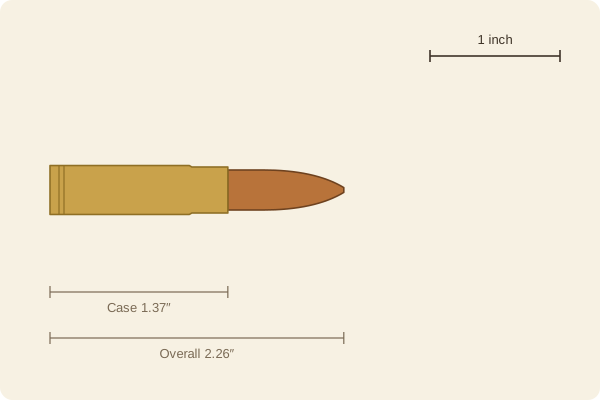
- Type
- Centerfire Rifle
- Bullet diameter
- .308 in
- Case length
- 1.368 in
- Overall length
- 2.26 in
- Typical bullet weights
- 110 to 220 grains
- Typical muzzle velocity
- About 1,000 fps (subsonic) to 2,350 fps (supersonic)
- Recoil
- Light recoil
- Quarry
- Deer, hogs & pronghorn, Varmints & predators
- Typical range
- Deer and hogs to about 150 to 200 yards
- Availability
- Common, but costs more than .223
Safety: A .300 Blackout round can physically fit in a 5.56 or .223 chamber, but it is a much wider bullet and can cause a dangerous failure when fired. Mark your magazines clearly and never keep both cartridges in one place.
What it is good for
- Short-range deer and hog hunting from an AR-style rifle.
- Hunters who plan to use a suppressor, where subsonic loads are quiet.
- Varmints and predators at modest range.
Where it falls short
- The supersonic bullet loses energy and drops faster than larger cartridges, so shots must stay close.
- Subsonic loads are for suppressed shooting and are not meant for hunting larger game at distance.
- It is easy to confuse with .223, with serious consequences (see the safety note).
Easily confused with
- .223 Remington: uses the same case family and magazines but has a much narrower bullet; do not mix them.
Field notes
The .300 Blackout was designed so an AR-15 owner could switch calibers by changing only the barrel. For hunters it is a short-range option that handles recoil gently and is easy to suppress.
Related guides
Numbers are typical factory-load figures, not guarantees. Use only ammunition that matches the cartridge stamped on your firearm and is made by a reputable manufacturer, and follow the manual. Legal game cartridges, minimum calibers, and non-toxic shot rules differ by state and area. Check your state's current regulations; our state resources directory links to each state's official rules. Not sure which rifle to buy? Try our hunting rifle wizard.