Choosing Your First Hunting Rifle: A Beginner's Guide
A practical walkthrough of caliber, action type, and fit for hunters buying their first rifle.
Published August 10, 2026 · Updated August 11, 2026
How to Use This Guide
Buying a first hunting rifle feels complicated because it's really five smaller decisions stacked together: what you're hunting, how far you'll shoot, what action type you want, what caliber fits both the game and your recoil tolerance, and what budget makes sense. Work through the sections in order. By the end you'll have a short list of calibers and configurations instead of an overwhelming wall of options.
1. Start With What You're Hunting
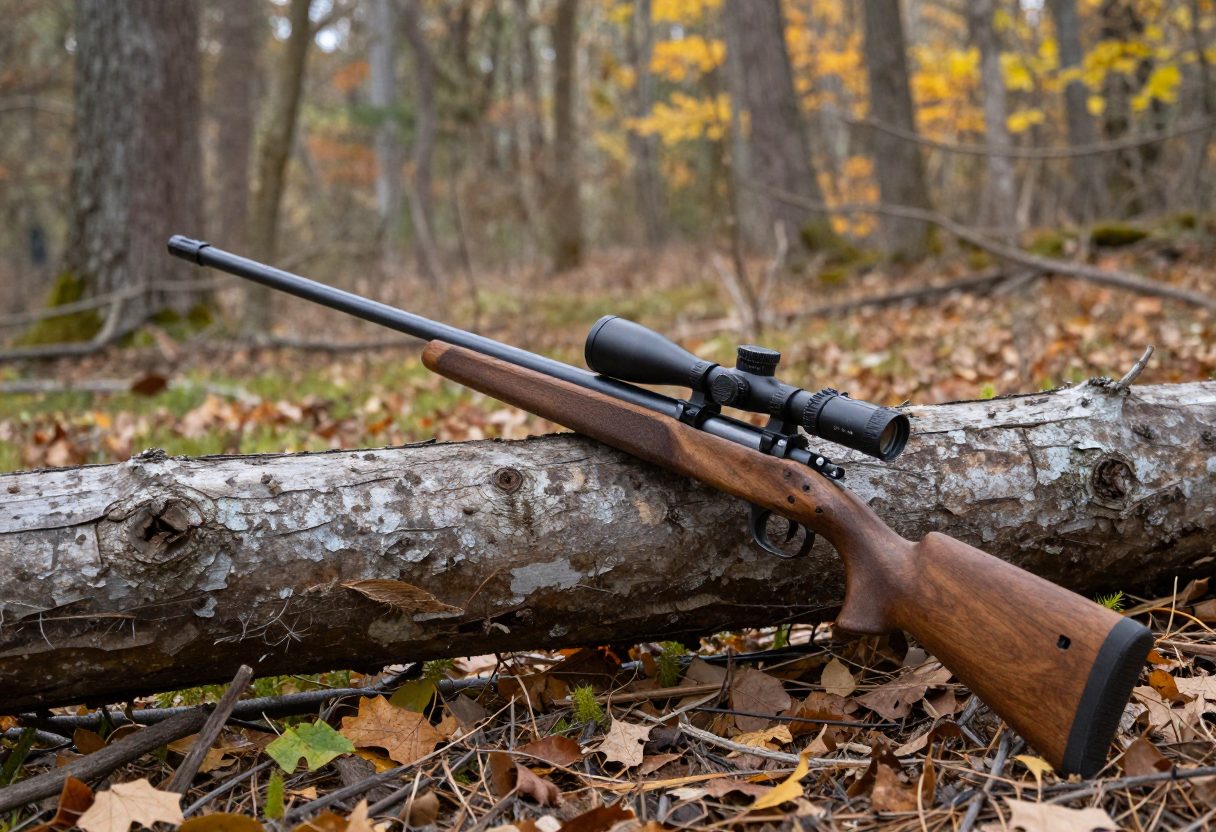
Caliber and rifle weight should follow the animal, not the other way around. Most new hunters over-buy power "just in case" and end up with a rifle that kicks too hard to shoot well.
| Game | Typical Range | Caliber Examples | Notes |
|---|---|---|---|
| Small predators / varmints (coyote, fox, groundhog) | 50–300 yds | .223 Rem, .22-250 Rem, .243 Win | Flat-shooting, low recoil, pelt-friendly |
| Whitetail / mule deer, antelope | 50–250 yds | .243 Win, 6.5 Creedmoor, .270 Win, .308 Win, 7mm-08 | The "do everything" deer category |
| Elk, large mule deer, black bear | 50–300 yds | .270 Win, 7mm Rem Mag, .30-06, .308 Win | Needs more retained energy at distance |
| Moose, big bear, dangerous game | 50–200 yds | .300 Win Mag, .338 Win Mag, .375 H&H | Heavy recoil; usually not a first-rifle category |
| Turkey/small game with a rifle | Close range | .22 LR, .17 HMR (where legal) | Not for deer-sized game |
Rule of thumb for a first rifle: if you expect to hunt mostly deer-sized game in typical woodland or mixed terrain, a mid-power cartridge (6.5 Creedmoor, .270 Win, .308 Win, or .30-06) covers the overwhelming majority of North American hunting situations and is a safe "one rifle to start" choice.
2. Be Honest About Your Realistic Shooting Distance
This matters more than magazine articles suggest. Most game animals in North America are taken inside 200 yards, and a large share inside 100 yards, especially in the East, Midwest, and forested terrain. Western open-country hunting can push shots to 300–400 yards or beyond.
- Under 150 yards (thick woods, tree stands, brush): Cartridge choice matters less than shot placement. Almost any deer-appropriate caliber works fine.
- 150–300 yards (mixed terrain, field edges): A flatter-shooting cartridge (.270 Win, 6.5 Creedmoor, 7mm-08) gives more margin for range-estimation error.
- 300+ yards (open West, prairie, mountain): Prioritize a flat trajectory, good ballistic coefficient bullets, and a scope with useful holdover markings or a dialing turret. This distance category also demands more practice time than most beginners initially expect.
A good practice goal: be able to keep shots inside an 8-inch circle (roughly a deer's vital zone) at your maximum intended range, from field positions, not just a bench.
3. Action Types Explained
The "action" is how the rifle loads, fires, and ejects a round. Each has trade-offs in cost, reliability, accuracy, and follow-up shot speed.
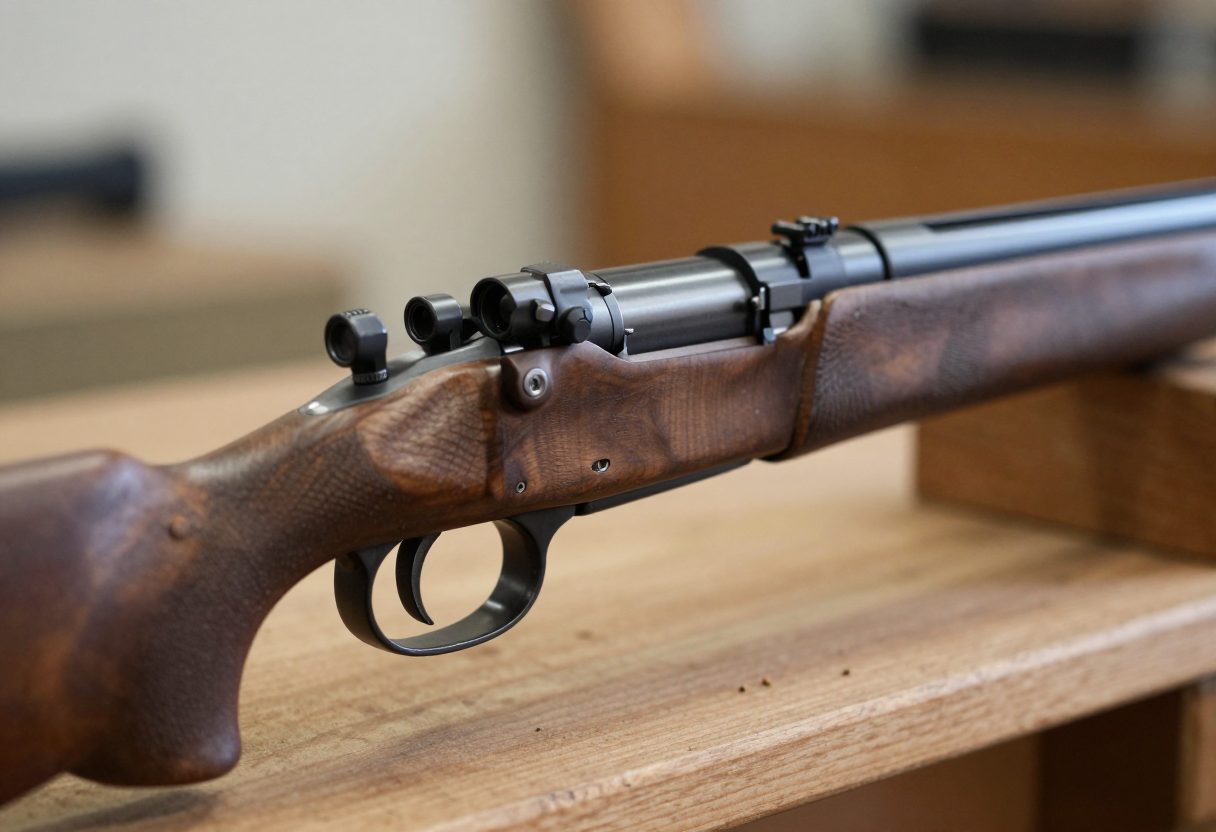
Bolt-Action
The default recommendation for most first-time hunters.
- Pros: Most inherently accurate common action type; simple, few moving parts; widest range of calibers and price points; easiest to maintain; very reliable in bad weather/mud/cold.
- Cons: Slower follow-up shots than semi-autos; requires practicing smooth bolt cycling.
- Best for: Nearly everyone starting out, across all game categories.
Lever-Action
- Pros: Fast handling in brush, traditional feel, generally lighter and shorter, good for close-range woods hunting.
- Cons: Typically limited to shorter-range cartridges (.30-30 Win, .35 Rem, .45-70), tubular magazines usually require flat- or round-nose bullets which limits long-range ballistics.
- Best for: Dense woods deer/hog hunting under 150 yards; hunters who value tradition and handling speed.
Semi-Automatic
- Pros: Fastest follow-up shots, softer felt recoil due to the action absorbing some energy, popular for hog hunting where multiple shots matter.
- Cons: More moving parts to clean and maintain, historically slightly less inherently accurate than a good bolt gun (modern semi-autos have closed this gap considerably), heavier, generally pricier for comparable accuracy.
- Best for: Hog control, coyote hunting, hunters who prioritize quick second shots over ultimate precision — see our predator and hog hunting guide for the techniques these hunts actually call for.
Pump-Action
- Pros: Faster cycling than a bolt with more direct manual control than a semi-auto (useful in extreme cold where semi-autos can be finicky).
- Cons: Niche category, fewer models and caliber choices, cycling can disturb aim more than a bolt if not practiced.
- Best for: A smaller niche of hunters, largely from specific regional traditions (e.g., some Northeastern deer hunters).
Single-Shot / Break-Action
- Pros: Simple, light, often the most affordable way to get a high-quality barrel, teaches shot discipline.
- Cons: No follow-up shot without reloading.
- Best for: Budget-conscious buyers, youth hunters, or anyone prioritizing simplicity and weight over capacity.
Recommendation for a true first rifle: a bolt-action in a common caliber is the safest starting point. It's the easiest to learn to shoot accurately, cheapest to feed with ammo variety, and easiest to get serviced anywhere.
4. Understanding Recoil (and Why It Matters More Than Power)
Recoil is the single biggest reason new hunters develop a flinch, which then wrecks accuracy far more than any cartridge choice does. A rifle you can shoot comfortably and accurately beats a "more powerful" one you're afraid to practice with.
Felt recoil is driven by three things:
- Cartridge — bigger case, heavier bullet, more powder = more recoil energy.
- Rifle weight — a heavier rifle absorbs more recoil energy than a light one in the same caliber.
- Stock design and fit — a recoil pad, straight-line stock design, and good cheek weld all reduce felt recoil even when the physics stay the same.
Rough Recoil Comparison (approximate free recoil energy, standard loads)
| Cartridge | Felt Recoil | Comparable To |
|---|---|---|
| .223 Rem | Very light | Common .22 centerfire, easy for any shooter |
| 6.5 Creedmoor | Light-moderate | Comfortable for most adult and teen shooters |
| .243 Win | Light-moderate | A common youth/first-deer-rifle choice |
| .270 Win | Moderate | Manageable with practice |
| .308 Win | Moderate | Similar to .270, slightly more thump |
| .30-06 Spring. | Moderate-firm | Still very manageable in a rifle of typical weight |
| 7mm Rem Mag | Firm | Noticeably more than the .30-06 |
| .300 Win Mag | Firm-heavy | Often uncomfortable without a good pad/muzzle brake |
| .338 Win Mag / .375 H&H | Heavy | Not recommended as a first rifle for most shooters |
Practical tip: If you're unsure, err toward less recoil. A well-placed shot from a 6.5 Creedmoor or .308 Win kills deer-sized game just as dead as an overbuilt magnum — and you'll actually enjoy practicing enough to place that shot well.
5. Rifle Fit: The Most Overlooked Factor
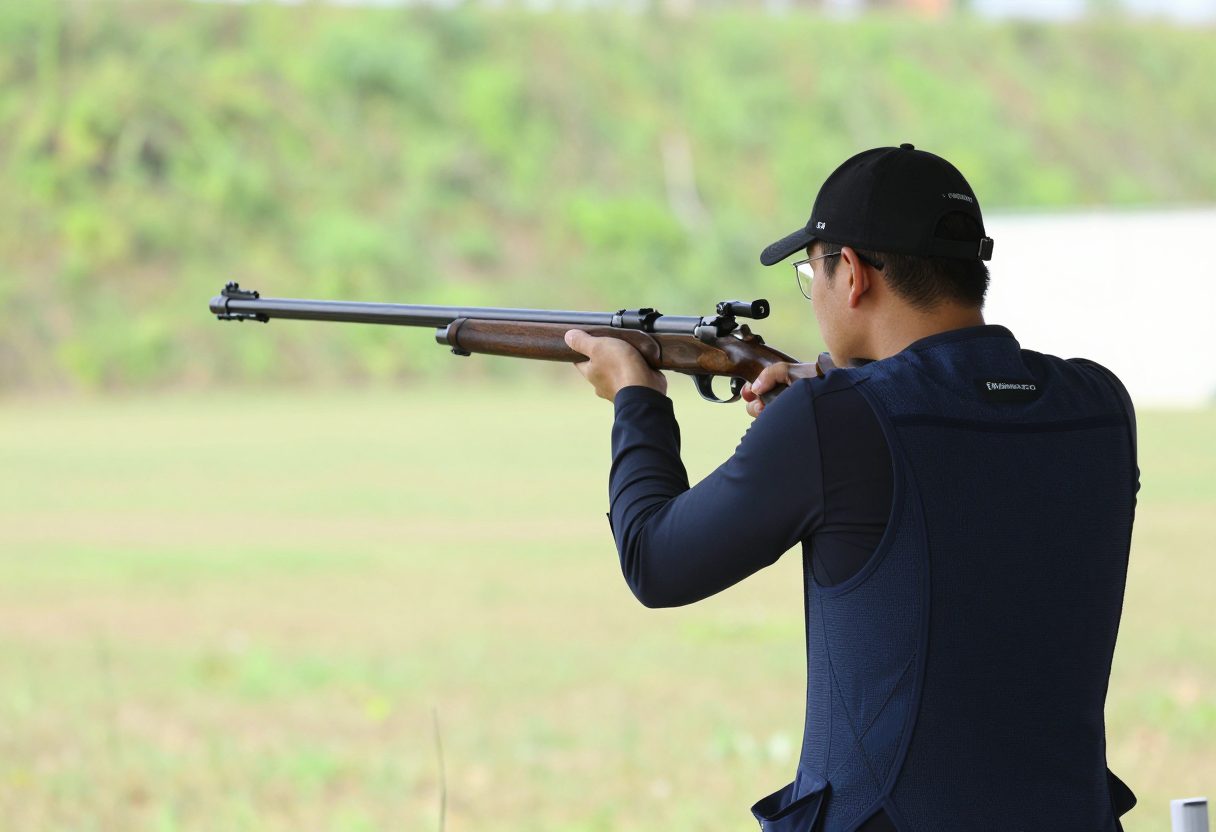
A rifle that doesn't fit your body will kick harder, point less naturally, and be harder to shoot consistently — regardless of caliber.
- Length of Pull (LOP): The distance from the trigger to the end of the buttstock. Too long and you'll struggle to mount the rifle quickly or get a full cheek weld; too short and your thumb can strike your nose during recoil. Many rifles ship with a "standard" LOP (~13.5–14 in) sized for an average adult male — shorter shooters, some women, and younger hunters often benefit from a shorter LOP, which can usually be adjusted with stock spacers, a different recoil pad, or an adjustable stock.
- Comb height: Should let your eye line up naturally with the scope without straining your neck up or mashing your cheek down.
- Weight and balance: A rifle that's comfortable on a bench can feel heavy after a few miles of hiking or awkward when shouldered quickly from a tree stand. If you can, handle the rifle (or a similar model) in person before buying, and mount it to your shoulder several times to check natural pointability.
- Try before you buy when possible: Gun shops, rental ranges, and hunting mentors are the best way to test fit and recoil before committing.
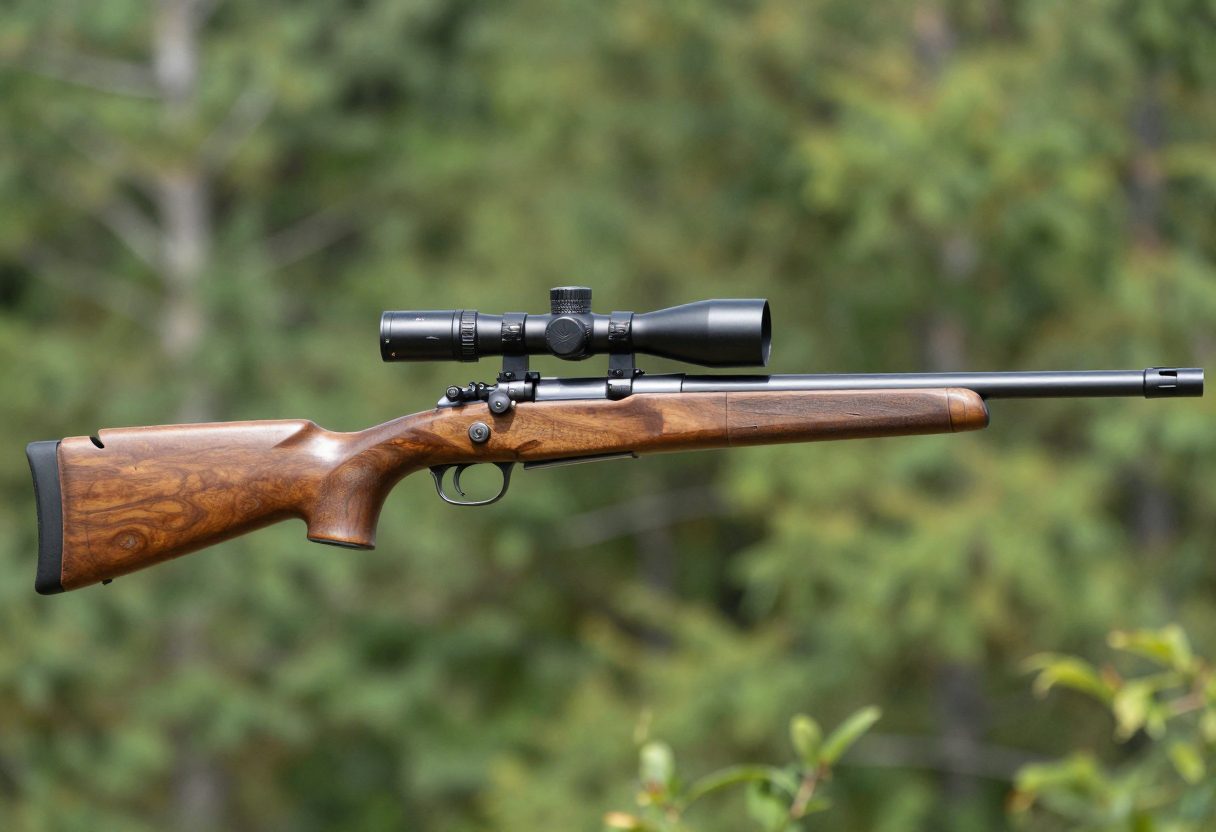
6. Optics: Matching a Scope to the Rifle's Job
The rifle is only half the system — for anything beyond iron-sight ranges, the scope matters as much as the barrel.
- Close woods hunting (under 150 yds): A lower-power scope (1-4x or 2-7x) with a wide field of view helps you find game quickly in brush.
- General all-around deer/elk hunting: A 3-9x40mm scope remains a proven, affordable, versatile choice.
- Open-country / longer range: A variable scope in the 4-16x or similar range, ideally with clear holdover marks (a "BDC" reticle) or a reliable dialing turret, paired with practice at your intended distances.
- Budget note: Spending disproportionately on the scope relative to the rifle is a common and often wise trade-off — a mediocre rifle with a great scope will usually outperform a great rifle with a poor scope, because a poor scope introduces its own aiming error and can fail to hold zero.
7. Budget Planning
A first hunting rifle setup typically breaks down into more than just the rifle's price tag:
| Item | Typical Range (USD, approximate) |
|---|---|
| Rifle (new, entry-to-mid-tier bolt action) | $400–$900 |
| Scope (quality entry-to-mid-tier) | $150–$500 |
| Mounting rings/base + professional mounting | $30–$100 |
| Ammunition for sighting-in and practice | $40–$100+ |
| Sling, case, cleaning kit | $50–$150 |
| Total realistic first setup | ~$700–$1,800 |
Budget tips:
- Used rifles from reputable brands (bolt actions especially) are often excellent value — a well-maintained used rifle can outperform a cheap new one.
- Buying "combo" packages (rifle + scope pre-mounted) can save money but verify the included scope's quality; some combo scopes are a weak point.
- Factor in ammunition cost per caliber — some cartridges (like .308 Win or .30-06) are widely available and inexpensive; others (specialty magnums) cost significantly more per round, which matters if you plan to practice regularly (you should).
8. Common First-Rifle Caliber Recommendations
These four consistently top "best first deer rifle" recommendations for good reason — wide ammo availability, manageable recoil, and proven effectiveness:
- .308 Winchester — short action, mild recoil, extremely common ammo, effective on everything from deer to elk at reasonable ranges.
- .270 Winchester — flat-shooting, long track record, moderate recoil, great all-around choice for deer/pronghorn/elk.
- 6.5 Creedmoor — excellent ballistics, notably light recoil for its performance, huge modern ammo selection, favored by many new hunters and long-range shooters alike.
- .30-06 Springfield — the most versatile "one rifle for almost anything in North America" cartridge, with the widest range of factory bullet weights, at the cost of slightly more recoil than the others above.
If recoil sensitivity is the deciding factor (smaller-framed shooters, younger hunters, or anyone who's recoil-shy), .243 Winchester or 6.5 Creedmoor are excellent starting points that still cleanly handle deer-sized game.
9. Practice, Safety, and Getting Started
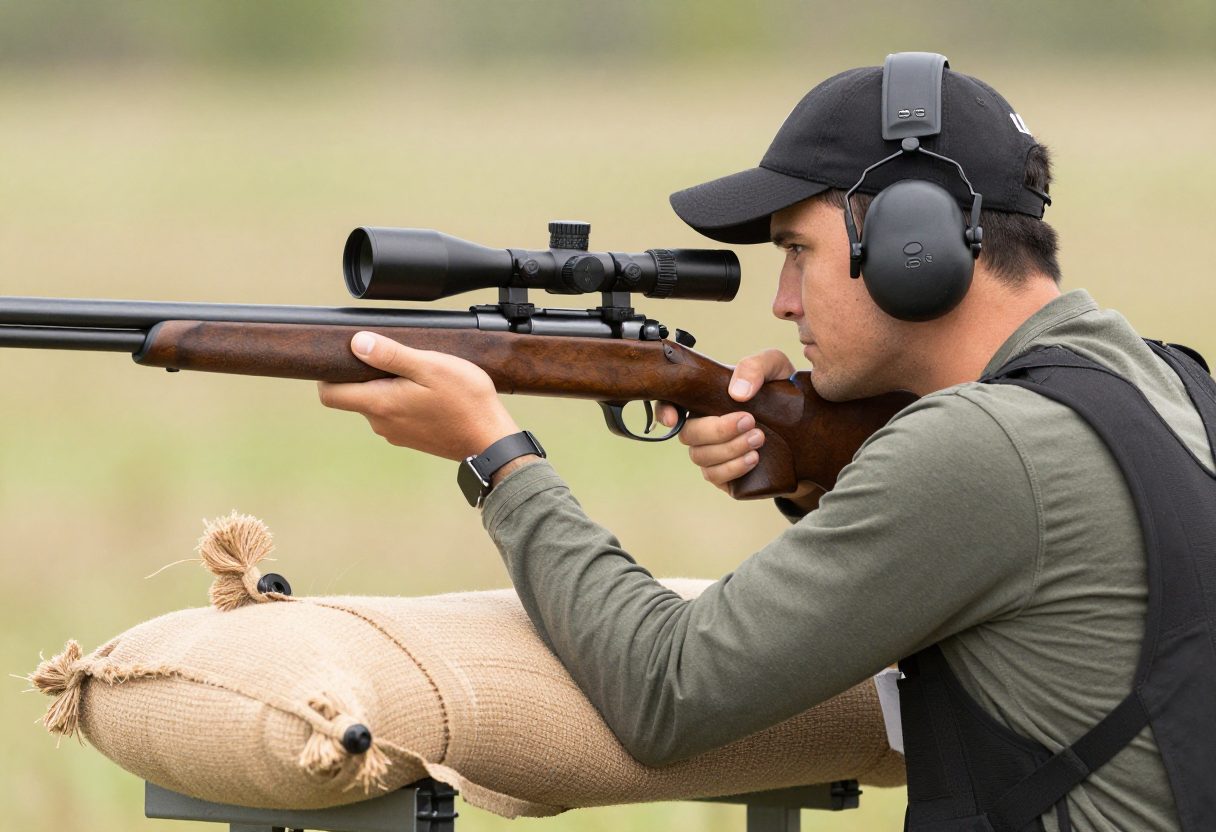
- Sight in before season, not the week before. Confirm zero at your expected hunting distance, not just 100 yards, if you plan to shoot farther — see our step-by-step sighting-in guide for the actual process.
- Practice from field positions, not just a bench — sitting, kneeling, and off a pack or shooting sticks, since that's how most shots are actually taken.
- Take a hunter education course if you haven't already; most states require it for first-time license buyers, and it covers firearm safety fundamentals beyond what this guide addresses.
- Learn your state's regulations on legal calibers, magazine capacity, and action types for the specific game you're pursuing — rules vary significantly by state and even by weapon zone within a state.
- Consider a mentor or a guided first trip. Shooting well and hunting well are related but different skills; time in the field with an experienced hunter accelerates both.
10. Quick Decision Checklist
Use this as a final gut-check before buying:
- I know the primary game I'll hunt (deer, elk, hogs, varmints, etc.)
- I have a realistic sense of my maximum shooting distance
- I've chosen an action type suited to that hunting style (bolt-action if unsure)
- I've picked a caliber that's appropriate for the game and recoil I can shoot comfortably
- I've checked the rifle's fit (length of pull, weight, balance) against my body, ideally in person
- I've budgeted for a scope, mounting, and practice ammo — not just the rifle
- I have a plan to practice from field positions before the season starts
- I've confirmed my state's legal requirements for the game and caliber I'm using
Glossary
- Action: The mechanism that loads, locks, fires, and ejects a cartridge.
- Caliber: The bore diameter and cartridge designation (e.g., .308 Winchester).
- Ballistic Coefficient (BC): A measure of how well a bullet resists wind drag and retains velocity — higher is generally flatter-shooting at distance.
- Length of Pull (LOP): Distance from the trigger to the end of the buttstock.
- Felt Recoil: The recoil energy a shooter actually experiences, influenced by rifle weight, stock design, and cartridge.
- Zero: The distance at which a scope is calibrated so the point of aim matches the point of impact.
- BDC Reticle: "Bullet Drop Compensating" reticle with markings below the crosshair for estimated holdover at various distances.
This guide covers general principles for common North American big-game hunting. Always confirm current local and state regulations, as legal calibers, magazine capacity limits, and season-specific rules vary and change over time.