
20 Gauge
Also called: 20 ga, twenty gauge, 20-bore
A lighter, softer-kicking gauge that handles most upland birds and ducks well, and is popular with youth and smaller-framed hunters.
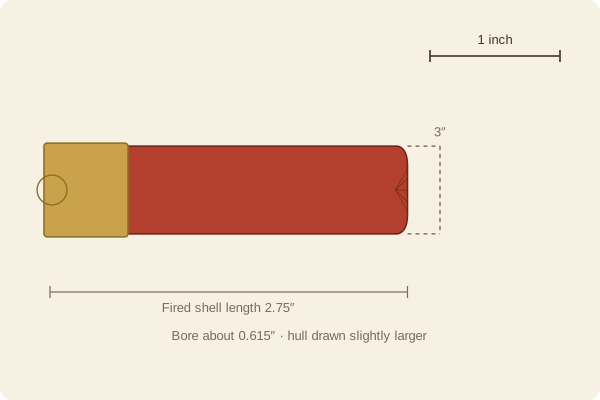
- Type
- Shotgun
- Bore
- .615 in (nominal)
- Shell length
- 2¾ in (also 3 in)
- Typical loads
- Shot loads of about 7/8 to 1⅛ ounces; slugs of about 3/4 ounce or more
- Typical muzzle velocity
- About 1,100 to 1,350 fps for shot; about 1,500 to 1,800 fps for slugs
- Recoil
- Light recoil
- Quarry
- Birds & turkey, Deer, hogs & pronghorn
- Typical range
- Birds to about 35 yards; slugs to about 100 yards
- Availability
- Very common
Safety: Never mix gauges. A 20-gauge shell can slide into a 12-gauge chamber and lodge in the barrel; if a 12-gauge shell is then loaded behind it, firing can burst the barrel and seriously injure you. Check the gauge marked on the barrel and on each shell, and keep different gauges in separate places.
What it is good for
- Upland birds, doves, and ducks.
- Youth and smaller hunters, with less recoil than a 12 gauge.
- Light guns that are easy to carry all day.
Where it falls short
- It carries less shot than a 12 gauge, so patterns are thinner at longer range.
- It is less suited to large geese and turkeys at long distances than a 12 gauge.
- Magnum 3-inch loads give up much of the recoil advantage.
Easily confused with
Field notes
The 20 gauge has a bore of about 0.615 inch. It is common in lightweight upland guns and a popular first shotgun for young shooters.
Related guides
Numbers are typical factory-load figures, not guarantees. Use only ammunition that matches the cartridge stamped on your firearm and is made by a reputable manufacturer, and follow the manual. Legal game cartridges, minimum calibers, and non-toxic shot rules differ by state and area. Check your state's current regulations; our state resources directory links to each state's official rules. Not sure which rifle to buy? Try our hunting rifle wizard.