
Ruffed Grouse
Bonasa umbellus
The classic bird of young northern forests, a wary woodland grouse that explodes into flight at close range.
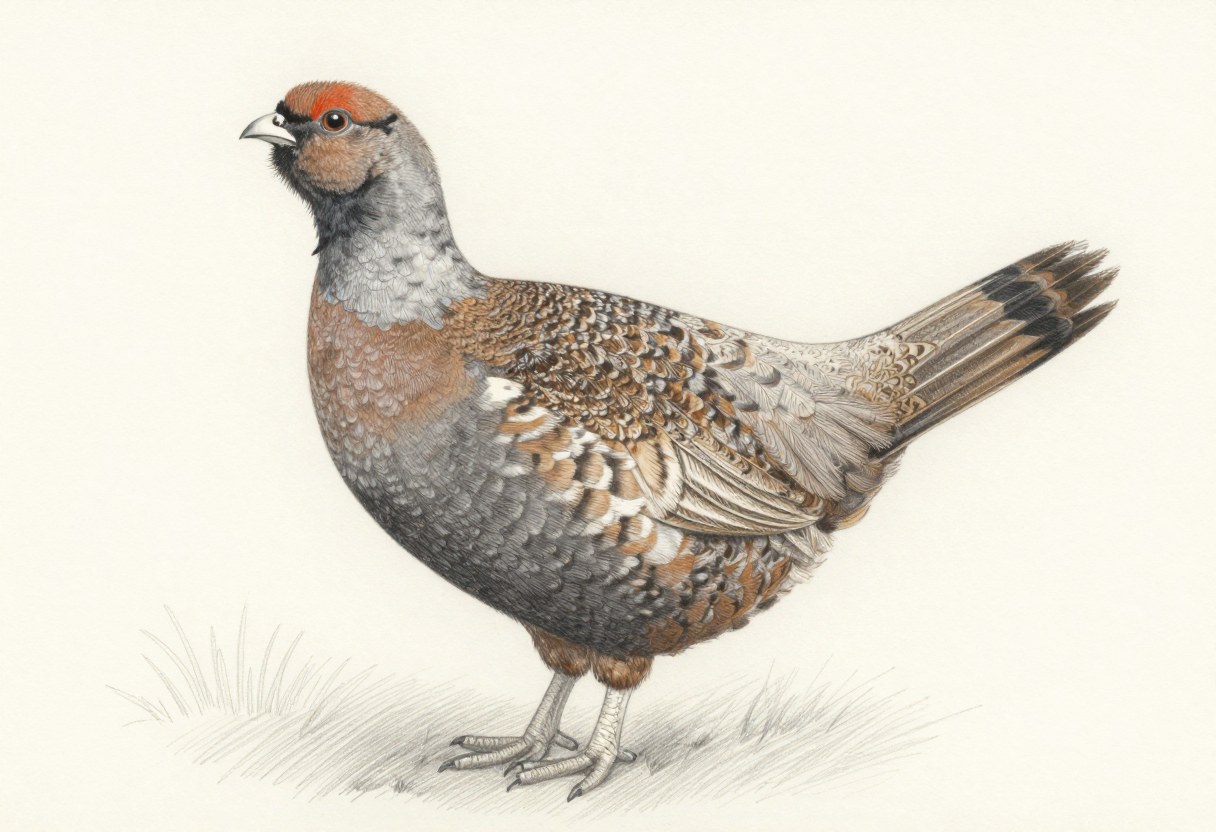
- Type
- Upland Birds
- Movement
- Year-round resident
- Habitat
- Woodlands
- Typical size
- 16–19 in long; about 1.2–1.5 lb
- Range
- Found across the northern forests of the United States, the Appalachians, the Great Lakes states, and the Pacific Northwest
- Seasons
- Seasons usually open in the fall and run into winter, and the daily bag limit is small
How to identify it
- Mottled gray-brown or reddish-brown plumage, with a small crest on the head.
- A dark ruff of feathers on each side of the neck, especially in males.
- A fan-shaped tail with a dark band near the tip.
- In spring, males beat their wings to make a low, drumming sound.
Often confused with
- Ring-necked pheasant (hen): longer and slimmer, with a long pointed tail.
- Spruce grouse: a darker grouse of northern conifer forests whose tail ends in a rusty band rather than a dark one.
What it eats
- Buds and catkins of aspen and birch
- Leaves, berries, and acorns
- Insects, mostly eaten by chicks
How it's hunted
- Walking logging roads and edges of young aspen cover
- Hunting with a pointing or flushing dog
- Short-range shooting in thick cover, usually at flushing birds
Field notes
Ruffed grouse live in young forest, especially aspen stands that have been cut or burned in the past decade or two. Good habitat has thick cover, buds to eat, and logs for drumming.
Males have a small reddish comb above the eye that shows most clearly when they display, and the drawing makes it look larger than it usually appears. Birds flush at close range and fly low through the trees, so most shots are quick. Learning where the cover is thickest matters more than gear.
Related guides
Seasons, bag limits, legal shot types, and licensing vary by state and change every year. Migratory game birds such as ducks, geese, and doves generally require a state license, registration in the Harvest Information Program, and, for waterfowl, a federal duck stamp, and waterfowl must be hunted with non-toxic shot. Check your state's current regulations — our state resources directory links straight to each state's official hunting rules and license portal.