
Ring-necked Pheasant
Phasianus colchicus
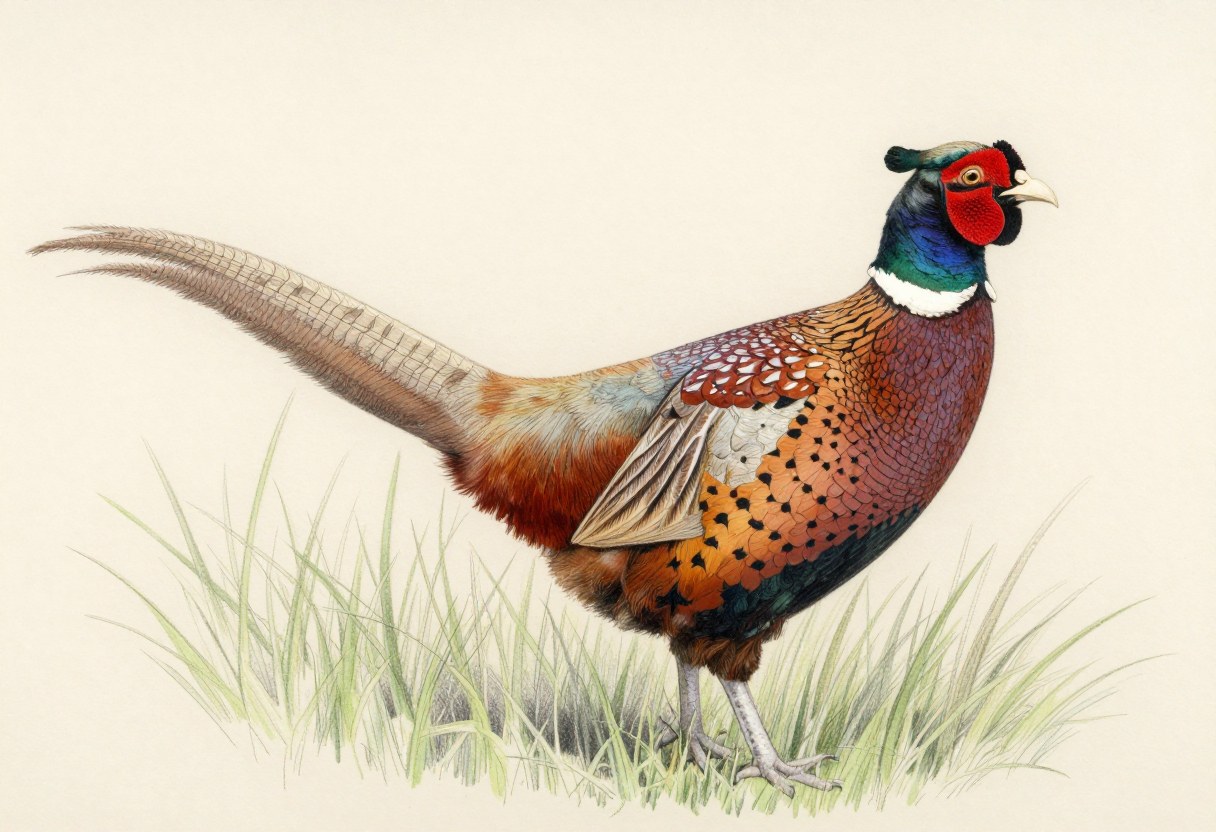
A colorful, long-tailed upland bird from Asia that became a favorite of Midwestern and Great Plains hunters. Roosters have a green head and a white neck ring.
- Type
- Upland Birds
- Movement
- Year-round resident
- Habitat
- Farm fields, Prairie & grassland, Brushland
- Typical size
- Roosters 30–36 in long including the tail and about 2–3 lb; hens are smaller
- Range
- Established across the northern half of the country, with the strongest populations in the Great Plains and upper Midwest
- Seasons
- Seasons usually open in the fall and run into winter, and many states allow roosters only
How to identify it
- Rooster: dark iridescent green head, bright red facial wattle, a thin white ring around the neck, copper-bronze body with black spotting, and a very long, pointed, barred tail.
- Hen: mottled tan and brown, with a shorter tail and no neck ring.
- Roosters flush with a loud cackle and a burst of wingbeats, then glide with the long tail trailing.
Often confused with
- Ruffed grouse: a stocky forest bird with a shorter, fan-shaped tail that has a dark band near the tip.
- Sharp-tailed grouse: a prairie grouse with scaled, spotted plumage and a short pointed tail.
What it eats
- Waste grain such as corn, soybeans, and wheat
- Seeds and weed seeds
- Insects, especially for chicks in spring and summer
How it's hunted
- Walking grass and crop edges with a pointing or flushing dog
- Drives with blockers at the end of cover
- Shooting flushing birds at the moment they rise, mostly at close range
Field notes
Ring-necked pheasants were introduced to North America from Asia in the late 1800s and have become a staple of hunting in the Great Plains and upper Midwest. They do best where farm fields meet grass and cover.
Many states allow only roosters to be taken. A pheasant hunter has to identify a bird in a split second, so learning the hen's mottled look and the rooster's long tail pays off.
Related guides
Seasons, bag limits, legal shot types, and licensing vary by state and change every year. Migratory game birds such as ducks, geese, and doves generally require a state license, registration in the Harvest Information Program, and, for waterfowl, a federal duck stamp, and waterfowl must be hunted with non-toxic shot. Check your state's current regulations — our state resources directory links straight to each state's official hunting rules and license portal.