
Ring-necked Duck
Aythya collaris
A compact diving duck that favors small wooded ponds. The name comes from a faint chestnut ring on the neck, but the white ring on the bill is much easier to see.
- Type
- Ducks
- Movement
- Migratory
- Habitat
- Lakes & ponds, Marshes, Woodlands
- Typical size
- 15–18 in long; about 1.5 lb
- Range
- Breeds across Canada and the northern states and winters across the southern states and along the coasts
- Seasons
- Part of the regular duck season, with a daily bag limit that is often generous
How to identify it
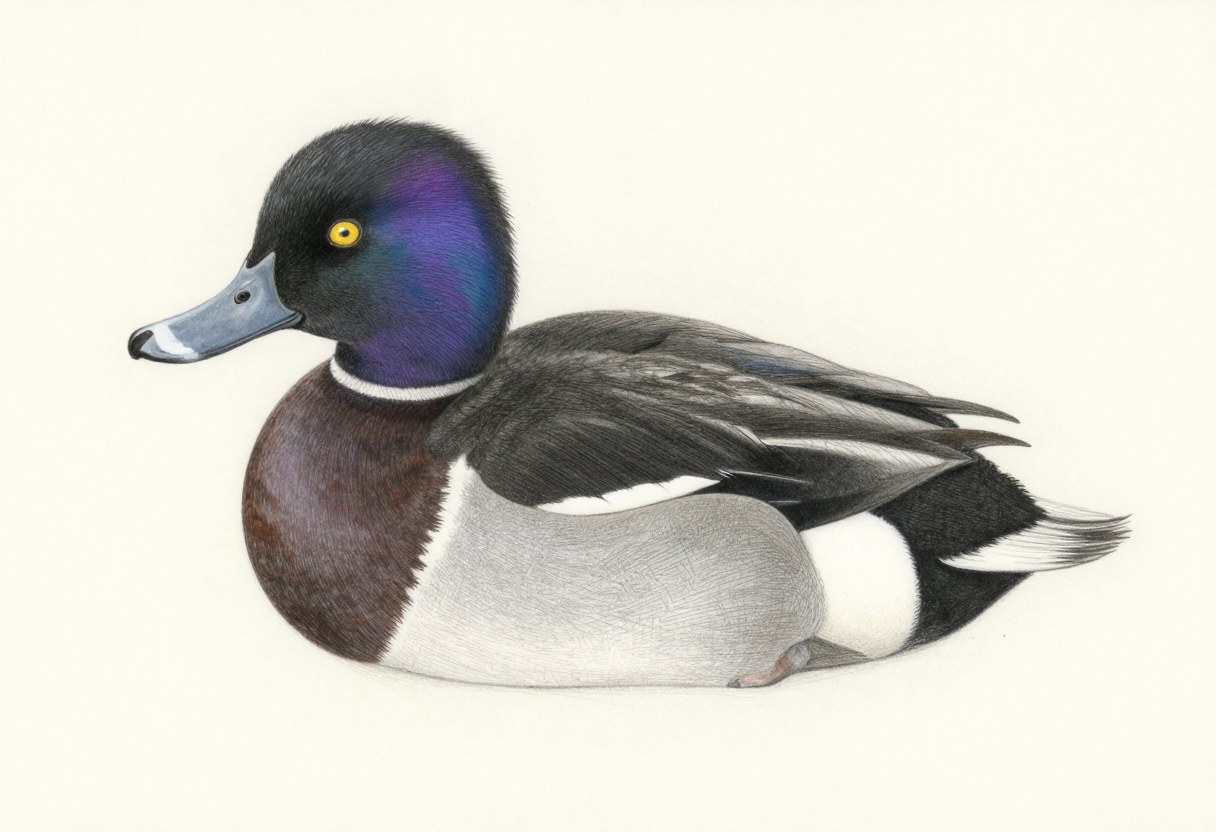
- Drake: a black back, a black head with a purple sheen and a peaked crown, gray flanks with a white spur at the shoulder, and a gray-blue bill with a bold white ring near the tip.
- Hen: brown, with a white eye-ring and a pale ring on the bill.
- The peaked head is a good shape clue.
Often confused with
- Lesser scaup: has a gray back and a bill with only a small black tip and no white ring.
What it eats
- Aquatic plants and seeds
- Aquatic invertebrates
How it's hunted
- Small decoy spreads on ponds and the edges of lakes
- Hunting wooded and weedy ponds where ringnecks gather
- Mixed diving-duck spreads
Field notes
Ring-necked ducks often use smaller, shallower ponds than other diving ducks, including wooded lakes and beaver ponds, and they dive in water only a few feet deep.
Hunters often call them ringbills, and the white ring on the bill is the best identification mark.
Related guides
Seasons, bag limits, legal shot types, and licensing vary by state and change every year. Migratory game birds such as ducks, geese, and doves generally require a state license, registration in the Harvest Information Program, and, for waterfowl, a federal duck stamp, and waterfowl must be hunted with non-toxic shot. Check your state's current regulations — our state resources directory links straight to each state's official hunting rules and license portal.