
Lesser Scaup
Aythya affinis
A small, common diving duck, also called a bluebill, that gathers in big flocks on lakes and bays.
- Type
- Ducks
- Movement
- Migratory
- Habitat
- Lakes & ponds, Marshes, Rivers
- Typical size
- 15–18 in long; about 1.8 lb
- Range
- Breeds across the northern prairies and Alaska and winters across the southern states and coastal waters
- Seasons
- Part of the regular duck season, often with a later opening than dabbling ducks in some areas
How to identify it
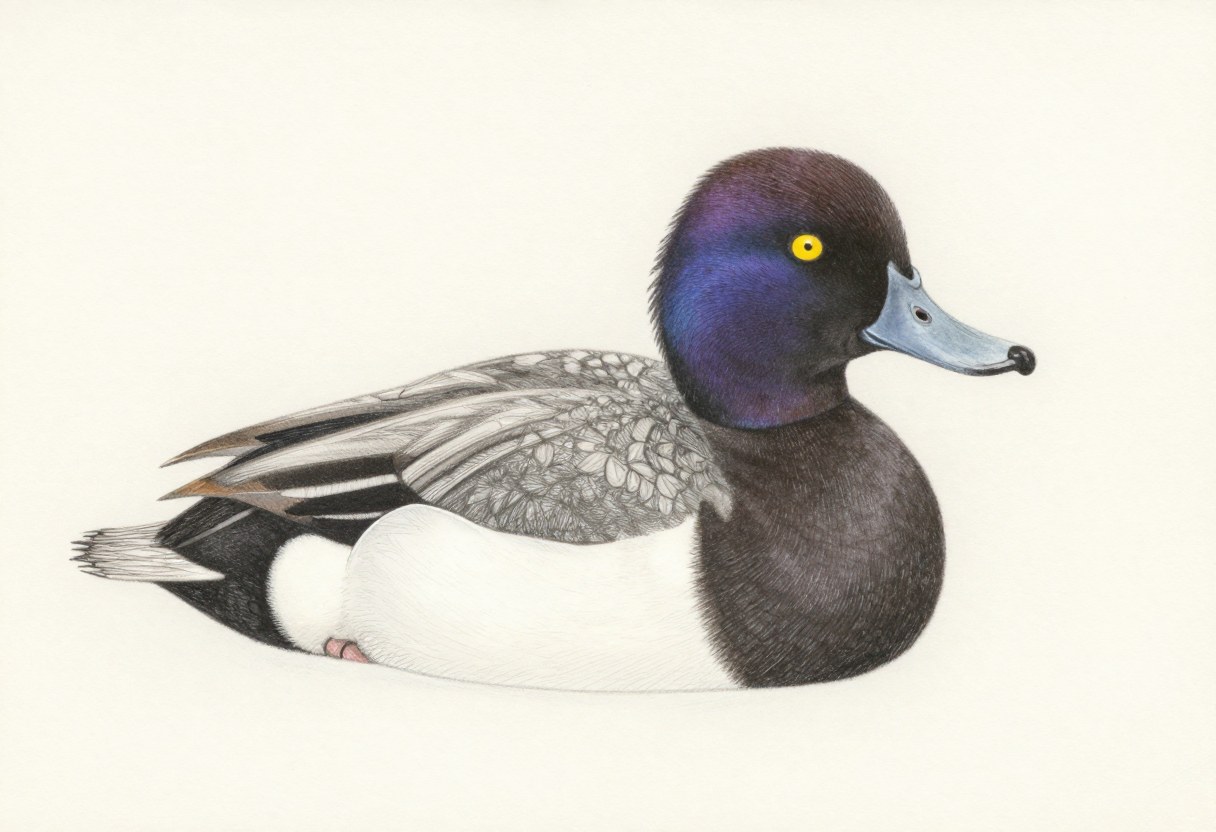
- Drake: a dark head with a purple sheen and a slightly peaked crown, a black breast and rear, a finely barred gray back, white flanks, and a blue-gray bill with a small black tip.
- Hen: brown, with a white patch at the base of the bill.
- The white stripe in the wing, visible in flight, extends only along the rear half of the wing.
Often confused with
- Ring-necked duck: has a black back, a white ring on the bill, and a white spur on the side.
What it eats
- Aquatic invertebrates such as snails and insects
- Seeds and aquatic plants
How it's hunted
- Large diving-duck decoy spreads on open water
- Boat blinds and layout blinds
- Hunting where flocks stage on big lakes and reservoirs
Field notes
Lesser scaup travel in large flocks and often raft on open water, which makes them a classic target for hunters with big decoy spreads.
Greater scaup look very similar and are mostly found along the coasts and the Great Lakes. The two are often hard to tell apart in the field.
Related guides
Seasons, bag limits, legal shot types, and licensing vary by state and change every year. Migratory game birds such as ducks, geese, and doves generally require a state license, registration in the Harvest Information Program, and, for waterfowl, a federal duck stamp, and waterfowl must be hunted with non-toxic shot. Check your state's current regulations — our state resources directory links straight to each state's official hunting rules and license portal.