
Northern Shoveler
Spatula clypeata
A dabbling duck with a huge spoon-shaped bill, used to strain tiny food from shallow water.
- Type
- Ducks
- Movement
- Migratory
- Habitat
- Marshes, Lakes & ponds
- Typical size
- 17–20 in long; about 1.5 lb
- Range
- Breeds across the northern prairies and the West and winters across the southern states and into Mexico
- Seasons
- Part of the regular duck season, with a daily bag limit that is often generous
How to identify it
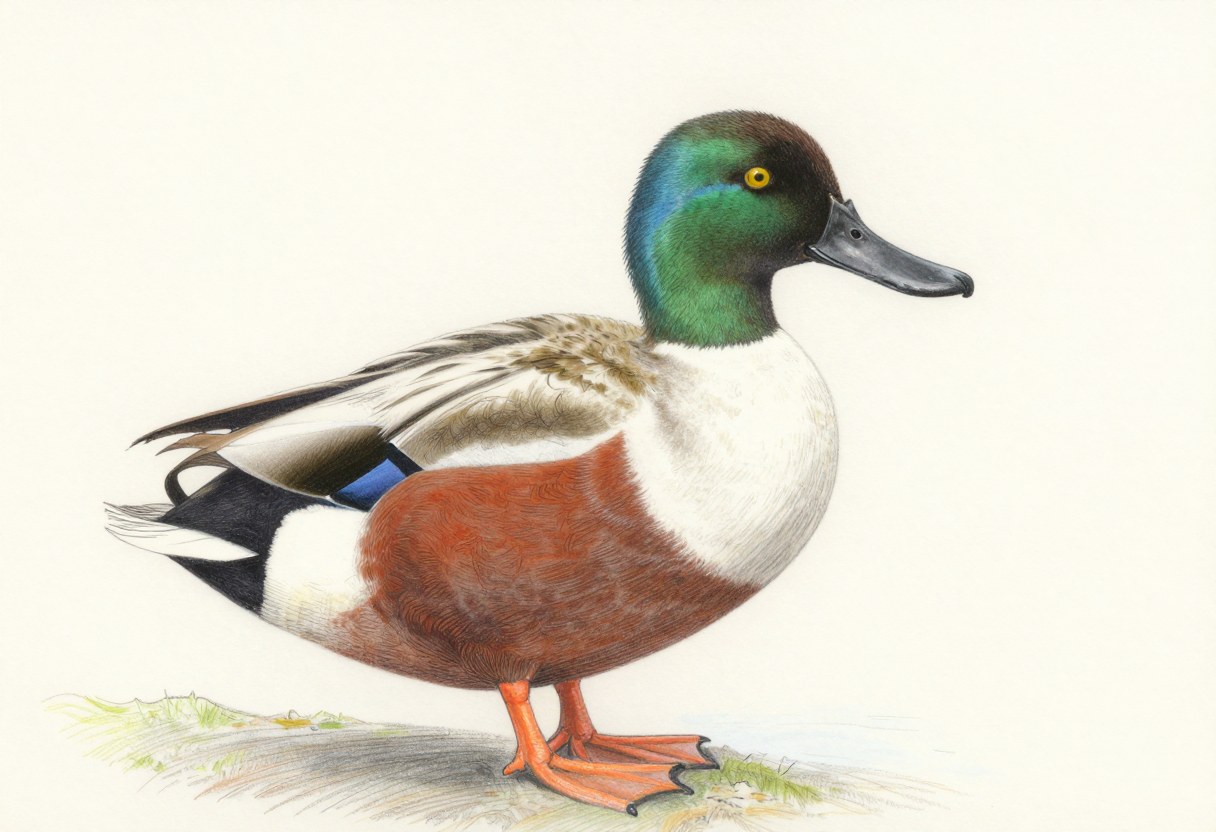
- Drake: a glossy green head, a very large black spatula-shaped bill, a white breast, rusty flanks, and a yellow eye.
- Hen: mottled brown, with a large orange-edged bill.
- Shovelers often swim with the bill held low, and sometimes in tight circles to stir up food.
Often confused with
- Mallard (drake): also has a green head, but with a yellow bill, a white neck ring, and a chestnut breast.
What it eats
- Tiny aquatic invertebrates strained from the water
- Seeds and plant material
- Insects
How it's hunted
- Decoys in shallow, muddy-bottomed marshes
- Hunting small shallow ponds where they feed in circles
- Pass shooting near feeding areas
Field notes
The shoveler's bill is the best identification mark. It is long, wide, and spatula-shaped, and the bird holds it close to the water as it filters food.
Because shovelers feed on small invertebrates, some hunters rate them lower as table fare than ducks that eat grain and plants. That is a matter of taste, and many hunters take them without complaint.
Related guides
Seasons, bag limits, legal shot types, and licensing vary by state and change every year. Migratory game birds such as ducks, geese, and doves generally require a state license, registration in the Harvest Information Program, and, for waterfowl, a federal duck stamp, and waterfowl must be hunted with non-toxic shot. Check your state's current regulations — our state resources directory links straight to each state's official hunting rules and license portal.