
Mallard
Anas platyrhynchos
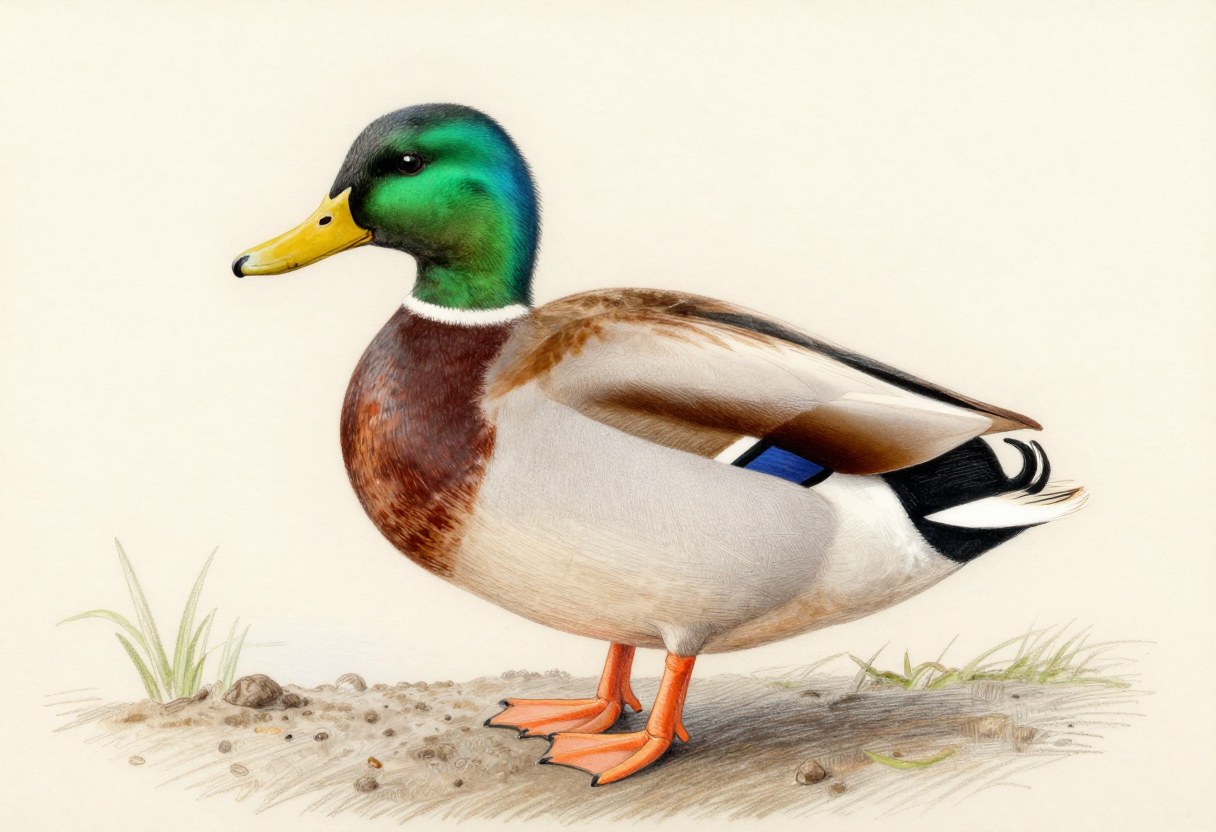
The most widespread and most hunted duck in North America. Drakes are easy to recognize by their glossy green heads, and hens by their mottled brown plumage and orange bills.
- Type
- Ducks
- Movement
- Migratory and resident
- Habitat
- Marshes, Lakes & ponds, Rivers, Farm fields
- Typical size
- 20–26 in long; about 2–3 lb
- Range
- Found across the entire country; breeds across the northern half of the continent and winters from the Midwest south to the Gulf Coast
- Seasons
- Seasons are set each year by flyway and state, generally running from autumn into January
How to identify it
- Drake: glossy green head, a thin white ring around the neck, chestnut breast, pale gray body, and a black tail with curled feathers in the center.
- Hen: mottled brown all over, with an orange bill that has a dark blotch in the middle.
- Both sexes show a blue-violet wing patch, called a speculum, bordered by white bars on both sides. It is visible in flight and when the bird stretches its wing.
- Mallards are big, heavy-bodied ducks that spring straight up off the water.
Often confused with
- American black duck: both sexes are dark chocolate brown with a paler head, and the blue wing patch has little or no white bordering.
- Gadwall (hen): a similar mottled brown, but with a small white square in the wing instead of a blue patch, and a gray-orange bill.
What it eats
- Seeds and waste grain such as corn, rice, and wheat
- Aquatic plants and acorns in flooded timber
- Insects and small invertebrates, especially in spring
How it's hunted
- Decoy spreads on ponds, marshes, and flooded fields, with a hen quack and feeding chuckle
- Jump-shooting small creeks and potholes
- Pass shooting near roosts and feeding fields at dawn and dusk
Field notes
Mallards are the benchmark duck. They use almost every kind of shallow water, from farm ponds to city parks, and they feed readily in flooded grain fields, which makes them the main target of many waterfowlers.
Many mallards are year-round residents in the middle and southern states, while northern birds migrate south as water freezes. Hard freezes in the north tend to push birds toward open water.
A drake in full plumage is easy to identify. Hens, and drakes in their late-summer eclipse plumage, look like mottled brown ducks, so check the bill and the wing patch before shooting.
Related guides
Seasons, bag limits, legal shot types, and licensing vary by state and change every year. Migratory game birds such as ducks, geese, and doves generally require a state license, registration in the Harvest Information Program, and, for waterfowl, a federal duck stamp, and waterfowl must be hunted with non-toxic shot. Check your state's current regulations — our state resources directory links straight to each state's official hunting rules and license portal.