
Northern Pintail
Anas acuta
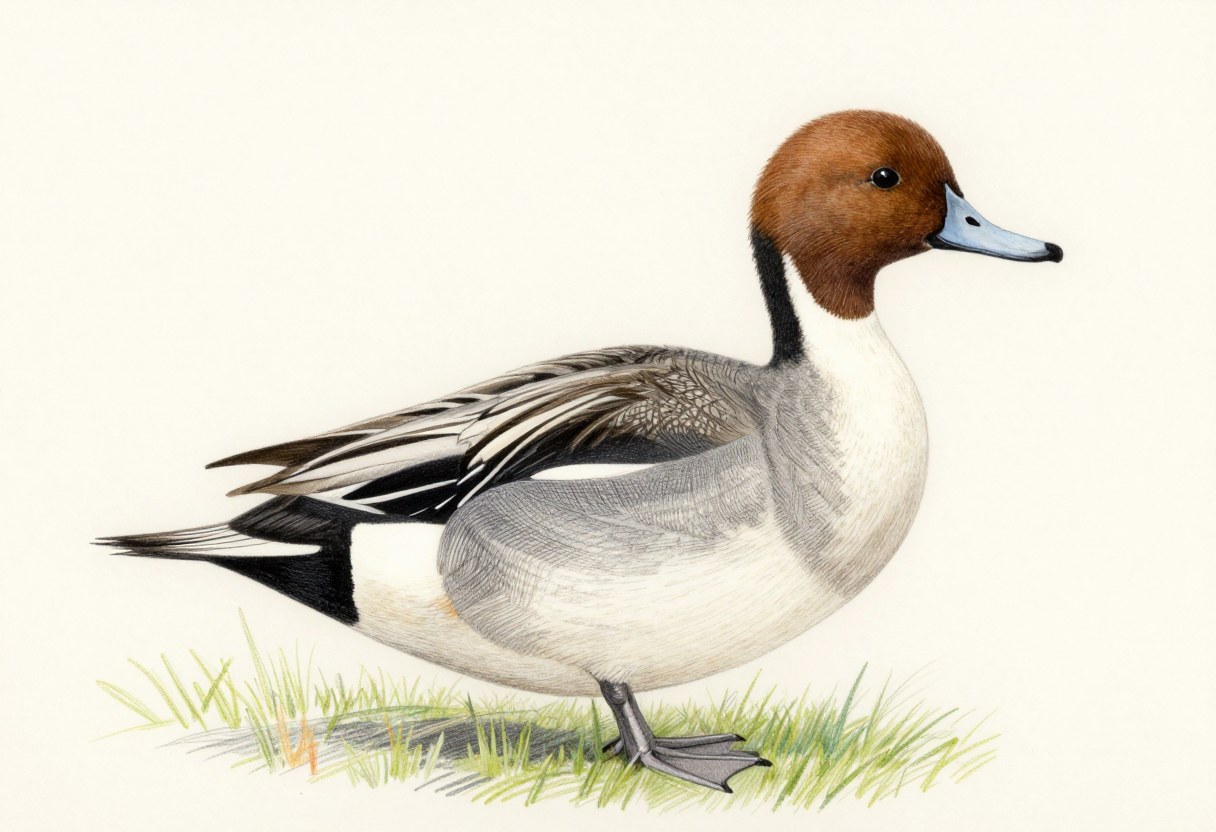
A slender, elegant duck with a long, pointed tail. Pintails are early migrants and are among the fastest and most graceful ducks in the air.
- Type
- Ducks
- Movement
- Migratory
- Habitat
- Marshes, Lakes & ponds, Farm fields
- Typical size
- 20–30 in long including the tail; about 2 lb
- Range
- Breeds across the northern prairies and Alaska and winters from California and the Gulf Coast south
- Seasons
- Bag limits have often been restrictive for pintails, so check the daily limit each year
How to identify it
- Drake: a chocolate-brown head, a white stripe running up the side of the neck, a white breast, a gray back and flanks, and a long, thin, pointed black tail.
- Hen: mottled brown, with a slim neck, a plain, pale head, a pointed tail, and a gray-blue bill.
- Both sexes have a long, slender neck and look sleek in flight.
Often confused with
- Mallard (hen): heavier, with a thicker neck and an orange bill, and a blue wing patch bordered by white.
What it eats
- Seeds and waste grain, especially rice and wheat
- Aquatic plants
- Aquatic insects, particularly in spring
How it's hunted
- Decoy spreads in shallow water and flooded fields
- Calling with a soft whistle
- Scouting open, shallow water where pintails gather in large flocks
Field notes
Pintails are one of the first ducks to migrate in the fall, and they favor open, shallow water in the prairies and the Gulf Coast rice country.
Populations of pintails have been below long-term goals for years, so bag limits are often tight. Positive identification matters, and the long tail and slim neck are good clues.
Related guides
Seasons, bag limits, legal shot types, and licensing vary by state and change every year. Migratory game birds such as ducks, geese, and doves generally require a state license, registration in the Harvest Information Program, and, for waterfowl, a federal duck stamp, and waterfowl must be hunted with non-toxic shot. Check your state's current regulations — our state resources directory links straight to each state's official hunting rules and license portal.