
Mourning Dove
Zenaida macroura
The most abundant and widely hunted game bird in North America, and often a hunter's first migratory bird hunt.
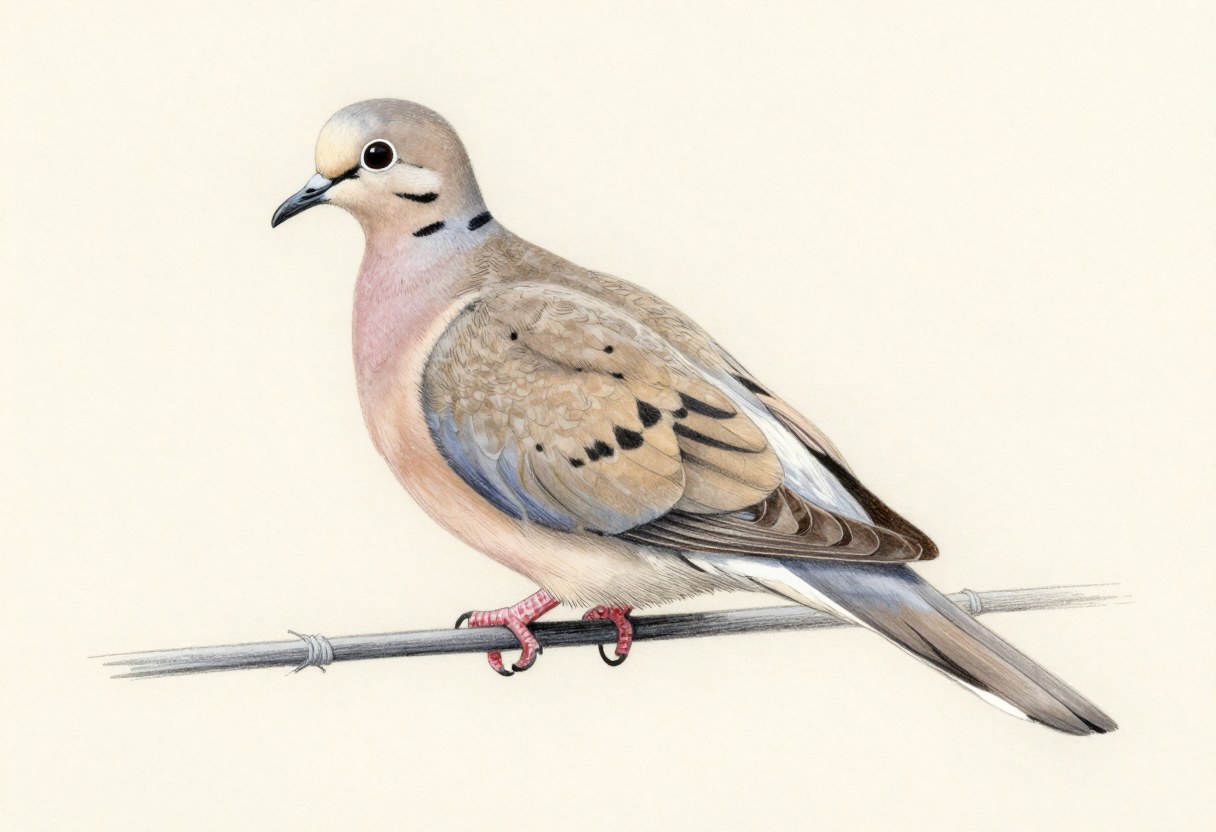
- Type
- Doves & Pigeons
- Movement
- Migratory and resident
- Habitat
- Farm fields, Brushland, Woodlands
- Typical size
- 9–13 in long; about 4 oz
- Range
- Found across the entire country, with northern birds migrating south for winter
- Seasons
- Seasons usually open on or near September 1 in many states, with split seasons and a generous daily limit
How to identify it
- Soft gray-brown plumage, a pinkish-buff underside, and a small black spot on the cheek.
- A long, pointed tail with white outer edges that shows in flight.
- A small head and a slender body.
- The wings whistle as the bird takes off.
Often confused with
- White-winged dove: has a bold white stripe on the wing and a blue ring around the eye.
- Eurasian collared-dove: larger, with a black half-collar on the neck and a square-tipped tail.
What it eats
- Seeds of sunflowers, millet, wheat, and weeds
- Waste grain such as corn
- Grit and small stones
How it's hunted
- Field shoots over harvested sunflowers, millet, or wheat
- Standing near water holes and fence lines where doves travel
- Using a few decoys on wires or on the ground
Field notes
Mourning doves are the most heavily hunted game bird in the country, which makes them a common first migratory bird for new hunters. Fast, darting flight makes them a tougher target than they look.
Dove seasons often start earlier than other seasons. Many areas also have lead shot rules on public land, so check them before you go.
Related guides
Seasons, bag limits, legal shot types, and licensing vary by state and change every year. Migratory game birds such as ducks, geese, and doves generally require a state license, registration in the Harvest Information Program, and, for waterfowl, a federal duck stamp, and waterfowl must be hunted with non-toxic shot. Check your state's current regulations — our state resources directory links straight to each state's official hunting rules and license portal.