
Green-winged Teal
Anas crecca
The smallest dabbling duck in North America, a hardy, fast-flying bird that sticks around into cold weather.
- Type
- Ducks
- Movement
- Migratory
- Habitat
- Marshes, Lakes & ponds, Rivers
- Typical size
- 12–15 in long; about 0.7 lb
- Range
- Breeds across Alaska and Canada and the northern United States; winters across the southern half of the country
- Seasons
- Part of the regular duck season, with its own bag limit, and often a common bird late in the season
How to identify it
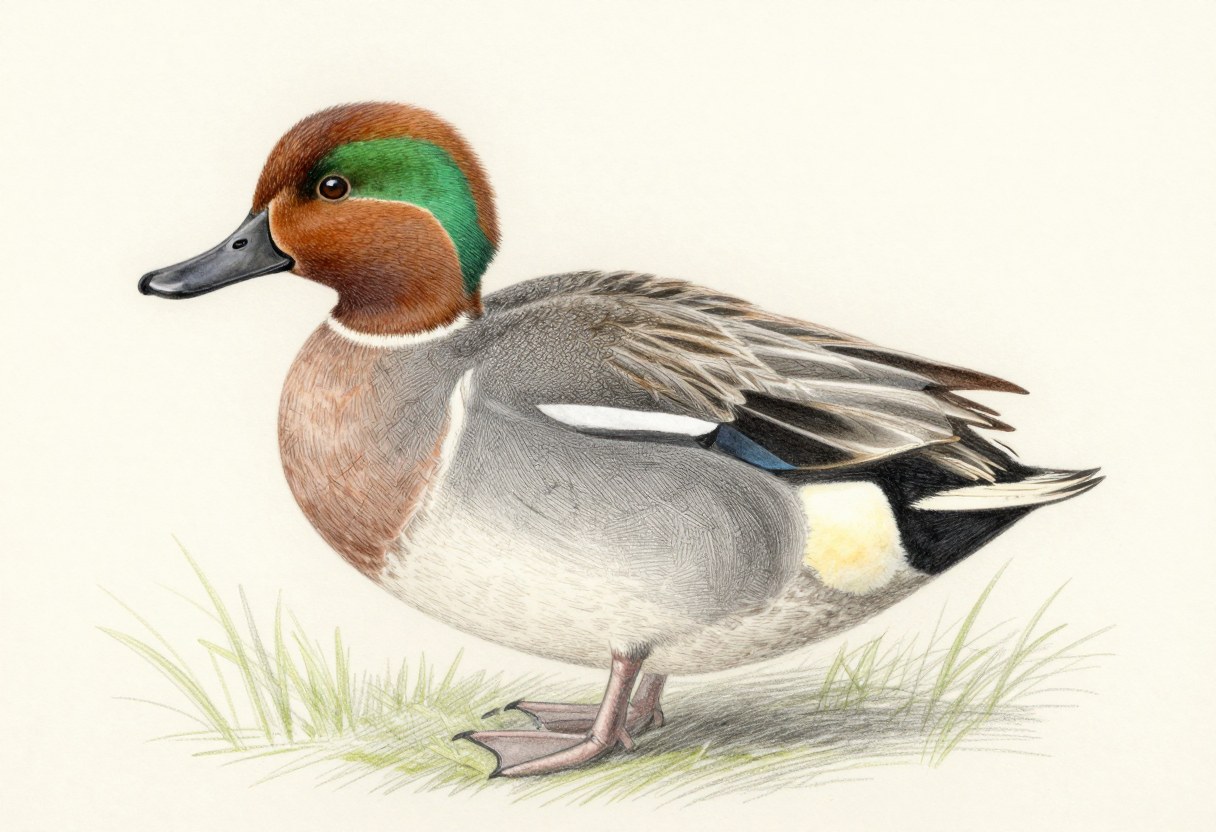
- Drake: a chestnut head with a broad glossy green patch running back from the eye, a gray body, a vertical white stripe on the side of the breast, and a creamy patch under the tail.
- Hen: mottled brown with a green wing patch.
- They fly in tight, jinking flocks that wheel and turn together.
- No other duck in North America is as small.
Often confused with
- Blue-winged teal: slightly larger, with a pale blue forewing patch instead of a green one.
What it eats
- Seeds of marsh and moist-soil plants
- Aquatic insects and small invertebrates
- Waste grain in flooded fields
How it's hunted
- Small decoy spreads in shallow marshes and mudflats
- Pass shooting at dawn and dusk
- Hunting shallow, weedy edges where they feed in tight flocks
Field notes
Green-winged teal are tough, small ducks that handle cold well, and they often arrive in big flocks as the season goes on. They feed on mudflats and in very shallow water, where larger ducks can't.
A flock can look like a single moving shape as it turns. The fast, nervy flight makes them a hard target, but a drake in good light is easy to identify.
Related guides
Seasons, bag limits, legal shot types, and licensing vary by state and change every year. Migratory game birds such as ducks, geese, and doves generally require a state license, registration in the Harvest Information Program, and, for waterfowl, a federal duck stamp, and waterfowl must be hunted with non-toxic shot. Check your state's current regulations — our state resources directory links straight to each state's official hunting rules and license portal.