
Blue-winged Teal
Spatula discors
A small, fast duck that migrates early in the fall, which is why many states hold a special September teal season.
- Type
- Ducks
- Movement
- Migratory
- Habitat
- Marshes, Lakes & ponds
- Typical size
- 14–16 in long; about 1 lb
- Range
- Breeds mostly in the northern Great Plains and prairie potholes and winters along the Gulf Coast and south into Latin America
- Seasons
- Many states offer a special early teal season in September, in addition to the regular duck season
How to identify it
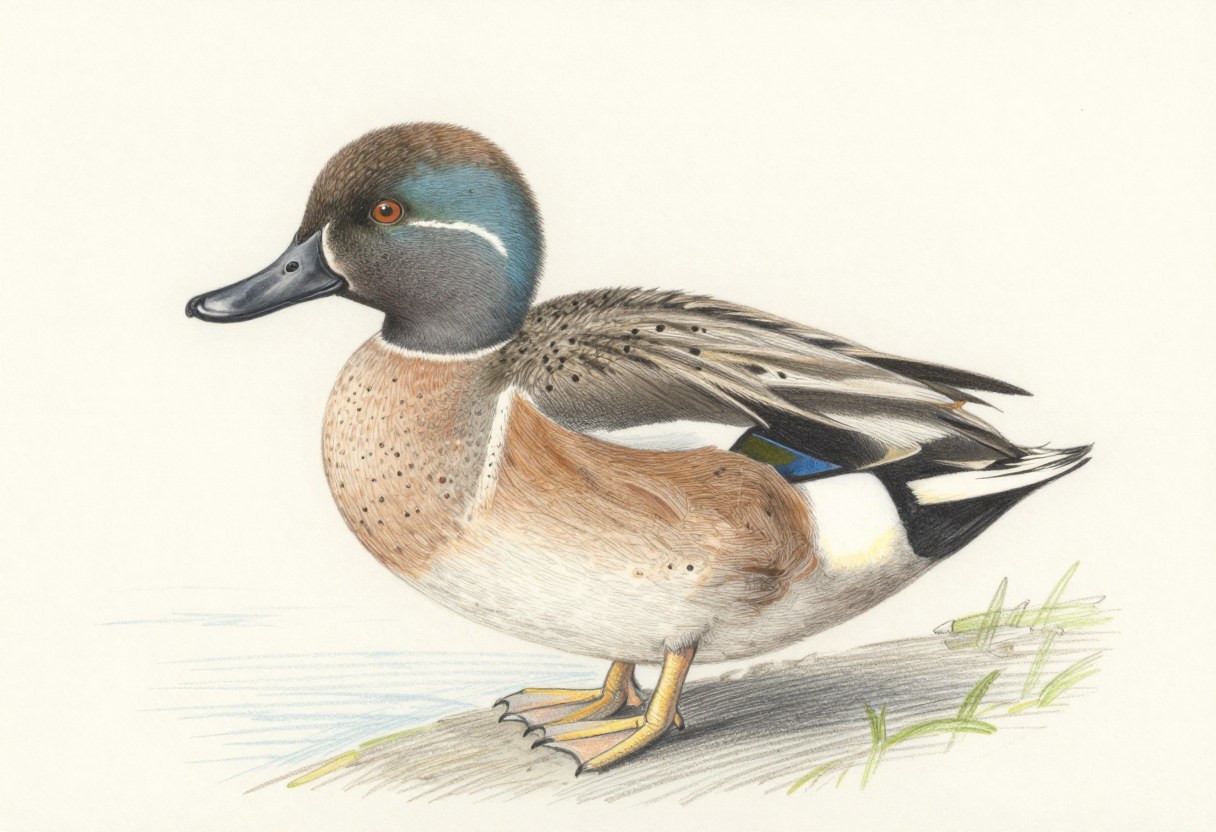
- Drake: a slate blue-gray head with a bold white crescent in front of the eye, a tan body with small dark spots, and a white patch on the rear flank.
- Both sexes show a large, light blue patch on the forewing, visible in flight.
- Hen: mottled brown, with a pale spot at the base of the bill.
- Blue-wings fly in tight, twisting flocks and often skim low over the water.
Often confused with
- Green-winged teal: a slightly smaller teal with a green wing patch and no blue forewing.
- Cinnamon teal: a western teal with a rusty-red drake that also shows blue on the forewing.
What it eats
- Seeds of marsh plants
- Aquatic insects, snails, and other invertebrates
- Waste grain in flooded fields
How it's hunted
- Small decoy spreads in shallow marshes and pond edges
- Pass shooting between feeding and loafing areas
- Early-season hunts on shallow, weedy water
Field notes
Blue-winged teal are among the first ducks to head south, and most have left the northern states before the regular season opens. The early teal season gives hunters a chance at them while they pass through.
Because teal are small and fast, it is easy to confuse them with other small ducks at a distance. Look for the blue forewing and the white crescent on drakes.
Related guides
Seasons, bag limits, legal shot types, and licensing vary by state and change every year. Migratory game birds such as ducks, geese, and doves generally require a state license, registration in the Harvest Information Program, and, for waterfowl, a federal duck stamp, and waterfowl must be hunted with non-toxic shot. Check your state's current regulations — our state resources directory links straight to each state's official hunting rules and license portal.