
Gray Partridge
Perdix perdix
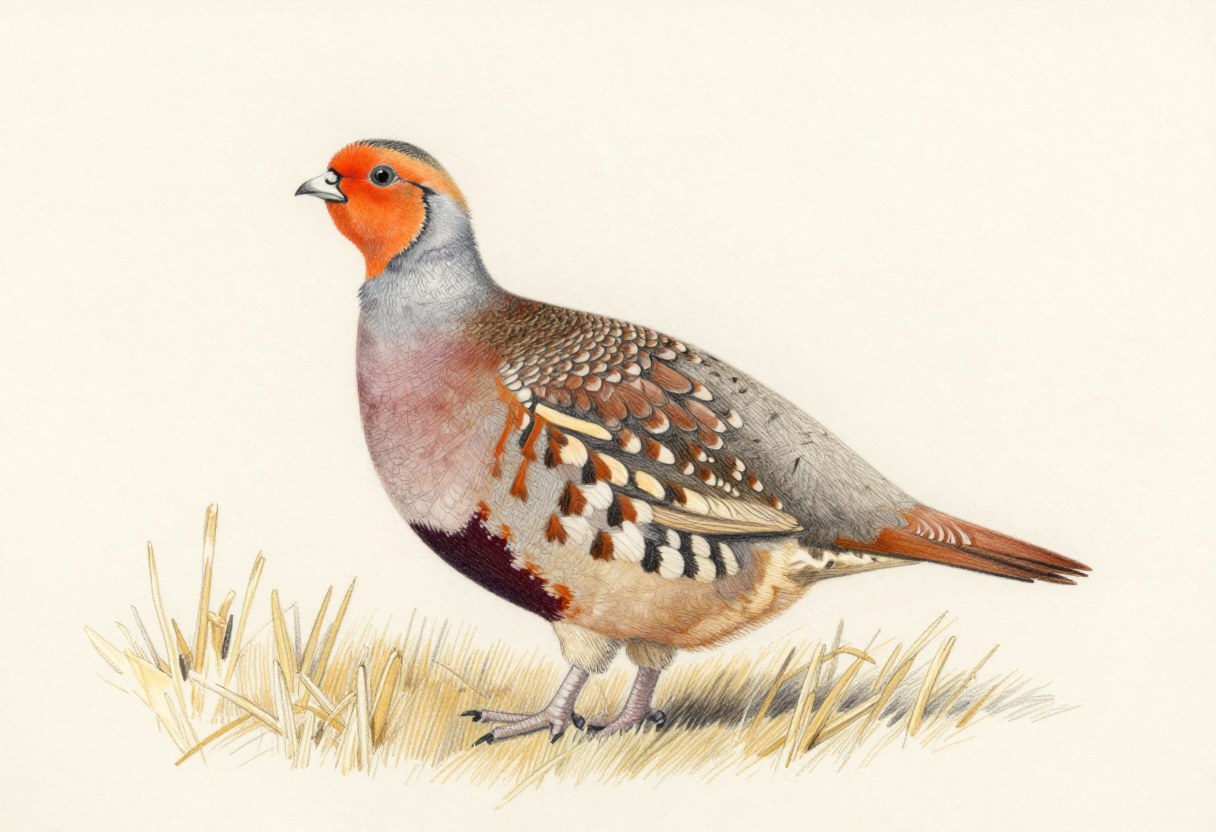
A small partridge from Europe, often called the Hungarian partridge or Hun, found in grain country across the northern plains and Pacific Northwest.
- Type
- Upland Birds
- Movement
- Year-round resident
- Habitat
- Farm fields, Prairie & grassland
- Typical size
- 12–13 in long; about 14 oz
- Range
- Introduced and established across the northern Great Plains, the northern Rockies, and parts of the Pacific Northwest and Great Lakes
- Seasons
- Seasons usually open in the fall and run into winter, with a daily bag limit that varies by state
How to identify it
- A gray breast and flanks, with an orange-rusty face and throat.
- A dark chestnut horseshoe-shaped patch on the belly, larger on males.
- Brown barring on the flanks and a short, rusty tail.
- They flush in coveys with a low, rapid wingbeat.
Often confused with
- Chukar: has a black necklace band, barred flanks, and a red bill and legs.
What it eats
- Waste grain and weed seeds
- Leaves and shoots
- Insects, especially for chicks
How it's hunted
- Walking field edges, fencerows, and weedy draws with a pointing dog
- Covey hunting, since birds often flush wild late in the season
- Working grass and stubble near grain fields
Field notes
Gray partridge came to North America from Europe and did well in northern grain country. Hunters call them Huns, short for Hungarian partridge.
Coveys can be skittish and flush at a distance, so walking quietly and using cover along fencerows helps.
Related guides
Seasons, bag limits, legal shot types, and licensing vary by state and change every year. Migratory game birds such as ducks, geese, and doves generally require a state license, registration in the Harvest Information Program, and, for waterfowl, a federal duck stamp, and waterfowl must be hunted with non-toxic shot. Check your state's current regulations — our state resources directory links straight to each state's official hunting rules and license portal.