
Chukar
Alectoris chukar
A hardy partridge from Asia that thrives on dry, steep, rocky hillsides in the West and is known for demanding hunts.
- Type
- Upland Birds
- Movement
- Year-round resident
- Habitat
- Brushland, Prairie & grassland
- Typical size
- 12–14 in long; about 1.2 lb
- Range
- Introduced and established in the Great Basin and the interior West, including Oregon, Idaho, Nevada, Utah, and Washington
- Seasons
- Seasons usually run from fall into winter, with a daily bag limit that varies by state
How to identify it
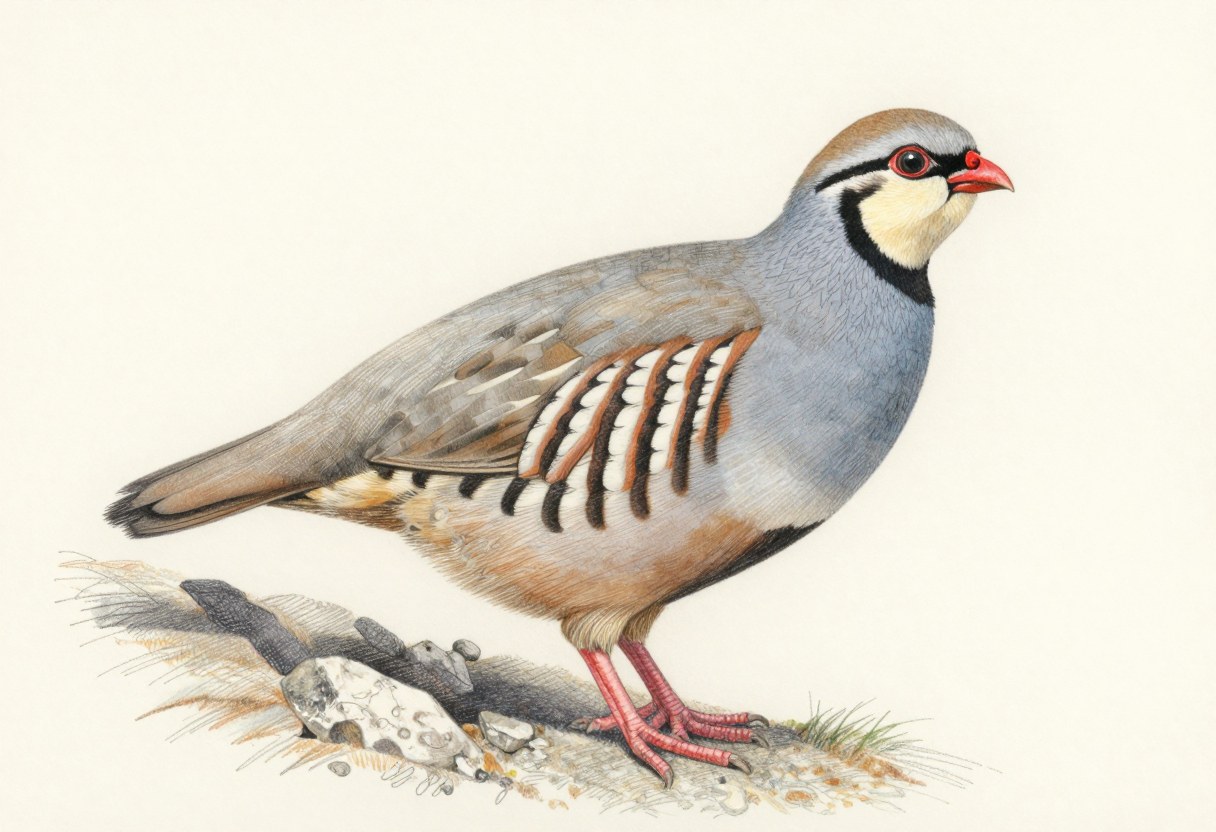
- A gray-blue back and breast, and a cream face and throat.
- A bold black band running from the forehead through the eye and down around the throat like a necklace.
- Black and white barred flanks, and a red bill and red legs.
- Coveys give a loud, repeated call that sounds like their name.
Often confused with
- Gray partridge: has an orange face, a gray breast, and a dark chestnut patch on the belly.
What it eats
- Seeds, especially cheatgrass seed
- Leaves and shoots of low plants
- Insects
How it's hunted
- Climbing steep, rocky slopes above the birds, since chukars tend to run uphill and then fly downhill
- Hunting with pointing dogs in dry canyons
- Carrying plenty of water for yourself and your dog in arid country
Field notes
Chukars live on rugged, dry slopes, and hunting them is physically demanding. Hunters need good boots, good fitness, and plenty of water.
Birds tend to run uphill and fly downhill, so getting above a covey often gives the best shot.
Related guides
Seasons, bag limits, legal shot types, and licensing vary by state and change every year. Migratory game birds such as ducks, geese, and doves generally require a state license, registration in the Harvest Information Program, and, for waterfowl, a federal duck stamp, and waterfowl must be hunted with non-toxic shot. Check your state's current regulations — our state resources directory links straight to each state's official hunting rules and license portal.