
Gadwall
Mareca strepera
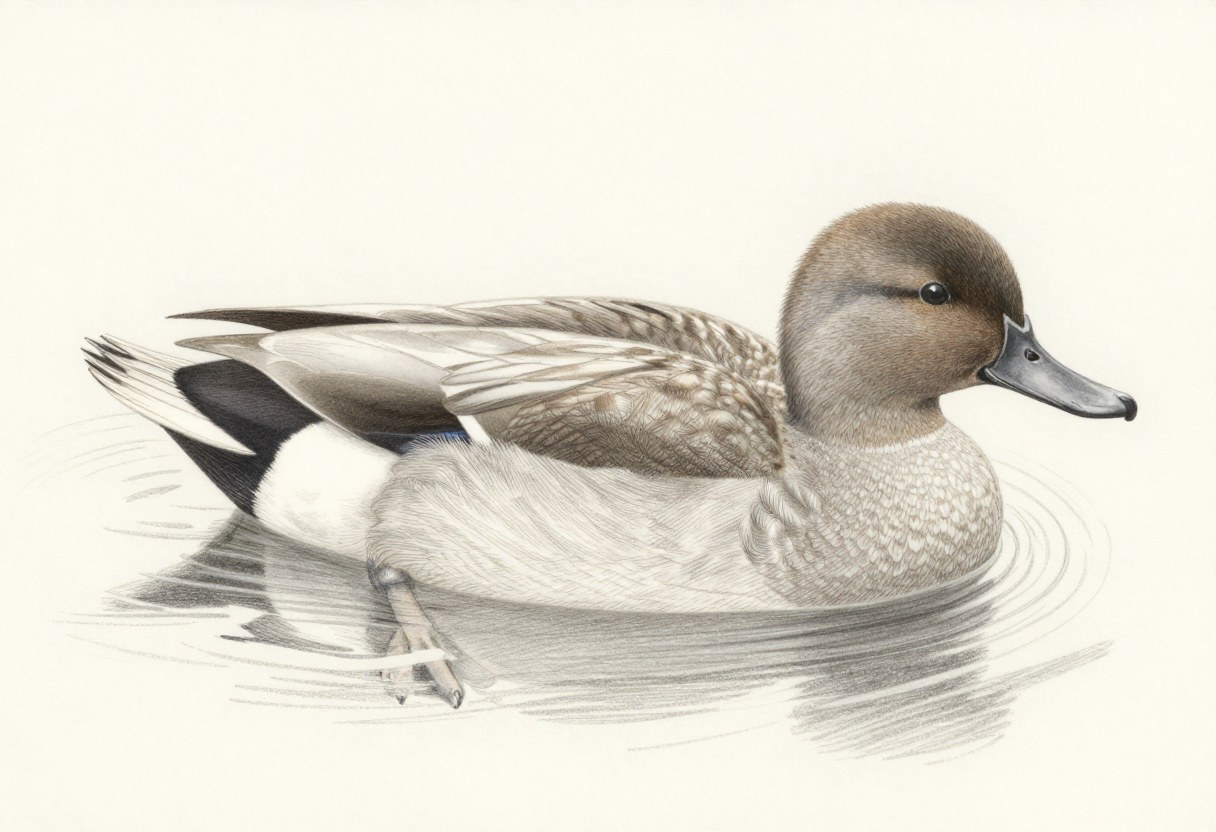
A quiet, finely patterned gray duck that is easy to overlook and is common in marshes and shallow lakes across the continent.
- Type
- Ducks
- Movement
- Migratory
- Habitat
- Marshes, Lakes & ponds, Rivers
- Typical size
- 18–23 in long; about 2 lb
- Range
- Breeds mostly in the northern prairies and the West, and winters from the Midwest and the coasts south into Mexico
- Seasons
- Part of the regular duck season and a common bird in the bag late in the year
How to identify it
- Drake: a finely vermiculated gray body, a plain gray-brown head, a black rear end, and a dark gray bill.
- Hen: mottled brown, with an orange bill that has a dark center and an orange edge.
- Both sexes have a white square on the inner wing, called a speculum, which shows in flight.
Often confused with
- Mallard (hen): larger, with a blue wing patch bordered by white on both sides, and a bill that is orange with a dark blotch.
What it eats
- Aquatic vegetation, including submerged plants
- Seeds and leaves
- Plant material picked up from the water surface
How it's hunted
- Decoy spreads in marshes and shallow lakes
- Pass shooting at dawn and dusk
- Mixed spreads that include mallards, which often attract gadwalls
Field notes
Gadwalls are easy to miss because the drake lacks bright color. The fine gray pattern looks like a texture from a distance, and the black rear end is a good field mark.
They often feed on plants that other ducks dislodge, and they associate with mallards and American wigeon.
Related guides
Seasons, bag limits, legal shot types, and licensing vary by state and change every year. Migratory game birds such as ducks, geese, and doves generally require a state license, registration in the Harvest Information Program, and, for waterfowl, a federal duck stamp, and waterfowl must be hunted with non-toxic shot. Check your state's current regulations — our state resources directory links straight to each state's official hunting rules and license portal.