
Cackling Goose
Branta hutchinsii
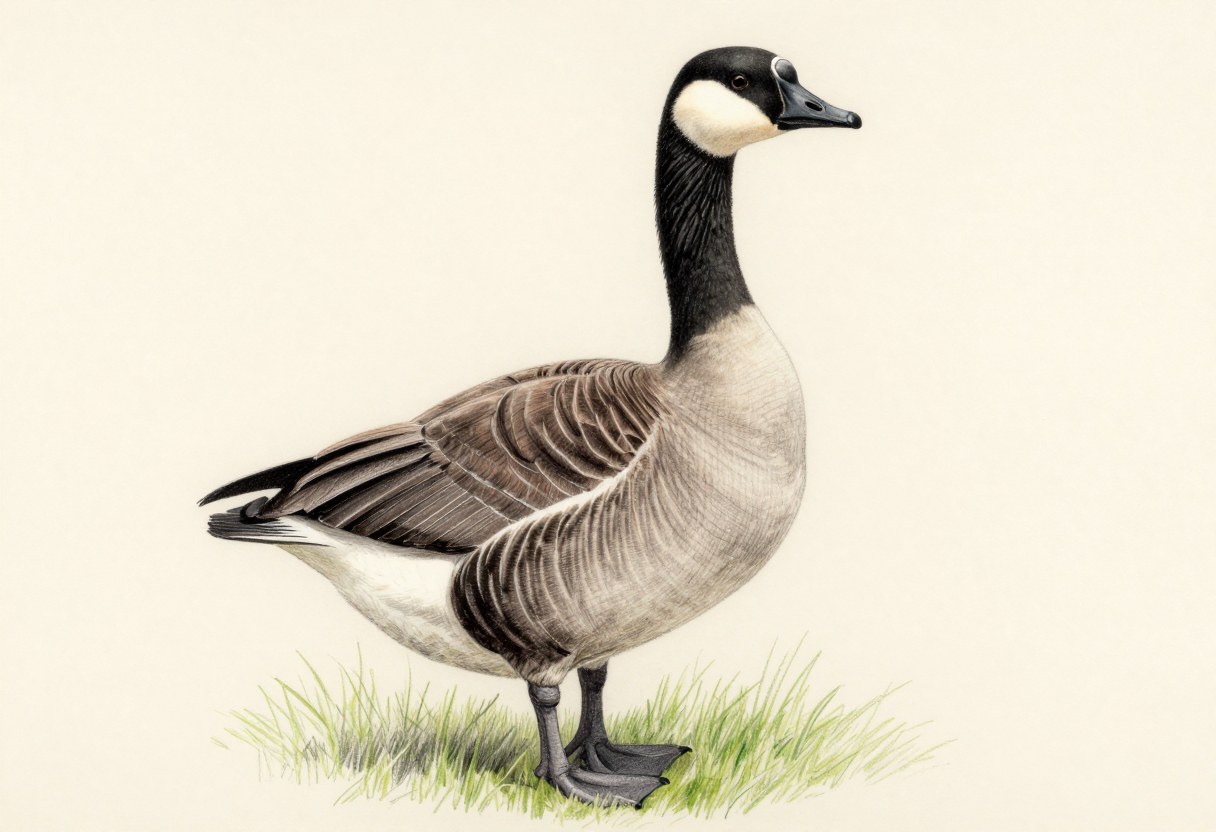
A small goose that looks like a miniature Canada goose, with a stubby bill and a short neck.
- Type
- Geese
- Movement
- Migratory
- Habitat
- Farm fields, Lakes & ponds, Marshes
- Typical size
- 23–26 in long; about 3–5 lb
- Range
- Breeds on the Arctic tundra and winters mainly in the Pacific and central states
- Seasons
- Often covered by the same goose season as Canada geese, but bag limits and rules can differ by region, so check your state
How to identify it
- A black head and neck with a white chinstrap, like a Canada goose, but much smaller.
- A short, stubby bill, a steep rounded forehead, and a short neck.
- Their calls are higher-pitched and quicker than those of Canada geese.
Often confused with
- Canada goose: larger, with a longer neck, a longer, flatter bill, and a sloping forehead.
What it eats
- Grasses and grain in fields
- Aquatic plants
- Waste grain
How it's hunted
- Decoy spreads in grass and grain fields
- Calling with high-pitched, fast notes
- Scouting feeding fields and roosts
Field notes
Cackling geese were long treated as a small kind of Canada goose and were recognized as a separate species in 2004. They are common in some winter areas, especially in the West.
Size and bill shape are the best ways to separate them from Canada geese, though the two can be hard to tell apart in a mixed flock.
Related guides
Seasons, bag limits, legal shot types, and licensing vary by state and change every year. Migratory game birds such as ducks, geese, and doves generally require a state license, registration in the Harvest Information Program, and, for waterfowl, a federal duck stamp, and waterfowl must be hunted with non-toxic shot. Check your state's current regulations — our state resources directory links straight to each state's official hunting rules and license portal.