
Canada Goose
Branta canadensis
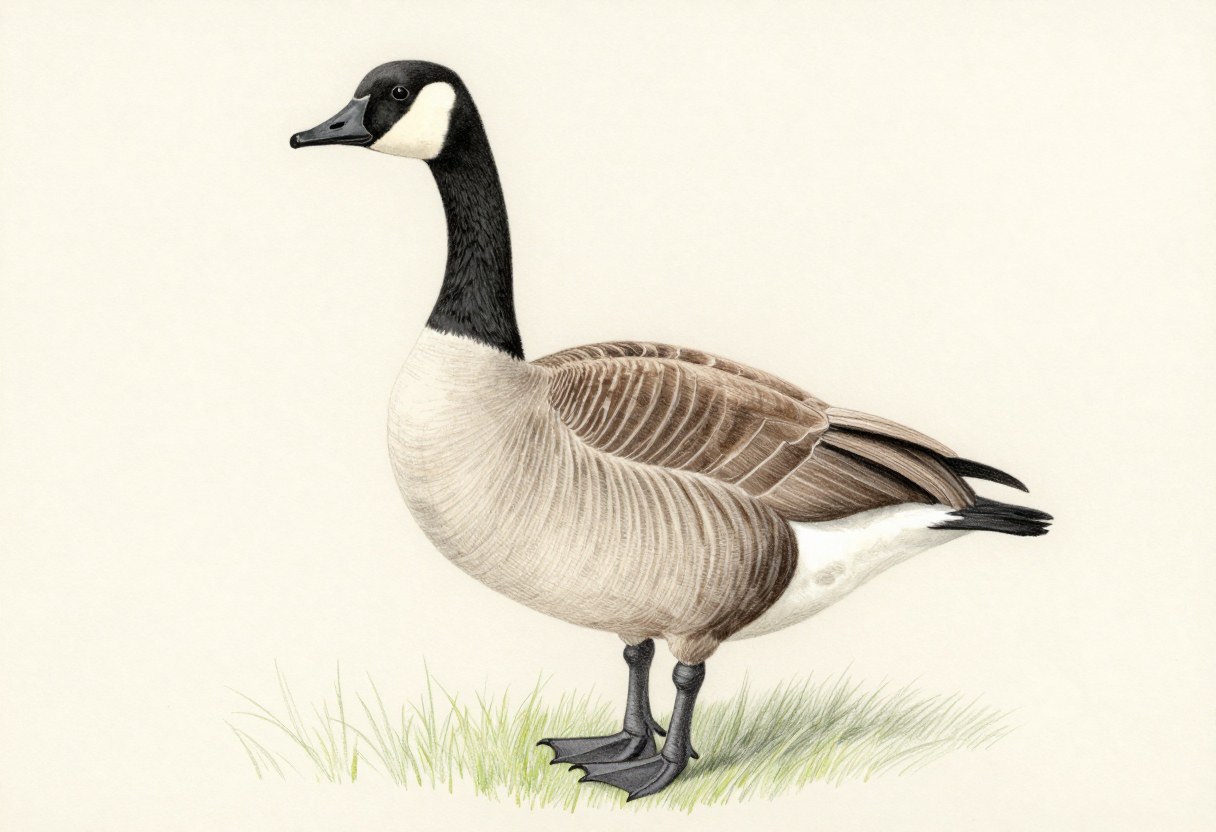
A large, adaptable goose with a black neck and head and a white chinstrap. Some populations migrate long distances, while others live in the same area all year.
- Type
- Geese
- Movement
- Migratory and resident
- Habitat
- Lakes & ponds, Rivers, Farm fields, Marshes
- Typical size
- 30–43 in long; about 6–14 lb depending on subspecies
- Range
- Found across nearly all of the country; breeds from Alaska and northern Canada south through much of the Lower 48, and winters across the central and southern states
- Seasons
- Many states run a special early season on resident geese in September, then a regular season in autumn and winter
How to identify it
- Black head and long black neck, with a white patch that wraps under the chin like a strap.
- Brown-gray back, paler tan breast, and a white rump patch at the base of a black tail.
- Black bill and black legs.
- Subspecies vary a lot in size: the giant Canada goose is much larger than smaller northern breeders.
Often confused with
- Cackling goose: looks like a small Canada goose, with a stubbier bill and a shorter neck, and often has a steeper forehead.
- Brant: a coastal goose with a black neck that has a small white mark, not a chinstrap, and a darker body.
What it eats
- Waste corn, wheat, and soybeans in harvested fields
- Grasses and winter wheat
- Aquatic plants in shallow water
How it's hunted
- Decoy spreads, often with layout blinds, in harvested grain fields
- Water decoys on ponds and rivers
- Calling with short honks and moans, after scouting the flight line between roost and feeding field
Field notes
Canada geese are creatures of habit. They roost on water and fly to feed in fields at predictable times, so scouting the flight line is often more important than any gear.
Large resident populations live in towns and suburbs all year, while migratory flocks arrive in the fall. Seasons and limits can differ between the two, so check the rules for the area you hunt.
Related guides
Seasons, bag limits, legal shot types, and licensing vary by state and change every year. Migratory game birds such as ducks, geese, and doves generally require a state license, registration in the Harvest Information Program, and, for waterfowl, a federal duck stamp, and waterfowl must be hunted with non-toxic shot. Check your state's current regulations — our state resources directory links straight to each state's official hunting rules and license portal.