
Bufflehead
Bucephala albeola
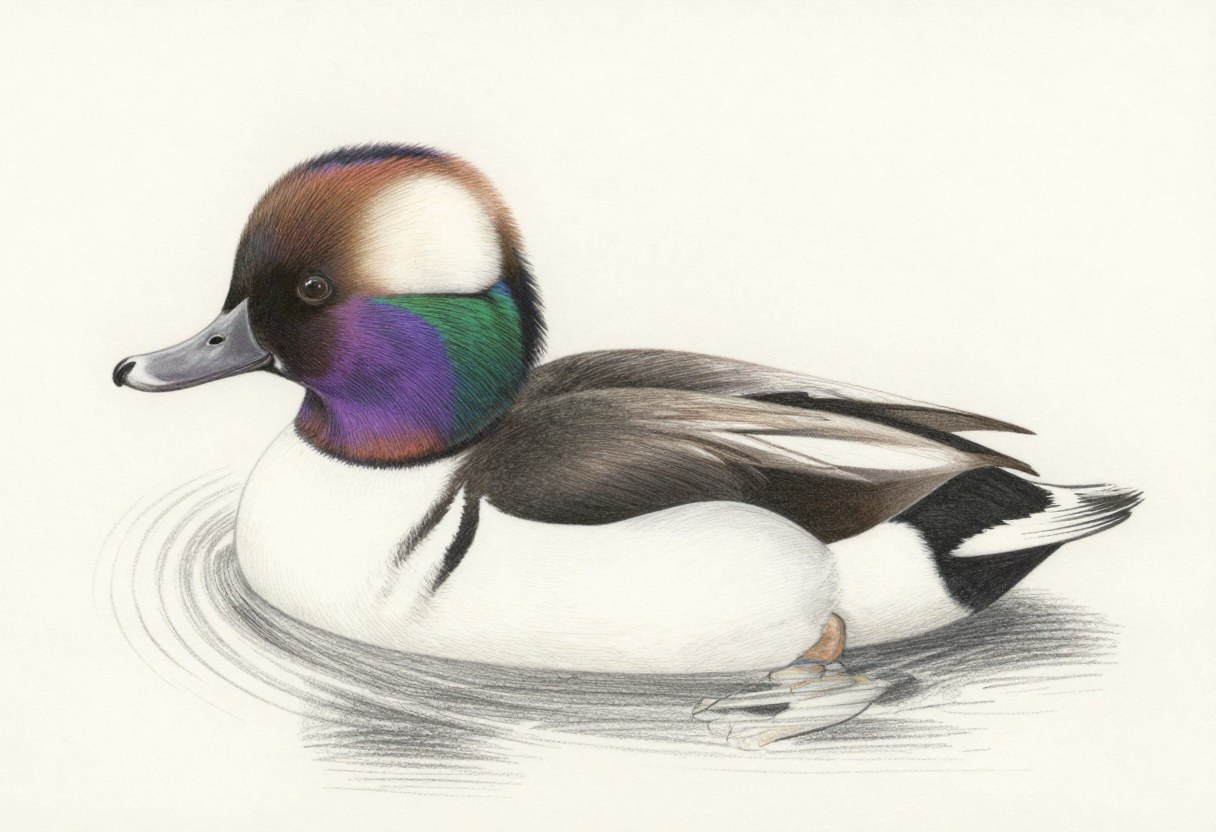
The smallest diving duck in North America, a quick, low-flying duck with a bold white patch on the head of the drake.
- Type
- Ducks
- Movement
- Migratory
- Habitat
- Lakes & ponds, Rivers, Marshes
- Typical size
- 13–15 in long; about 1 lb
- Range
- Breeds in the northern forests of Canada and Alaska and winters on coasts, lakes, and rivers across most of the country
- Seasons
- Part of the regular duck season, usually with a daily bag limit shared with other sea and diving ducks
How to identify it
- Drake: a large white patch that wraps from the cheek to the back of a puffy, iridescent purple and green head, white underparts, and a black back.
- Hen: small, dark gray-brown, with a small white patch on the cheek.
- Buffleheads are small, compact, and dive often, and they fly fast and low.
Often confused with
- Common goldeneye: larger, with a round white spot near the bill and a longer body.
What it eats
- Aquatic insects
- Crustaceans and mollusks
- Small amounts of seeds and plants
How it's hunted
- Small decoy spreads on open water
- Hunting lakes and rivers where buffleheads winter
- Pass shooting along shorelines
Field notes
Buffleheads nest in old woodpecker holes in northern forests, and they arrive on the lower states late in the fall.
They are small and fast, and they dive repeatedly, so a day with buffleheads often means short, fleeting chances.
Related guides
Seasons, bag limits, legal shot types, and licensing vary by state and change every year. Migratory game birds such as ducks, geese, and doves generally require a state license, registration in the Harvest Information Program, and, for waterfowl, a federal duck stamp, and waterfowl must be hunted with non-toxic shot. Check your state's current regulations — our state resources directory links straight to each state's official hunting rules and license portal.