
Common Goldeneye
Bucephala clangula
A hardy diving duck of cold open water, known for its golden eye and for the whistling sound its wings make in flight.
- Type
- Ducks
- Movement
- Migratory
- Habitat
- Lakes & ponds, Rivers
- Typical size
- 16–20 in long; about 2 lb
- Range
- Breeds in the northern forests of Canada and Alaska and winters on lakes, rivers, and coasts across much of the country
- Seasons
- Part of the regular duck season, often hunted late in the year when northern waters freeze up
How to identify it
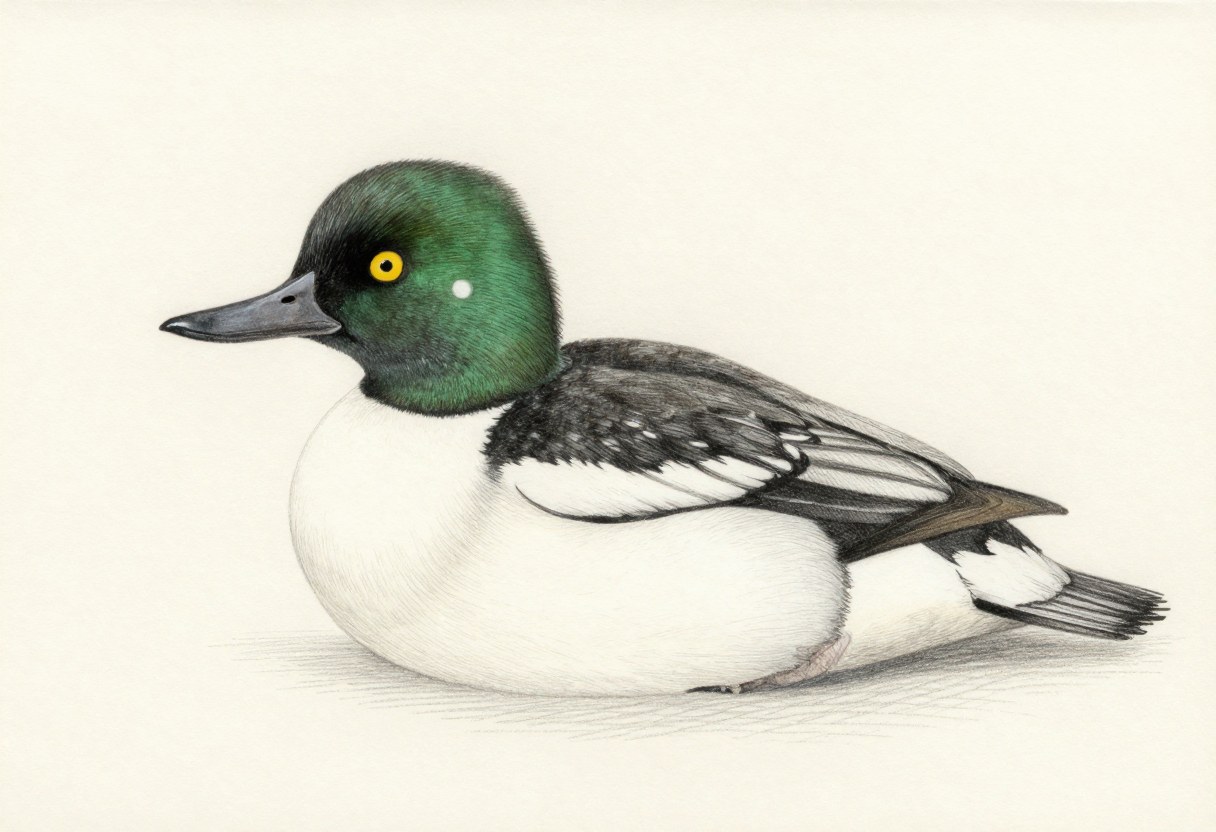
- Drake: a glossy dark green head with a round white spot between the bill and the eye, a white neck and underparts, a black and white back, and a golden-yellow eye.
- Hen: a brown head, a gray body, and a bill with a yellow tip.
- The wings make a distinctive whistling sound in flight, giving the species its nickname.
Often confused with
- Barrow's goldeneye: a western relative whose drake has a crescent-shaped white mark instead of a round spot.
What it eats
- Aquatic insects
- Crustaceans and mollusks
- Small amounts of plants
How it's hunted
- Decoys on open water of lakes and rivers
- Late-season hunts where they gather on open water
- Pass shooting along shorelines
Field notes
Common goldeneyes are among the last ducks to leave in winter, and they often stay as long as there is open water.
Their whistling wings make them easy to identify even before you can see them.
Related guides
Seasons, bag limits, legal shot types, and licensing vary by state and change every year. Migratory game birds such as ducks, geese, and doves generally require a state license, registration in the Harvest Information Program, and, for waterfowl, a federal duck stamp, and waterfowl must be hunted with non-toxic shot. Check your state's current regulations — our state resources directory links straight to each state's official hunting rules and license portal.