
American Wigeon
Mareca americana
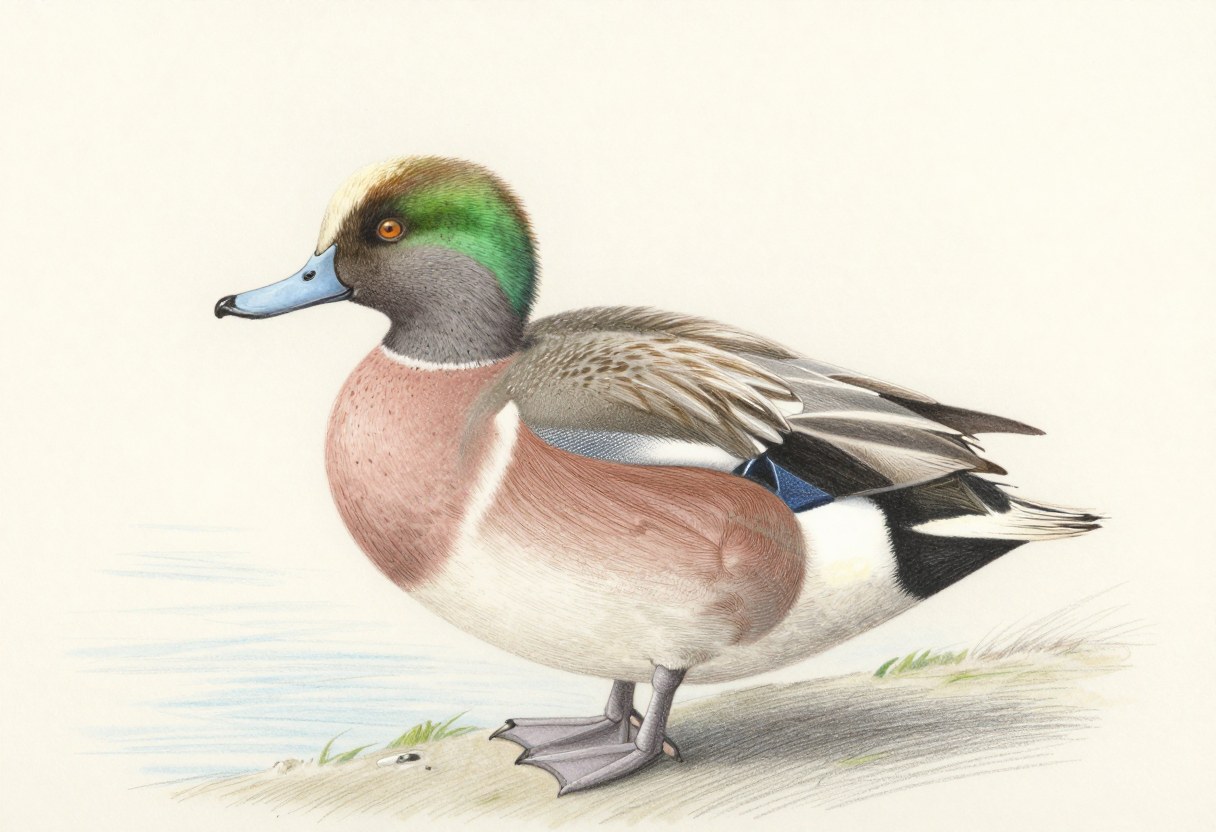
A whistling, grass-grazing duck sometimes called the baldpate for the drake's white crown.
- Type
- Ducks
- Movement
- Migratory
- Habitat
- Marshes, Lakes & ponds, Farm fields
- Typical size
- 18–23 in long; about 1.5–2 lb
- Range
- Breeds across Alaska, Canada, and the northern states, and winters from the Pacific coast and the Midwest south to the Gulf Coast
- Seasons
- Part of the regular duck season, with a daily bag limit that varies by flyway
How to identify it
- Drake: a white crown, a broad glossy green stripe behind the eye on a speckled gray head, pinkish-brown flanks, a white shoulder patch, and a black rump.
- Hen: a gray head, brown body, and a pale blue bill with a black tip.
- A soft, three-note whistle, "whew-whew-whew," often gives them away before you see them.
Often confused with
- Gadwall: a finely patterned gray duck that lacks the wigeon's white crown and green eye stripe.
What it eats
- Aquatic vegetation, often stolen from diving ducks
- Grass and winter wheat in fields
- Seeds
How it's hunted
- Decoys on shallow water near vegetation
- Fields where they graze on winter grains
- Pass shooting between roosting and feeding areas
Field notes
American wigeon are grazers. They walk on land and feed on grass, which sets them apart from most ducks, and they often follow diving ducks to snatch plants those ducks bring to the surface.
Their whistling call is distinctive and carries a long way. In flight, the white shoulder patch of the drake shows clearly.
Related guides
Seasons, bag limits, legal shot types, and licensing vary by state and change every year. Migratory game birds such as ducks, geese, and doves generally require a state license, registration in the Harvest Information Program, and, for waterfowl, a federal duck stamp, and waterfowl must be hunted with non-toxic shot. Check your state's current regulations — our state resources directory links straight to each state's official hunting rules and license portal.