
American Black Duck
Anas rubripes
A dark, wary duck of the East that is prized by hunters and managed with restrictive limits in many states.
- Type
- Ducks
- Movement
- Migratory and resident
- Habitat
- Marshes, Rivers, Woodlands, Lakes & ponds
- Typical size
- 19–23 in long; about 2.5 lb
- Range
- Breeds across the northeastern United States and eastern Canada and winters along the Atlantic coast and the Great Lakes
- Seasons
- Bag limits are often lower than for other dabbling ducks in the Atlantic flyway, so check the daily limit each year
How to identify it
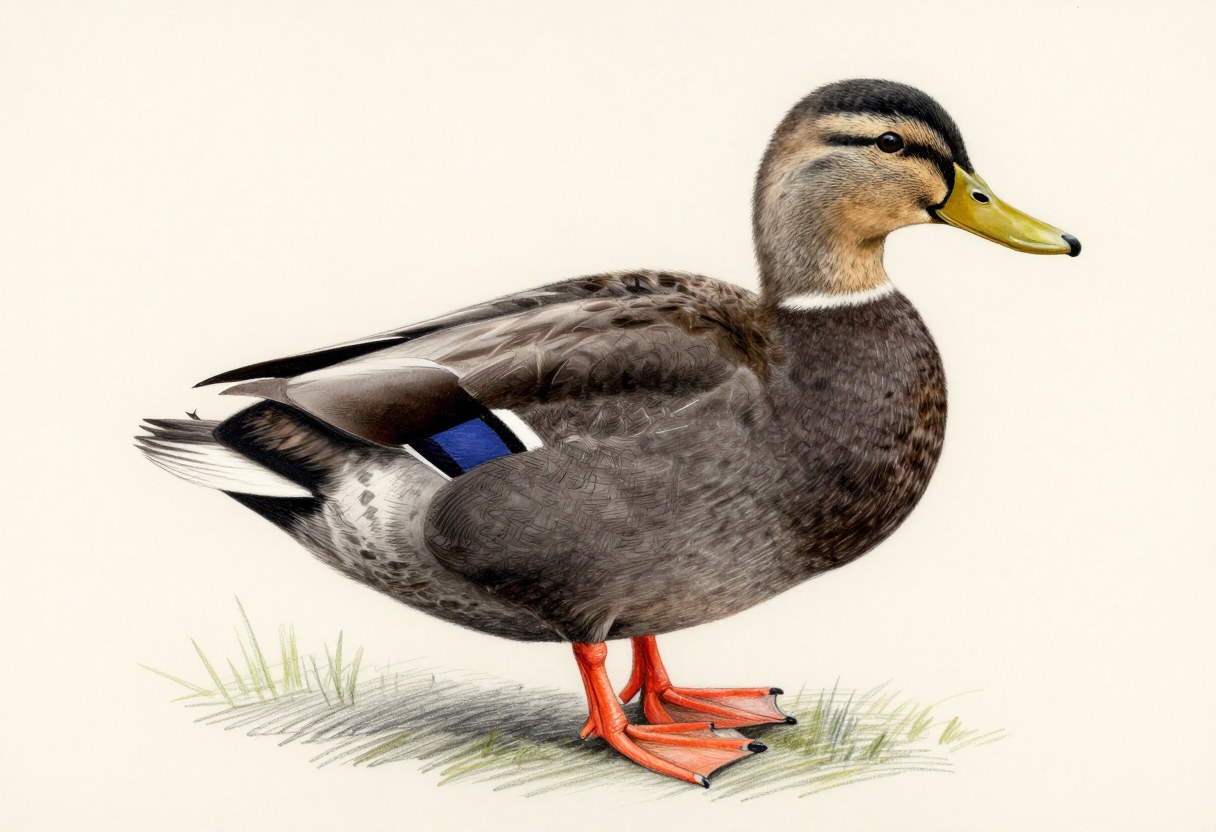
- Both sexes: a dark chocolate-brown body with a paler buff-gray head and a dark crown and eye stripe.
- The wing patch is violet-blue with little or no white border, and the underside of the wing flashes white in flight.
- Drake: a bright yellow-olive bill. Hen: a duller, dusky olive-green bill.
Often confused with
- Mallard (hen): paler brown, with an orange bill that has a dark blotch and a wing patch bordered by white.
What it eats
- Aquatic plants and seeds
- Acorns in flooded timber
- Crustaceans and mollusks in coastal marshes
How it's hunted
- Decoy spreads in tidal marshes and wooded ponds
- Calling softly, since black ducks are wary
- Jump-shooting small waters and creeks
Field notes
American black ducks have declined for decades, partly because of habitat loss and partly because of competition and hybridization with mallards. Many states in the Atlantic flyway keep their limits tight.
They are sharp-eyed and cautious, and decoys and calling should be quiet. A good look at the wing patch helps separate them from dark mallard hens.
Related guides
Seasons, bag limits, legal shot types, and licensing vary by state and change every year. Migratory game birds such as ducks, geese, and doves generally require a state license, registration in the Harvest Information Program, and, for waterfowl, a federal duck stamp, and waterfowl must be hunted with non-toxic shot. Check your state's current regulations — our state resources directory links straight to each state's official hunting rules and license portal.