
Field Guide / Archery Gear & Setup
Recurve Bow
Also called: takedown recurve, traditional bow
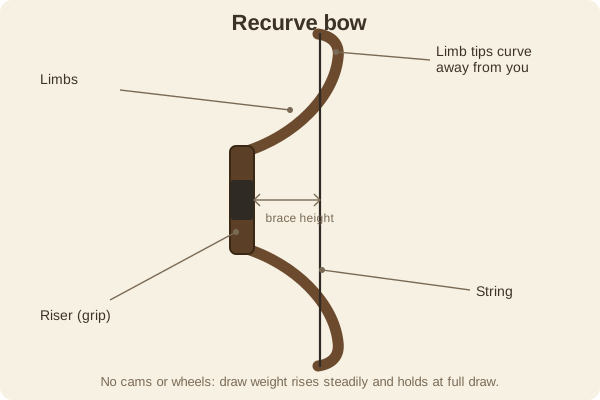
A simple, light, quiet bow whose limb tips curve away from the archer, popular with traditional bowhunters.
- Type
- Bows
- Typical hunting draw weight
- About 40 to 55 pounds
- Let-off
- None; the weight holds at full draw
- Arrow speed
- Roughly 150 to 210 feet per second
- Used for
- Deer & big game, Small game, Turkey, Target practice
Safety: Never dry-fire a bow or crossbow (release the string without an arrow). It can break the limbs, string, or cams and injure you.
What it is good for
- Traditional bowhunting and instinctive shooting.
- Small game and big game at close range, with practice.
- Hunters who like a light, quiet, simple bow.
Where it falls short
- Takes more practice to shoot well.
- Slower arrows mean shorter ranges and more time for the animal to react.
- Holding full weight at full draw is tiring.
Tips
- Practice at short distances and build strength before the season.
- Buy a draw weight you can pull smoothly and hold.
Works well with
- Longbow: another traditional bow with a different shape.
- Compound Bow: adds cams and let-off.
- Wood Arrow: a traditional match.
Field notes
A takedown recurve comes apart into limbs and a riser, so it packs into a small case and lets you change limbs for a different draw weight.
Related guides
Numbers here are typical, not guarantees. Have a pro shop set up and tune your bow or crossbow, follow the maker's manual, and never dry-fire a bow. Legal equipment, draw weights, crossbow seasons, and broadhead rules differ by state and area; our state resources directory links to each state's official regulations. Not sure what to buy? Try our bow and crossbow wizard.