
Field Guide / Archery Gear & Setup
Bows, crossbows, arrows, broadheads, accessories, and the numbers that tie them together. Search or filter by type and what you hunt, and use the diagrams to see how the parts fit.
Archery gear must be matched and tuned, and a pro shop can set it up safely. Follow the maker's manual for draw weight, arrow length, and arrow spine, and never dry-fire a bow or crossbow. Legal equipment, draw weights, crossbow use, and broadhead rules differ by state. Check your state's current hunting regulations.
22 entries
 Bows
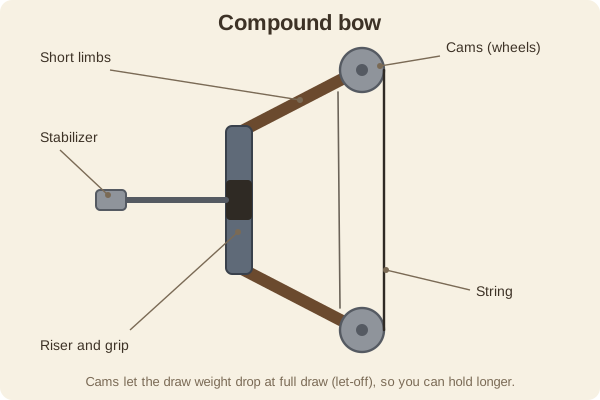
The most popular hunting bow: cams and cables let the draw weight drop at full draw, so you can hold and aim longer.
Let-off about 65 to 90% at full draw
 Bows
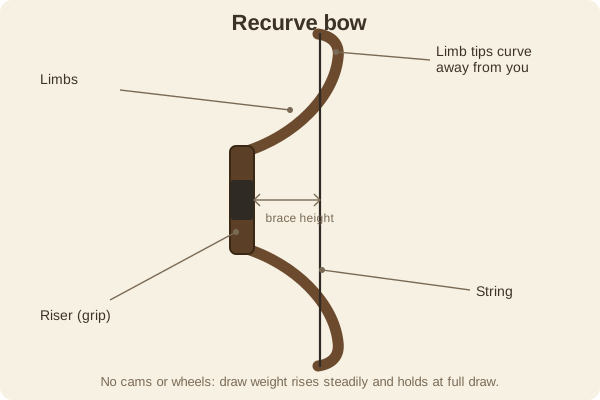
A simple, light, quiet bow whose limb tips curve away from the archer, popular with traditional bowhunters.
No cams or let-off; light and simple
 Bows
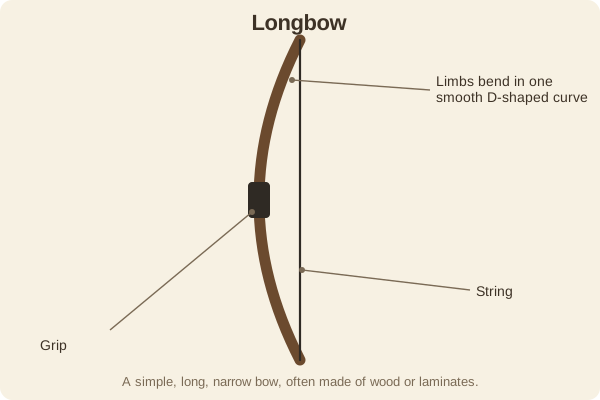
A long, narrow, simple bow with limbs that bend in one smooth curve, a classic for traditional hunters.
A long, simple, D-shaped traditional bow
 Bows
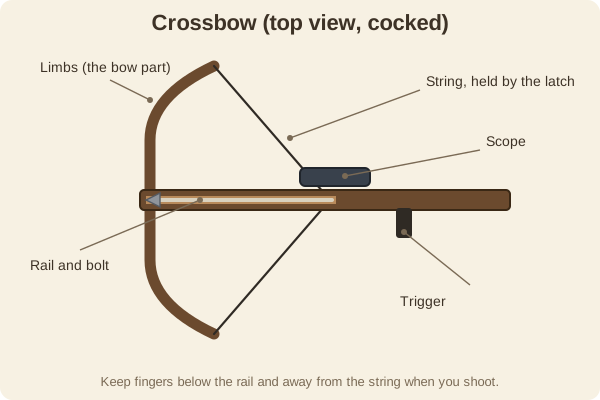
A horizontal bow on a stock with a trigger, held cocked until you shoot, and one of the easiest bows to shoot accurately.
Fast bolts, rifle-style aiming, special legal rules
 Arrows & Parts
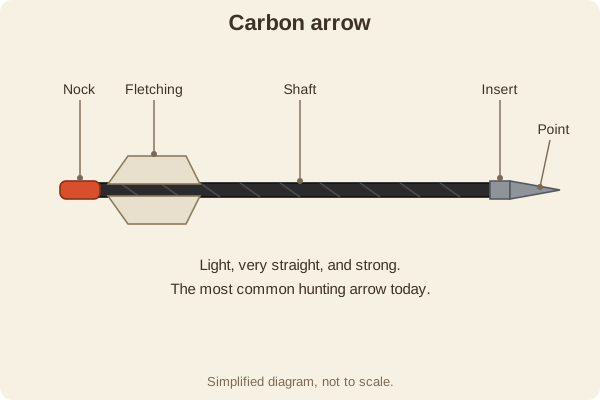
The most common hunting arrow: light, strong, very straight, and available in many weights and stiffnesses.
Light, straight, durable; check for cracks
 Arrows & Parts
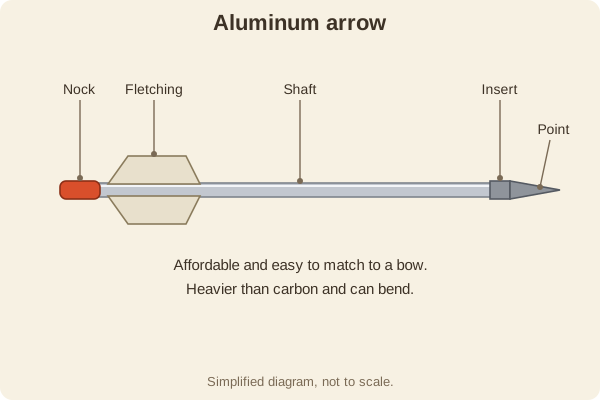
A straight, affordable metal arrow that is easy to match to a bow and can sometimes be straightened after a bend.
Affordable, repairable, a bit heavier
 Arrows & Parts
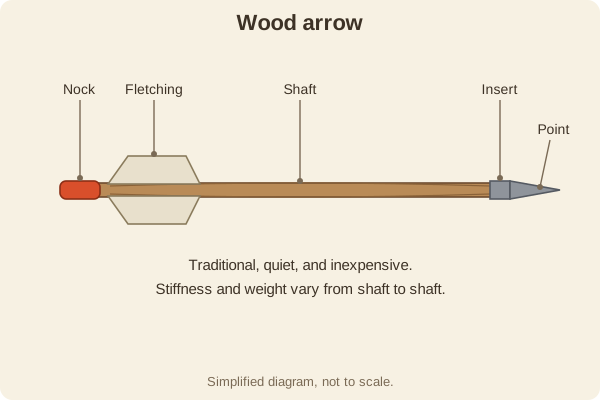
A traditional arrow of cedar or other wood, used with recurves and longbows, and loved for its feel and tradition.
Traditional, quiet, varies from shaft to shaft
 Arrows & Parts
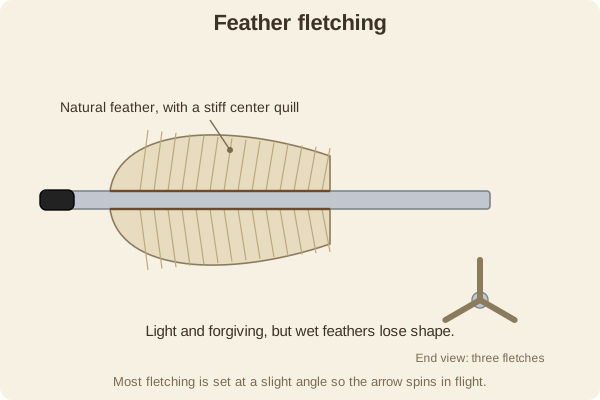
Natural feathers glued to the back of an arrow to steer it, lightweight and forgiving, and a favorite with traditional archers.
Light and forgiving, but wet feathers lose shape
 Arrows & Parts
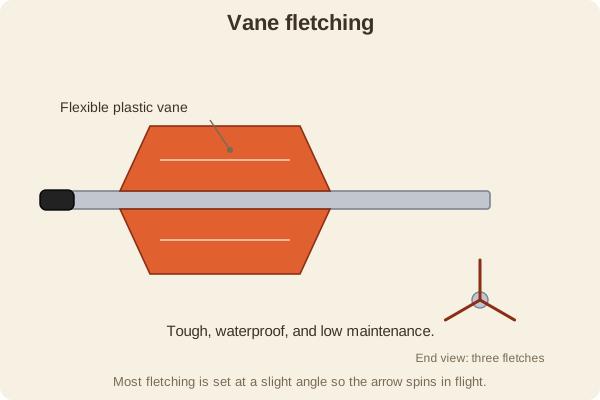
Tough, waterproof plastic fletching, the usual choice for compound and crossbow hunting arrows.
Tough, waterproof, low maintenance
 Points & Broadheads
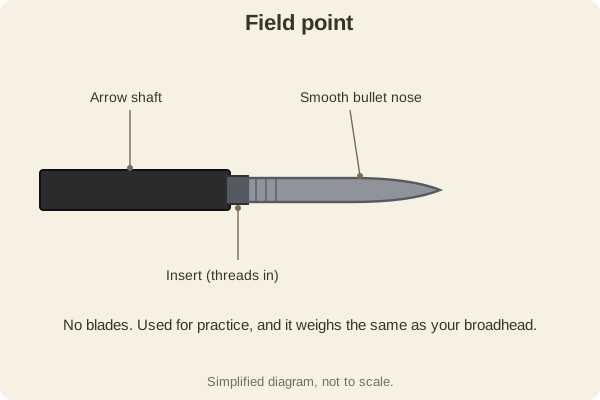
A smooth, bullet-shaped metal point for practice, ideally the same weight as the broadhead you will hunt with.
Practice tip, often 100 or 125 grains
 Points & Broadheads
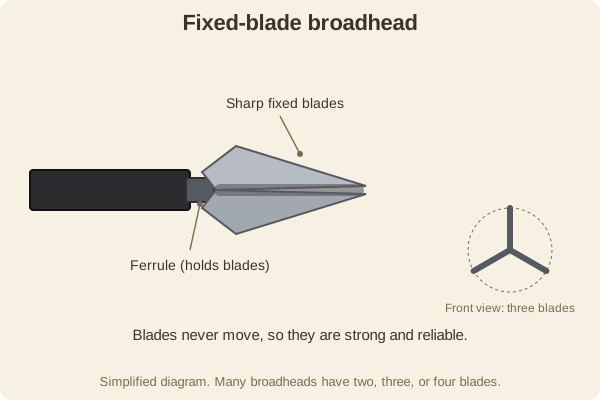
A broadhead whose blades are fixed in place, simple and strong, with reliable penetration on big game.
Blades never move, so strong and reliable
 Points & Broadheads
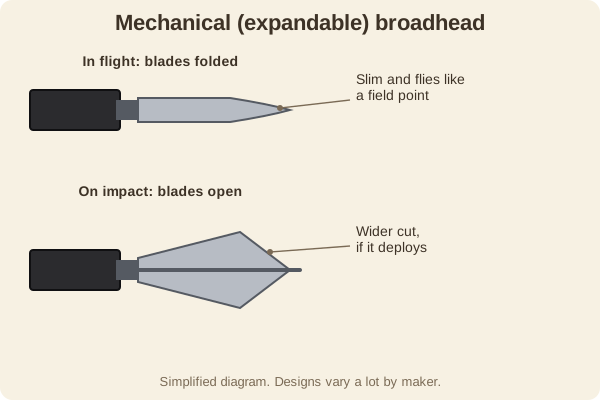
A broadhead with folded blades that open on impact, flying like a field point and cutting a wider path when it works.
Folds in flight, opens on impact
 Points & Broadheads
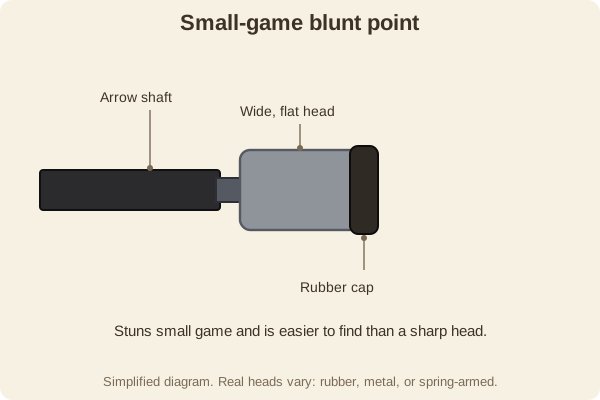
A wide, flat or rubber-tipped point that stuns small game and is easier to recover than a sharp head.
Stuns small game, easy to recover
 Accessories
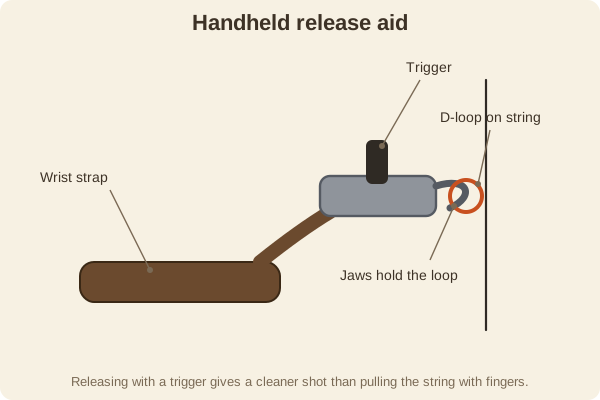
A handheld or wrist-strap device with a trigger that lets go of the string cleanly, used by most compound shooters.
A trigger gives a cleaner, more consistent release
 Accessories
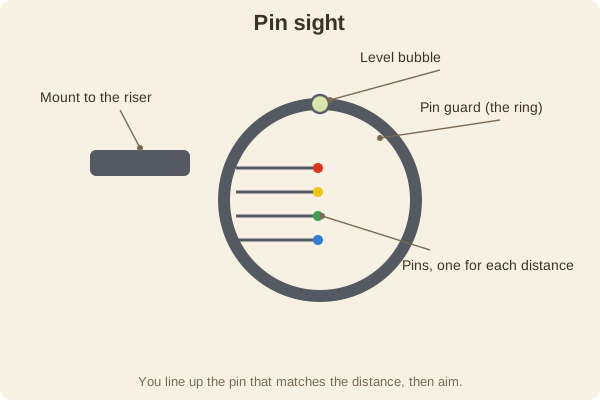
A mounted aiming device with pins or a single adjustable pin, set for the distances you shoot.
Pins set for known distances
 Accessories
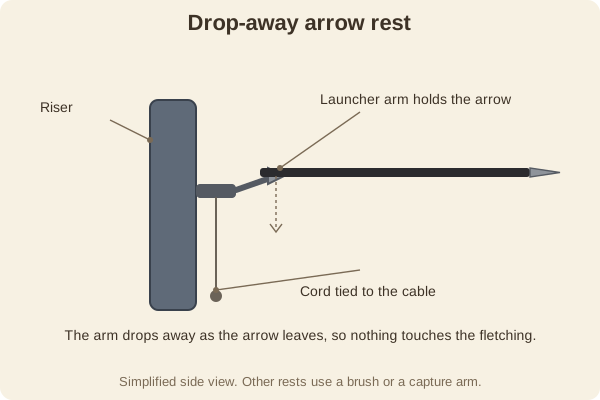
A mounted support that holds the arrow on the bow, from a simple brush to a drop-away that falls clear when you shoot.
Supports the arrow, drop-away clears the fletching
 Accessories
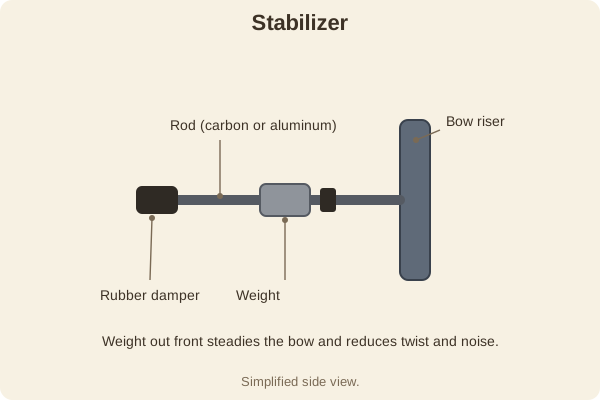
A rod with a weight that mounts to the front of the bow to steady it, reduce twist, and quiet vibration.
A rod and weight out front steadies the bow
 Accessories
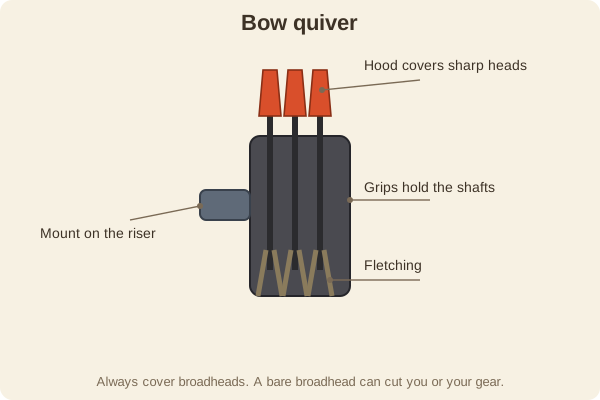
A holder that carries arrows on the bow, with a hood that covers the broadheads, so they are ready and safe to carry.
Carries arrows with a hood over the heads
 Specs & Setup
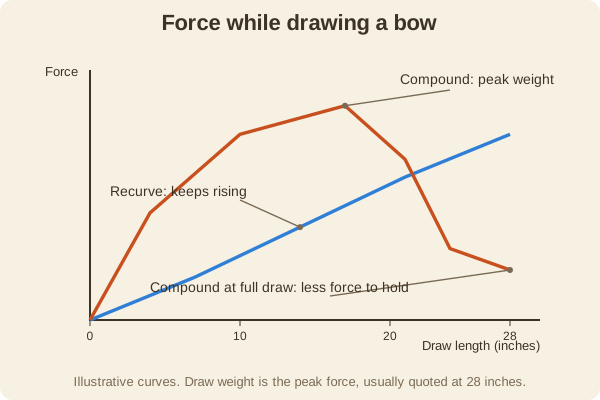
The force, in pounds, needed to pull a bow to full draw, and one of the most important numbers when you choose a bow.
Peak pull force, usually quoted at 28 inches
 Specs & Setup
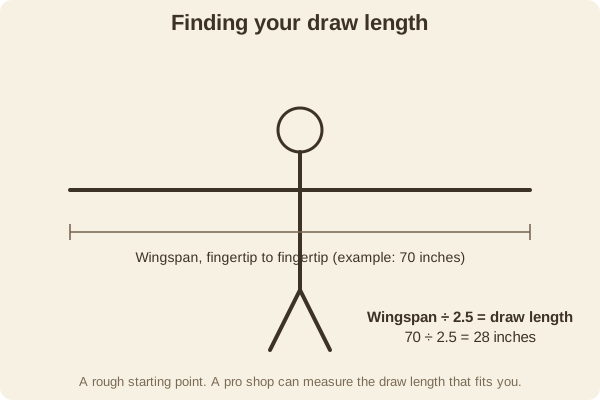
How far you pull the string at full draw, which a pro shop sets to fit your body for comfort and accuracy.
A starting estimate is wingspan divided by 2.5
 Specs & Setup
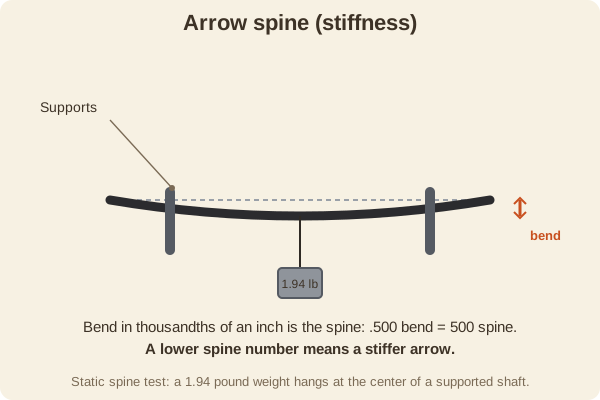
How stiff an arrow shaft is, which must be matched to your bow's draw weight, your arrow length, and your point weight.
A lower spine number is a stiffer arrow
 Specs & Setup
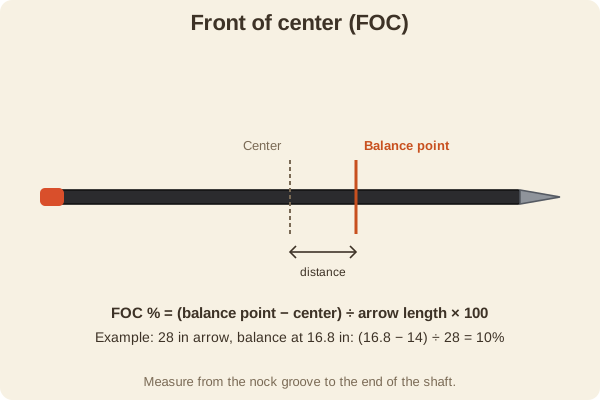
How much of an arrow's weight sits forward of its middle, a number hunters tune to improve stability and penetration.
Typically about 7 to 15%, higher for some hunters