
Field Guide / Archery Gear & Setup
Fixed-Blade Broadhead
Also called: fixed blade, cut-on-contact
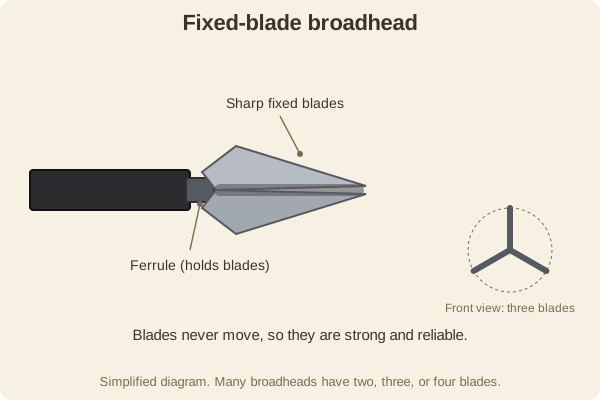
A broadhead whose blades are fixed in place, simple and strong, with reliable penetration on big game.
- Type
- Points & Broadheads
- Common weights
- Often 100 to 125 grains
- Cutting width
- Often about 1 to 1.25 inches
- Legal note
- Many states set a minimum cutting width and other rules
- Used for
- Deer & big game, Turkey
Safety: Broadheads are razor sharp. Keep them covered, use a broadhead wrench, never test an edge on your skin, and pull arrows from a target by pushing the shaft, with your hand away from the blades.
What it is good for
- Deer, elk, and other big game.
- Hunters who value strength and simplicity.
- Shots that may hit bone.
Where it falls short
- Can fly differently from a field point, so tuning matters.
- Blades must be kept sharp, and replaceable-blade heads need new blades.
- Smaller cutting diameter than many mechanical heads.
Tips
- Tune your bow to shoot broadheads and field points to the same spot.
- Check the blades and ferrule for damage after every shot.
Works well with
- Field Point: for practice, with matching weight.
- Mechanical Broadhead: a different design that opens on impact.
Field notes
Fixed-blade heads come with two, three, or four blades and may have replaceable or permanent blades. Many bowhunters choose them for dependability.
Related guides
Numbers here are typical, not guarantees. Have a pro shop set up and tune your bow or crossbow, follow the maker's manual, and never dry-fire a bow. Legal equipment, draw weights, crossbow seasons, and broadhead rules differ by state and area; our state resources directory links to each state's official regulations. Not sure what to buy? Try our bow and crossbow wizard.