
Field Guide / Archery Gear & Setup
Draw Weight
Also called: poundage, bow weight
The force, in pounds, needed to pull a bow to full draw, and one of the most important numbers when you choose a bow.
- Type
- Specs & Setup
- How it is measured
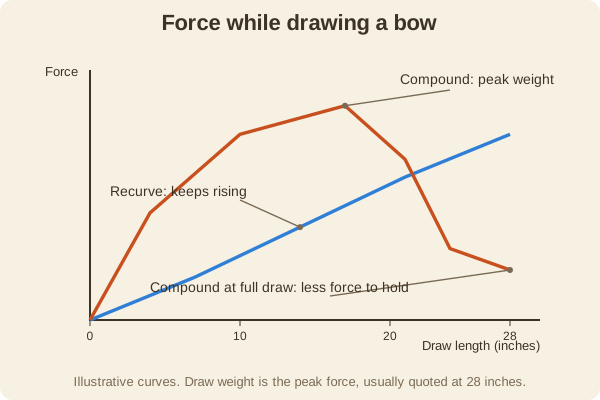
- Peak force, normally quoted at a 28-inch draw
- Typical compound hunting weights
- About 40 to 70 pounds
- Legal note
- Some states set a minimum draw weight for big game
- Used for
- Deer & big game, Turkey, Small game, Target practice
Safety: Do not buy more draw weight than you can control. Shooting a bow that is too heavy increases the chance of a bad shot and injury.
What it is good for
- Choosing a bow you can shoot well.
- Matching arrow spine and weight.
- Checking legal minimums for big game.
Where it falls short
- A bow that is too heavy leads to bad form and fatigue.
- Heavier is not always better.
- Compound let-off changes the holding weight.
Tips
- Pick a weight you can draw smoothly, sitting and standing, even when cold.
- Increase weight slowly as you build strength.
Works well with
- Draw Length: set together for a good fit.
- Arrow Spine: must match the draw weight.
Field notes
Draw weight is peak force, not the weight you hold at full draw. A compound bow with high let-off holds a fraction of its peak draw weight.
Related guides
Numbers here are typical, not guarantees. Have a pro shop set up and tune your bow or crossbow, follow the maker's manual, and never dry-fire a bow. Legal equipment, draw weights, crossbow seasons, and broadhead rules differ by state and area; our state resources directory links to each state's official regulations. Not sure what to buy? Try our bow and crossbow wizard.