
Field Guide / Archery Gear & Setup
Carbon Arrow
Also called: carbon shaft
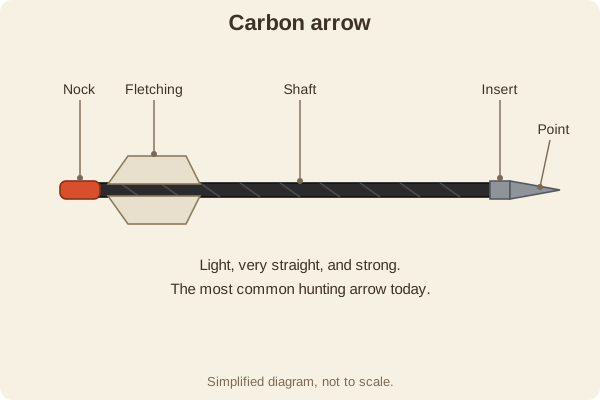
The most common hunting arrow: light, strong, very straight, and available in many weights and stiffnesses.
- Type
- Arrows & Parts
- Weight
- Often about 5 to 10 grains per inch of shaft
- Straightness
- Usually held to within a few thousandths of an inch
- Repair
- Cannot be straightened, and damaged shafts should be replaced
- Used for
- Deer & big game, Turkey, Small game, Target practice
Safety: A cracked carbon arrow can break and splinter when shot. Inspect every shaft before use and retire any that are damaged.
What it is good for
- Most compound and crossbow hunting.
- Fast, flat shooting with good penetration.
- Hunters who want durable shafts that stay straight.
Where it falls short
- A cracked carbon shaft can splinter and injure you.
- More costly than aluminum or wood.
- Must be spine-matched carefully.
Tips
- Check each shaft for cracks by flexing it gently while watching and listening.
- Match spine, length, and point weight to your bow with the maker's chart.
Works well with
- Arrow Spine: must match your bow.
- Vane Fletching: the usual pair for hunting.
Field notes
Carbon arrows are made from woven carbon fiber. They are light for their strength, which makes them popular with compound hunters.
Related guides
Numbers here are typical, not guarantees. Have a pro shop set up and tune your bow or crossbow, follow the maker's manual, and never dry-fire a bow. Legal equipment, draw weights, crossbow seasons, and broadhead rules differ by state and area; our state resources directory links to each state's official regulations. Not sure what to buy? Try our bow and crossbow wizard.