
Supermoons and Blue Moons
Also called: supermoon, blue moon
Two popular names for unusual full Moons: a supermoon is a full Moon near its closest point to Earth, and a blue moon is an extra full Moon in a month or season.
- Type
- Other Sky Events
- Best season
- Any time of year
- Gear
- Naked eye
- When to look
- Supermoons several times a year; blue moons about every two to three years
- Supermoon
- A full or new Moon near its closest approach, up to about 14% larger and 30% brighter than the smallest full Moon
- Blue moon
- The second full Moon in a calendar month, about every 2.7 years
- Color
- Usually not blue at all
- Best look
- Just after moonrise, when it looks biggest
What you will see
- A full Moon that is a bit brighter and larger than usual.
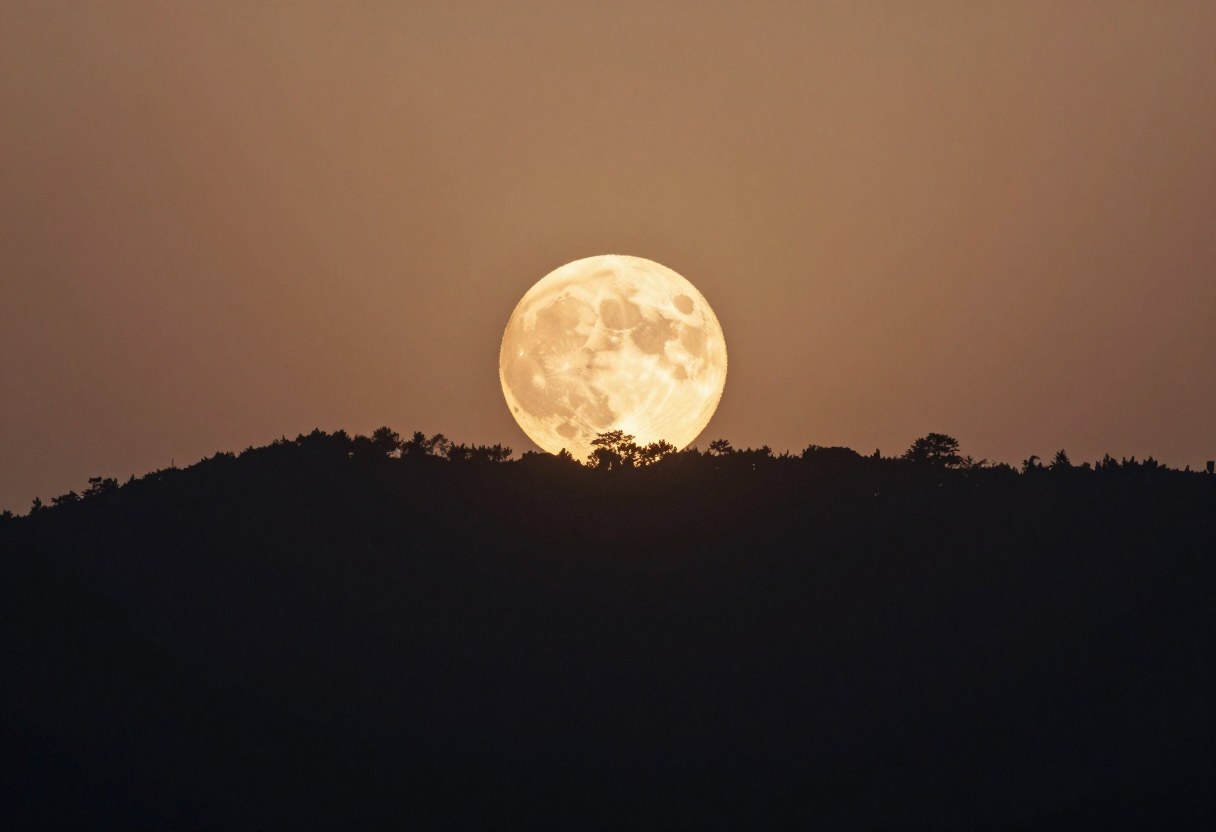
- A big, orange Moon near the horizon, partly an illusion.
- A blue moon looks like any other full Moon.
How to watch
- Watch the Moon as it rises and compare it with the same Moon high in the sky.
- Frame it behind trees or hills to see the size illusion.
- Use binoculars to see craters.
Field notes
The difference between a supermoon and an ordinary full Moon is small, though noticeable if you compare them. The Moon looks much bigger near the horizon, but that is mostly a trick of perception.
Related guides
Dates and times repeat from year to year but shift slightly, and the Moon's phase and the planets' positions are different every year. Check a current source such as NASA, the American Meteor Society, or a stargazing app before you plan a night out, and check the weather forecast for clear skies.