
Partial and Annular Solar Eclipses
Also called: ring of fire eclipse
When the Moon covers only part of the Sun, or sits too far away to cover it completely and leaves a bright ring. Both require eye protection at every moment.
- Type
- Eclipses
- Best season
- Any time of year
- Gear
- Naked eye
- When to look
- Several times a year somewhere on Earth; check NASA for events near you
- Partial
- The Moon covers part of the Sun, seen over a wide area
- Annular
- The Moon is too far away to cover the Sun, so a bright ring remains
- Duration
- A partial eclipse lasts a couple of hours, and an annular ring a few minutes
- Eye safety
- A solar filter is required for every phase, even during an annular ring
Safety: Never look at the Sun without a proper solar filter. Use eclipse glasses that meet the ISO 12312-2 standard, and throw away any pair that is scratched or damaged. Ordinary sunglasses are not safe. Do not look at the Sun through binoculars, a telescope, or a camera unless a solar filter is fitted over the front of the instrument.
What you will see
- A bite taken out of the Sun that grows over about an hour.
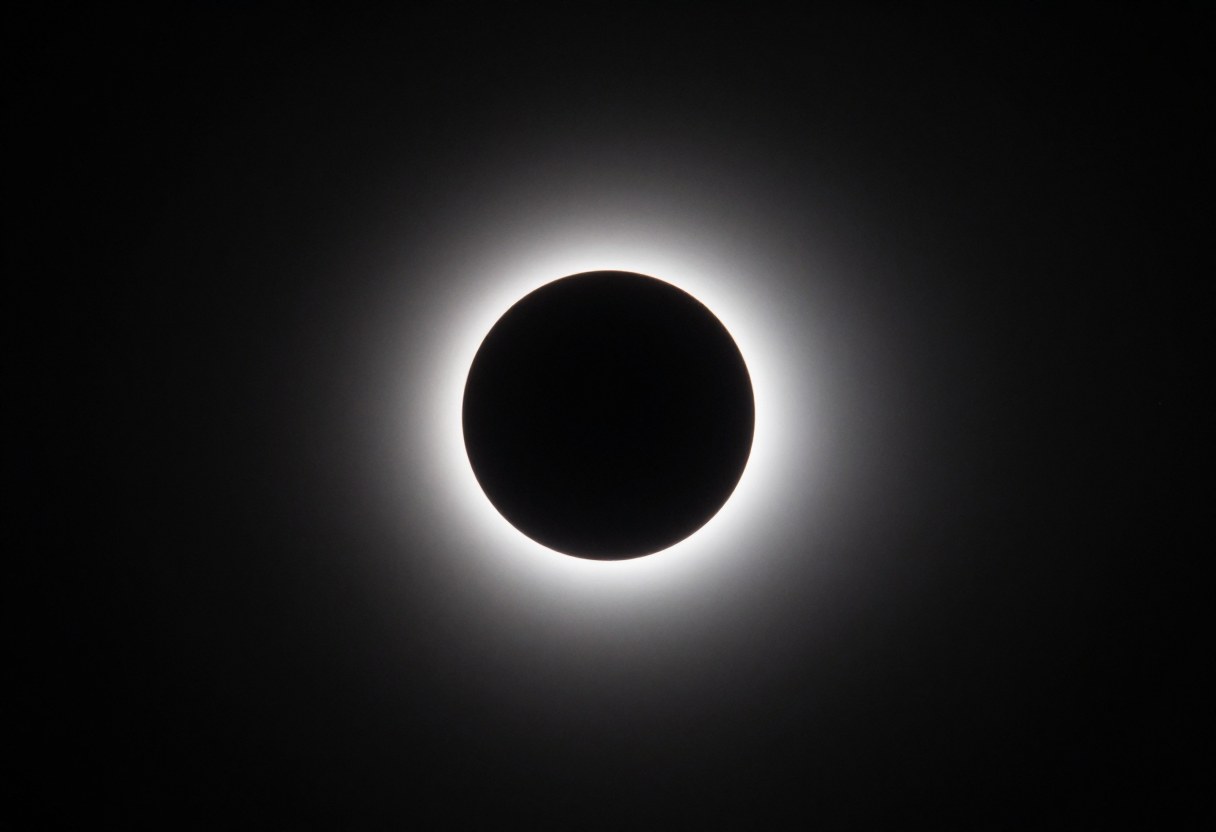
- In an annular eclipse, a bright ring of sunlight around the dark Moon.
- Crescent-shaped spots of light under trees.
How to watch
- Use certified eclipse glasses for the whole event, including the annular ring.
- You can also project the Sun's image through a pinhole onto a piece of paper.
- Do not look through binoculars, a telescope, or a camera without a proper solar filter.
Field notes
Unlike a total eclipse, a partial or annular eclipse never gets dark enough to be safe to view without a filter. In an annular eclipse, the ring of sunlight that remains is still dangerous to look at.
Related guides
Dates and times repeat from year to year but shift slightly, and the Moon's phase and the planets' positions are different every year. Check a current source such as NASA, the American Meteor Society, or a stargazing app before you plan a night out, and check the weather forecast for clear skies.