
Florida Pompano
Trachinotus carolinus
Also called: pompano
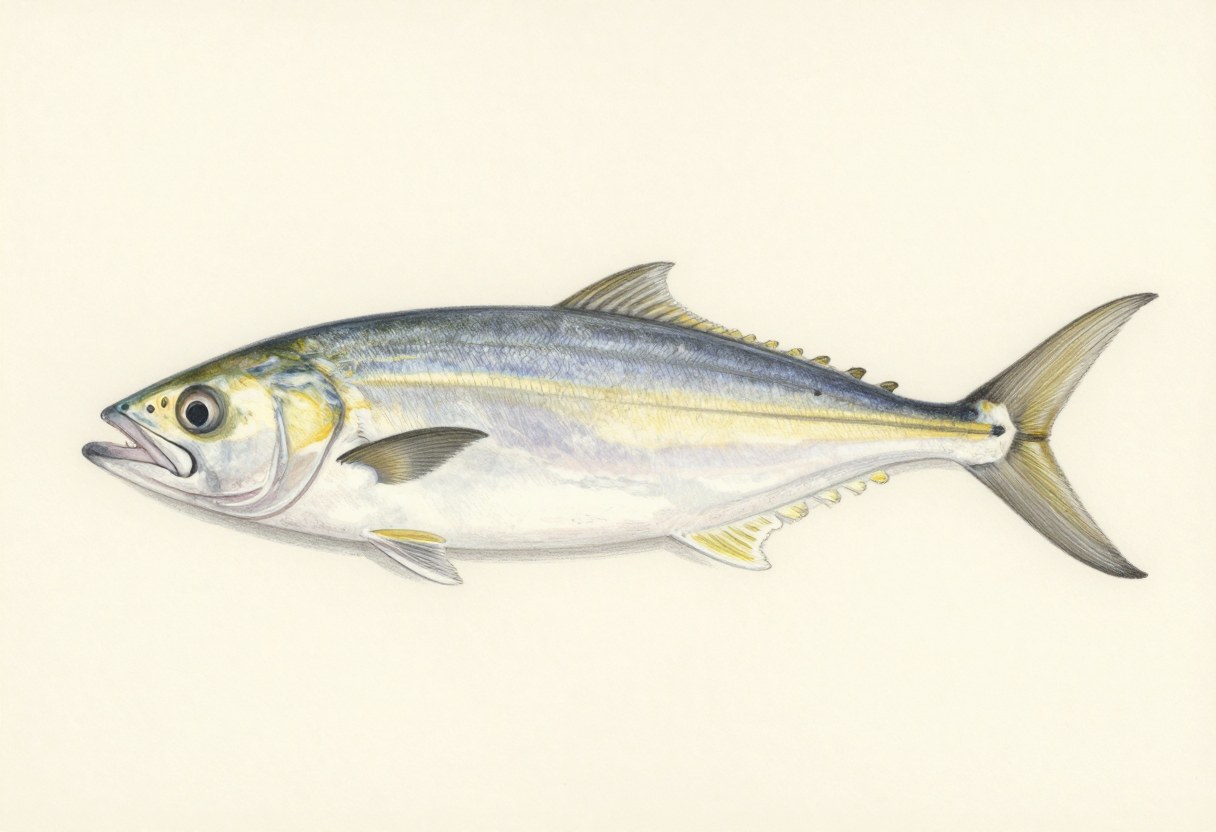
A silver, deep-bodied surf and inlet fish that runs the beaches in spring and fall and is prized for its flavor.
- Type
- Inshore & Flats
- Typical size
- 1 to 3 lb; fish over 4 lb are large
- Range
- The Atlantic coast from Virginia south and around the Gulf of Mexico, most common in Florida and the Gulf
- Coasts
- Southeast Atlantic, Gulf of Mexico
- Where
- Surf & beaches, Flats & estuaries
- Best seasons
- Spring and fall runs along beaches and inlets
Note: Size limits, bag limits, and seasons for this species change often, so check current state and federal rules before you keep one.
How to identify it
- A deep, silvery body with a slight golden tint on the belly.
- A small mouth and a blunt head.
- A deeply forked tail.
- No spots or bars.
Often confused with
- Permit: larger and deeper, with dark, sickle-shaped fins.
Baits and lures
- Sand fleas (mole crabs)
- Live shrimp
- Pompano jigs, often with a trailer of shrimp or a plastic grub
Techniques
- Fish a double-drop rig with sand fleas in the wash zone of the surf.
- Cast small jigs through breaking waves.
- Fish moving water around inlets and passes.
- Use a light leader and a small hook.
Field notes
Pompano feed on small crustaceans in the surf. Many surf anglers rake their own sand fleas as bait.
Related guides
Saltwater size limits, bag limits, seasons, gear rules, and license requirements change often and differ by state and in federal waters. Some species are catch-and-release only or closed in certain areas. Check your state's current fishing regulations before you keep a fish; our state resources directory links to each state's official wildlife and fisheries agency.