
Bonefish
Albula vulpes
Also called: gray ghost, bone
A wary silver fish of clear, shallow sand flats, famous for blistering runs and for being hard to approach.
- Type
- Inshore & Flats
- Typical size
- Typically 2 to 5 lb; over 8 lb is a trophy
- Range
- The Florida Keys and Biscayne Bay, plus the Bahamas and Caribbean
- Coasts
- Southeast Atlantic
- Where
- Flats & estuaries
- Best seasons
- Spring through fall is the best, with calm, clear days
Note: Bonefish are widely treated as a catch-and-release species, and rules vary. Size limits, bag limits, and seasons for this species change often, so check current state and federal rules before you keep one.
How to identify it
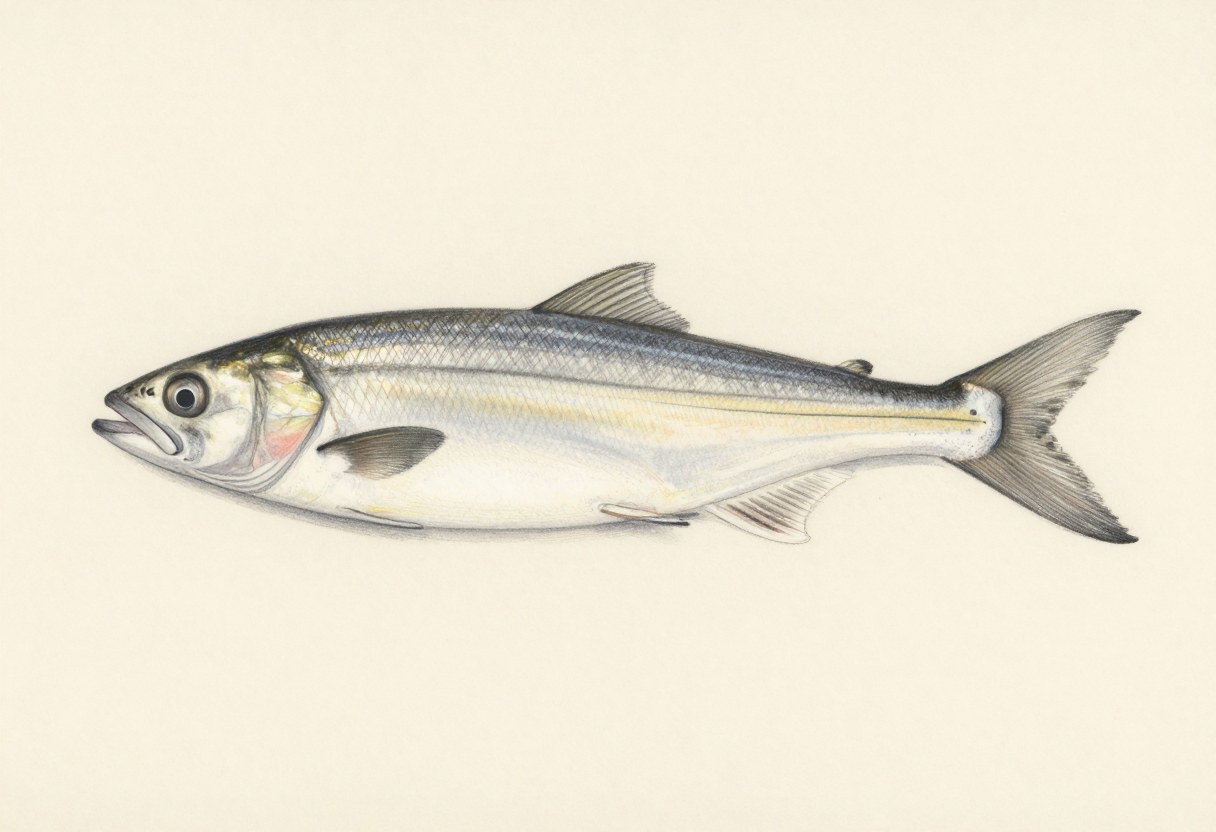
- A slender, silver body with a dark back.
- A conical snout that overhangs a small, underslung mouth.
- A deeply forked tail.
- No distinct spots or stripes.
Often confused with
- Permit: deep and flat-bodied, with dark sickle-shaped fins.
Baits and lures
- Live shrimp and crabs
- Small jigs
- Small flies that imitate shrimp and crabs
Techniques
- Wade or pole a skiff on clear flats and sight-cast to cruising fish.
- Make a quiet, accurate cast ahead of the fish and let the bait sink.
- Be ready for a very fast first run, and keep the line clear.
- Release fish gently and quickly.
Field notes
Bonefish feed by tailing on the bottom in shallow water, which is why flats anglers watch for tails and mud puffs.
Related guides
Saltwater size limits, bag limits, seasons, gear rules, and license requirements change often and differ by state and in federal waters. Some species are catch-and-release only or closed in certain areas. Check your state's current fishing regulations before you keep a fish; our state resources directory links to each state's official wildlife and fisheries agency.